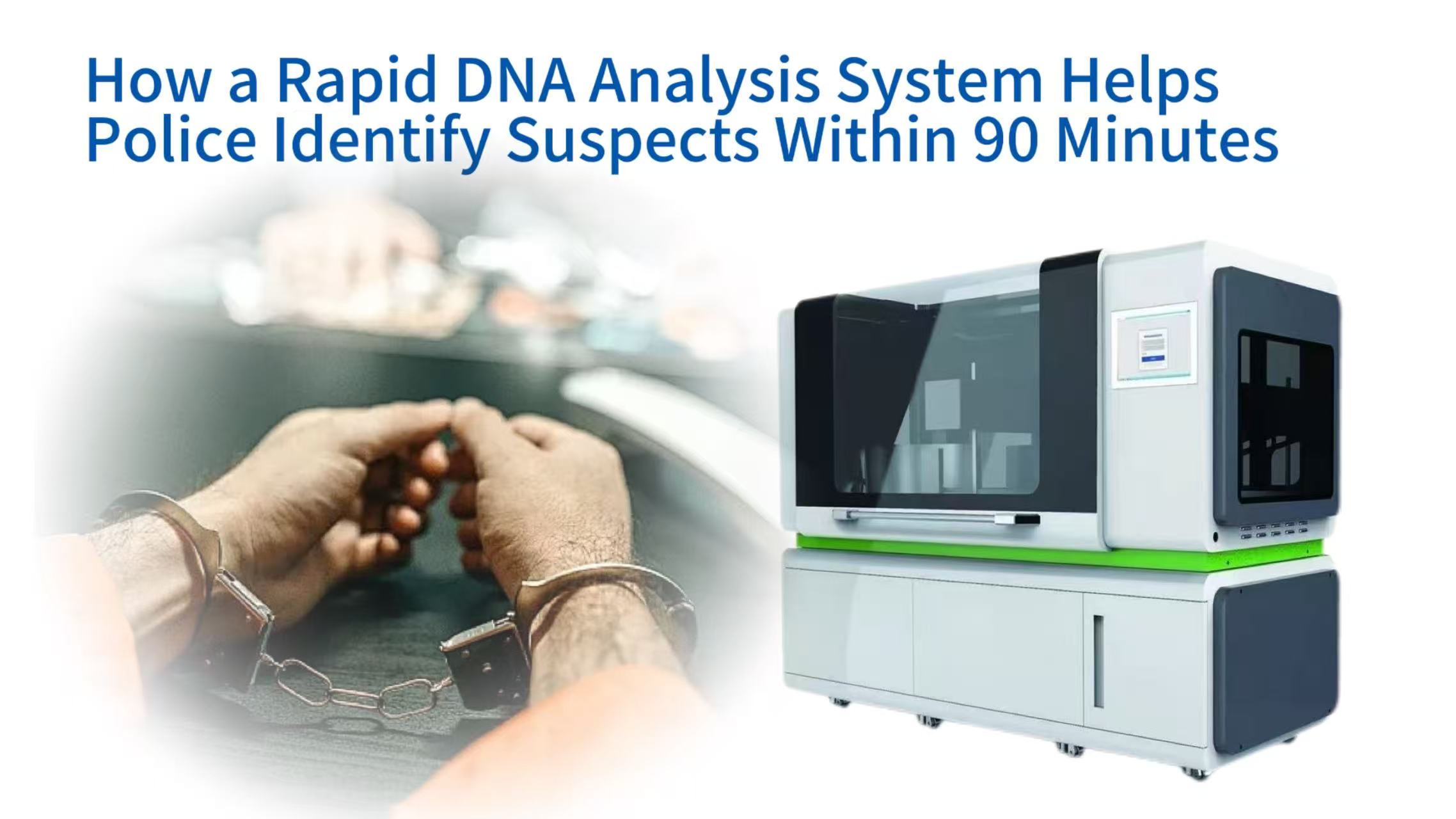
Modern forensic science has transformed criminal investigations by shrinking the time needed to link a suspect to a crime scene from weeks to less than two hours. A rapid DNA analysis system is a fully automated instrument that takes a biological sample, extracts the genetic material, amplifies specific DNA markers, and produces a forensic‑grade profile ready for database comparison in about 90 minutes. This article explains the technology behind these systems, their real‑world applications in law enforcement, and how they deliver actionable intelligence while maintaining court‑ready reliability. You will learn about the core components, the types of samples they process, the strict quality standards they meet, and the measurable benefits they bring to police departments and forensic laboratories.
The Critical Need for Speed in Forensic Identification
Rapid DNA vs Traditional DNA: Time & Workflow Comparison
Traditional DNA
Days → Weeks
Manual Multi-Step Lab Work
High Human Error
Rapid DNA System
90 Minutes Only
Automated Benchtop
Zero Shipping Delay
Traditional DNA testing requires transporting evidence to a centralized laboratory where skilled technicians perform multiple manual steps across several instruments. This process often takes days or even weeks, during which a suspect may remain at large or an innocent person may be held without cause. Law enforcement agencies face increasing pressure to resolve cases quickly while maintaining the highest standards of accuracy and legal admissibility. A rapid DNA analysis system addresses this need by moving the entire workflow from sample to profile onto a single benchtop device. The automation reduces human error and eliminates the logistical delays of evidence shipping and laboratory queuing.
The value of 90‑minute results is most evident in time‑sensitive situations such as booking stations, crime scene investigations, and disaster victim identification. When an arrestee’s DNA can be checked against a national database before their release decision, law enforcement gains a powerful tool to prevent repeat offenses and uncover false identities. Similarly, when a crime scene yields touch DNA from a weapon or a vehicle, a rapid system deployed in a mobile lab can produce a suspect profile while detectives are still canvassing the area. This speed does not come at the cost of accuracy; validated rapid DNA systems match the discriminating power of conventional methods, with random match probabilities often exceeding one in a trillion.
Traditional DNA Workflow Bottlenecks
Conventional forensic DNA analysis relies on a chain of separate instruments for extraction, quantification, amplification, and electrophoresis. Each step requires trained personnel to transfer samples, set up reagents, and interpret intermediate results. The transportation of biological evidence to an off‑site laboratory introduces chain‑of‑custody complexities and potential degradation from environmental exposure. Backlogs in public crime labs can stretch for months, forcing investigators to prioritize only the most serious cases. These bottlenecks are not merely administrative nuisances; they directly affect public safety and the timely resolution of criminal proceedings.
In many jurisdictions, arrestee samples are collected but not analyzed until weeks later, missing the opportunity to link the individual to unsolved crimes during their initial detention. Traditional methods also struggle with low‑quantity or degraded samples, requiring repeated attempts that further delay results. The manual nature of pipetting and thermal cycling introduces variability that can lead to inconclusive profiles. A rapid DNA analysis system consolidates all these steps into a closed cartridge, where microfluidic channels and pre‑loaded reagents execute the protocol without user intervention. This consolidation directly attacks the root causes of delay and inconsistency.
Operational Advantages of On‑Site Profiling
Decentralizing DNA analysis to the point of arrest or evidence collection changes the investigative dynamic. Police officers at a booking station can obtain a DNA profile from a buccal swab while the suspect is being processed, then run that profile against a local or national database within the same shift. A match can reveal outstanding warrants, prior convictions, or links to unsolved homicides. This immediate intelligence supports detention decisions and can lead to confession or exoneration before a case even goes to a prosecutor. The alternative—waiting weeks for a lab result—often means releasing a potentially dangerous individual back into the community.
On‑site profiling also reduces the risk of sample mix‑ups or contamination that can occur when evidence is transported across multiple facilities. The automated system maintains a digital chain of custody, recording every action from swab insertion to profile generation. For major incidents like terrorist attacks or active shooter scenes, a mobile rapid DNA laboratory can be deployed to the perimeter, allowing investigators to process reference samples from victims and suspects simultaneously. The speed of these systems has been proven in exercises and real‑world events, demonstrating that forensic intelligence can be gathered in hours rather than days.
Legal and Evidentiary Considerations for Rapid Results
Courts have increasingly accepted rapid DNA results, provided the instrument and its consumables have undergone rigorous validation. In the United States, the FBI’s National DNA Index System NDIS approval requires that rapid DNA systems meet the same quality standards as conventional laboratory methods. The generated profiles contain the core CODIS loci, ensuring compatibility with existing databases. Law enforcement agencies must establish clear protocols for operator training, sample handling, and result review to satisfy evidentiary rules. A qualified DNA analyst still reviews the automated output before it is entered into official records or presented in court.
The closed‑system design of rapid analyzers actually enhances evidentiary reliability by minimizing opportunities for contamination. Each disposable cartridge is manufactured under strict quality control, and the instrument’s software records any anomalies or deviations. Courts have recognized that the reproducibility of rapid DNA systems, when validated by an accredited laboratory, provides the same probative value as traditional testing. Agencies implementing these systems should work with their legal advisors to develop standard operating procedures that address chain‑of‑custody, data retention, and the role of the reviewing analyst. Properly deployed, rapid DNA technology strengthens rather than weakens the forensic evidence base.
Core Technology Behind 90‑Minute DNA Analysis
90-Minute Rapid DNA Core Workflow Steps
A rapid DNA analysis system integrates three fundamental biotechnologies into a seamless workflow: microfluidic sample preparation, polymerase chain reaction PCR amplification, and capillary electrophoresis. The heart of the system is a disposable cartridge that contains all the necessary reagents in dried or liquid form. The user simply inserts a swab or a small piece of evidence into the cartridge, loads it into the instrument, and presses start. The instrument then controls temperature, fluid movement, and optical detection to produce an electropherogram—a graphical representation of DNA fragment sizes that forms the genetic profile. This automation eliminates the need for separate thermal cyclers, genetic analyzers, and countless manual pipetting steps.
The microfluidic channels within the cartridge are etched or molded into a polymer substrate, creating a network of chambers and valves. A pump or pressure system moves the sample through zones for cell lysis, DNA binding to magnetic beads, washing to remove inhibitors, and elution of purified DNA. This purification is critical for forensic samples that may contain heme, humic acid, or other PCR inhibitors. After purification, the DNA is mixed with primers and a master mix that targets specific short tandem repeat STR loci. The cartridge then seals and cycles through precise temperatures to amplify the DNA. Finally, the amplified fragments are injected into a capillary filled with a polymer gel, where an electric field separates them by size for detection by a laser‑induced fluorescence system.
Microfluidic Cartridge Design and Function
The disposable cartridge is a marvel of engineering that replaces an entire laboratory bench. Its internal geometry is designed to minimize dead volume while ensuring efficient mixing and reaction kinetics. Magnetic beads, often coated with silica or carboxyl groups, capture DNA under high‑salt conditions. A movable magnet or external magnetic field transfers the beads through successive wash buffers, effectively removing proteins, salts, and other contaminants. The closed environment prevents aerosol formation and cross‑contamination between samples. Each cartridge contains internal quality controls, such as a synthetic DNA spike, to verify that the chemistry and thermal cycling performed correctly.
Manufacturers design cartridges for specific sample types—buccal swabs, blood stains, touch DNA, or bone extracts. The lysis chemistry varies; for example, a cartridge optimized for touch DNA includes a stronger detergent and longer incubation to release DNA from skin cells. The shelf life of these cartridges is typically 12 to 18 months when stored at room temperature or refrigerated, depending on the formulation. Laboratories must track lot numbers and expiration dates to ensure valid results. The cost per cartridge ranges from $50 to $150, representing the consumable expense for each rapid DNA test. This cost is offset by savings in labor, equipment maintenance, and reduced turnaround time.
PCR Amplification of Forensic STR Markers
Polymerase chain reaction within the rapid system targets a panel of 15 to 24 autosomal STR loci, plus the sex‑determining amelogenin marker. These loci are highly variable among individuals, providing the statistical power to distinguish between unrelated people. The rapid system’s thermal cycler achieves temperature uniformity within 0.5°C across all reaction chambers, ensuring consistent amplification even with low‑template samples. The PCR chemistry includes hot‑start polymerases that activate only at elevated temperatures, reducing non‑specific priming. Fluorescent dyes attached to the primers allow the detection system to identify each locus by color and fragment length.
Amplification cycles are optimized to complete in about 30 to 40 minutes, shorter than conventional protocols that may take 2 to 3 hours. This speed is achieved by using rapid‑cycling polymerases and thinner‑walled reaction vessels that heat and cool more quickly. The number of cycles is typically 28 to 30 for reference samples and up to 34 for trace evidence, balancing sensitivity against the risk of stochastic effects. After amplification, the PCR product is diluted and mixed with a size standard and formamide before injection into the capillary. The entire process is fully automated, with the instrument’s software adjusting cycle parameters based on real‑time fluorescence monitoring.
Capillary Electrophoresis and Fluorescence Detection
Capillary electrophoresis separates amplified DNA fragments by size as they migrate through a viscous polymer under an electric field. The rapid system uses a single capillary or a small array of up to 24 capillaries, each capable of processing one sample at a time. An injection voltage forces the DNA into the capillary, then a separation voltage drives the fragments toward a detection window. A laser excites the fluorescent dyes attached to the primers, and a charge‑coupled device CCD camera records the emission wavelengths. The software converts this optical data into an electropherogram showing peaks that correspond to specific STR alleles.
The resolution of capillary electrophoresis in rapid systems is sufficient to distinguish alleles differing by a single base pair, meeting forensic standards. The run time per sample is typically 15 to 20 minutes, meaning a single‑capillary instrument can produce a profile every 90 to 120 minutes overall, while a multi‑capillary system can process several samples in parallel. The separation polymer is contained within a replaceable cartridge or pump reservoir, lasting for dozens of runs. After each injection, the capillary is flushed and re‑filled with fresh polymer to prevent carryover. The system’s software automatically sizes the peaks by comparing them to an internal size standard, then calls alleles using an expert system algorithm that applies peak height thresholds and stutter filters.
Types of Rapid DNA Systems and Their Deployment Scenarios
Rapid DNA analyzers are not one‑size‑fits‑all; they range from compact, single‑sample instruments designed for field use to high‑throughput benchtop models that process 24 or 96 samples simultaneously. Law enforcement agencies choose a system based on their expected sample volume, the need for portability, and the types of evidence they most frequently encounter. A small police department may only need a single‑cartridge instrument for occasional arrestee testing, while a state crime laboratory processing thousands of reference samples annually requires a multi‑capillary, high‑throughput platform. Understanding these categories helps agencies invest appropriately and avoid under‑ or over‑capacity.
The deployment environment also dictates which features are essential. A booking station inside a police headquarters has stable power, climate control, and network connectivity, allowing a standard benchtop instrument to operate reliably. In contrast, a mobile laboratory deployed to a disaster site must withstand vibration, temperature fluctuations, and limited electrical supply. Some manufacturers offer ruggedized versions with battery backup and shock‑absorbing mounts. The choice of system directly affects the speed of implementation, training requirements, and long‑term maintenance costs. Agencies should conduct a pilot study with their specific sample types and operators before committing to a full rollout.
Single‑Sample Portable Systems for Field Use
Portable rapid DNA analyzers weigh less than 10 kilograms and fit inside a hard‑sided case that can be checked as airline luggage. These instruments process one cartridge at a time, with a total run time of 90 to 120 minutes. They are ideal for mobile crime scene units, border checkpoints, and remote booking stations. The user interface is typically a touchscreen with guided workflows, and the instrument can operate on battery power for several hours. Some portable models include cellular or satellite data links to upload profiles directly to a central database. The trade‑off for portability is lower throughput; a single operator can only produce about 8 to 12 profiles per day.
Field‑deployable systems require less stringent environmental controls than laboratory instruments. They can function in temperatures from 5°C to 40°C and at altitudes up to 3000 meters. The consumable cartridges are sealed to prevent humidity absorption. Law enforcement agencies often place these systems in command vehicles or temporary shelters at major events, such as political summits or sporting events, to rapidly screen personnel or investigate incidents. The portability also supports disaster victim identification DVI operations, where a mobile unit can be stationed near the incident site to process family reference samples and post‑mortem specimens simultaneously. Training for field use is typically one to two days, focusing on sample collection, cartridge loading, and basic troubleshooting.
Benchtop Mid‑Throughput Systems for Booking Stations
Benchtop rapid DNA analyzers are designed for fixed locations like police booking stations, county jails, or regional forensic labs. They typically process 4 to 8 samples per run, using a rotating carousel or a linear array of cartridges. The instrument can be left unattended while it processes a batch, and the results are automatically sent to a connected computer or network. These systems offer higher throughput than portable models but still require minimal bench space and no special plumbing or ventilation beyond standard laboratory safety. Many benchtop instruments include an integrated barcode reader for sample tracking and a printer for immediate hard‑copy reports.
A typical booking station workflow using a benchtop system begins with an officer collecting a buccal swab from the arrestee. The swab is inserted into a cartridge, which is loaded into the instrument along with up to three other samples. The operator enters basic demographic information through a secure interface. Approximately 90 minutes later, the system generates a DNA profile and automatically compares it to a local database and, if authorized, to state and national indices. A match triggers an alert that the officer can act upon before the arrestee is released. The benchtop system’s reliability and ease of use have led to its adoption by hundreds of law enforcement agencies.
High‑Throughput Automated Systems for Central Labs
High‑throughput rapid DNA platforms are essentially robotic workstations that can process 96 or more samples in a single batch. These systems are intended for centralized forensic laboratories that receive large volumes of arrestee or reference samples. They often integrate with laboratory information management systems LIMS and can run continuously with automated cartridge loading and result reporting. The per‑sample time may be longer than portable systems because of batching overhead, but the total throughput per day can exceed 200 samples. High‑throughput systems require more bench space, regular calibration, and trained technical staff to operate.
For a state DNA database laboratory that receives thousands of samples each month, a high‑throughput rapid system can dramatically reduce backlog. The automated extraction and amplification are performed in parallel using multi‑well plates rather than individual cartridges. After amplification, a multi‑capillary genetic analyzer separates the products. The entire workflow from plate loading to database upload can be completed in under four hours for a full plate. These systems are also used in forensic genetic genealogy projects, where many reference samples from volunteers need to be processed quickly. The initial capital investment is higher, but the cost per sample drops significantly at scale.
Core Functions That Enable 90‑Minute Suspect Identification
4 Core Rapid DNA Functions (100%)
A rapid DNA analysis system delivers four essential functions that directly support law enforcement’s mission: high‑sensitivity processing of trace samples, fully automated operation with minimal user intervention, integrated contamination control, and secure data management with audit trails. These functions work together to produce a forensic‑grade DNA profile in less than 90 minutes from sample insertion. The system’s sensitivity allows it to detect as little as 125 picograms of DNA, equivalent to about 20 human cells. This capability is critical for touch evidence such as a fingerprint left on a weapon or a few skin cells on a car steering wheel.
The automation function eliminates the need for a dedicated DNA analyst at each step. A patrol officer with two hours of training can operate the system, loading a cartridge and pressing start. The instrument then executes the entire protocol, from cell lysis to allele calling, without further human input. The contamination control function uses disposable cartridges, filtered pipette tips, and ultraviolet light decontamination cycles to prevent cross‑sample carryover. Finally, the data management system records every action, stores the raw and analyzed data, and generates a report that can be reviewed by a qualified analyst. These functions collectively reduce the time from evidence collection to actionable intelligence from days to hours.
High‑Sensitivity Trace DNA Processing
Forensic samples often contain very little DNA, especially from touched surfaces or handled objects. A rapid DNA system employs specialized lysis buffers that break open cells even when they are few in number. The magnetic bead‑based extraction captures DNA efficiently from dilute solutions, and the wash steps remove PCR inhibitors that are abundant in fingerprints, such as fatty acids and salts. The PCR amplification uses enhanced polymerases that are tolerant to residual inhibitors, and the number of cycles can be increased to 34 to boost signal from low‑template samples. The system’s software applies peak detection thresholds that balance sensitivity against the risk of interpreting stochastic noise as real alleles.
Validation studies have shown that rapid systems can produce full DNA profiles from touch samples deposited by a single individual after 30 seconds of handling. The success rate depends on the nature of the surface; porous materials like cardboard absorb cells and yield lower recovery than non‑porous surfaces like glass or metal. When a full profile is not possible, the system may generate a partial profile that still provides investigative value, such as excluding a suspect or indicating a familial link. Laboratories must establish their own validation protocols for trace evidence, defining the minimum amount of DNA or the maximum cycle number that yields reliable results. The high‑sensitivity function is a game‑changer for property crimes and other cases where biological evidence is invisible to the naked eye.
Fully Automated Workflow with Error Reduction
The automation within a rapid DNA system removes nearly all opportunities for human error. Traditional DNA testing involves dozens of pipetting steps, each with a measurable failure rate. Mis‑labeling a tube, adding the wrong reagent, or skipping a wash can invalidate the entire analysis. In a rapid system, the cartridge contains pre‑measured reagents in sealed chambers, and the instrument’s fluidics control the timing and order of reactions. The user’s only tasks are to collect the sample, insert it into the cartridge, and load the cartridge into the instrument. This simplicity reduces the required training from months to hours and allows non‑specialists to operate the system.
Error reduction also extends to data interpretation. The expert system software applies forensic algorithms to call alleles, setting peak height thresholds and stutter ratios based on validated parameters. It flags potential issues such as off‑scale peaks, pull‑up artifacts, or incomplete amplification. A human analyst then reviews the flagged items and the final profile before it is used for database comparison or court presentation. This hybrid approach—automated processing with human review—preserves the rigor of forensic science while delivering speed. The automation does not eliminate the need for quality control; rather, it shifts the analyst’s focus from repetitive bench work to critical evaluation of results.
Integrated Contamination Prevention and Chain of Custody
Contamination is the greatest threat to forensic DNA analysis. A single extraneous skin cell from an analyst or from a previously processed sample can produce a false profile that leads to a wrongful arrest or excludes a true perpetrator. Rapid DNA systems address this risk through multiple layers of protection. The disposable cartridges are manufactured in cleanroom environments and are certified free of human DNA. The instrument’s sample chamber is isolated from the rest of the system, and a UV light decontaminates surfaces between runs. The cartridge design prevents aerosols from escaping, and the use of positive displacement or air‑displacement pipettes inside the cartridge eliminates cross‑contamination.
Chain of custody is maintained through barcode scanning and electronic signatures. The operator scans the sample collection swab, the cartridge, and the instrument’s slot before starting a run. The software records the time, date, operator ID, and instrument serial number. All raw data and analyzed results are stored in an encrypted file that cannot be altered after the run is complete. If a profile is uploaded to a database, the system logs the transaction. These features satisfy the quality assurance requirements of accreditation bodies such as ANAB or ASCLD/LAB. When a rapid DNA result is used in court, the electronic record serves as a contemporaneous documentation of the entire process, replacing handwritten lab notebooks.
Forensic Evidence Types and Sample Processing Challenges
Forensic Sample Types & DNA Quantity
| Sample Type | DNA Amount | Success Rate |
|---|---|---|
| Buccal Swabs | Abundant | >99% |
| Touch DNA | 50-500 picograms | ~60% (smooth surfaces) |
| Degraded Samples | Fragmented<200bp | Partial/Full Profile |
Rapid DNA systems are designed to handle a wide range of forensic sample types, each presenting unique biochemical challenges. The most straightforward samples are reference buccal swabs collected from arrestees or volunteers. These contain abundant, high‑quality DNA with few inhibitors. At the other extreme are trace touch DNA samples, which may contain only 50 to 500 picograms of DNA mixed with environmental contaminants. Degraded samples from bones, teeth, or aged stains contain DNA that is broken into small fragments, requiring amplification of mini‑STR targets. Mixed samples from sexual assault evidence contain DNA from two or more individuals, and the system must generate a profile that allows deconvolution of the major and minor contributors.
The system’s chemistry and software must adapt to each sample type. Some manufacturers offer different cartridge variants optimized for buccal swabs, blood stains, or touch DNA. The lysis buffer, proteinase K concentration, and incubation time vary. For degraded samples, the PCR primers are designed to bind closer to the repeat region, producing shorter amplicons that are more likely to survive fragmentation. For mixed samples, the system may use Y‑STR markers that only amplify male DNA, simplifying the analysis. The operator selects the appropriate cartridge or protocol based on the evidence type, guided by the instrument’s menu. The system then automatically adjusts thermal cycling parameters and detection thresholds.
Reference Buccal Swabs and Arrestee Processing
Buccal swabs are the gold standard for rapid DNA analysis because they provide a large quantity of high‑molecular‑weight DNA. The collection is non‑invasive and can be performed by a trained officer in less than a minute. The swab is typically rubbed against the inside of the cheek, picking up epithelial cells. The cartridge’s lysis buffer quickly breaks open these cells, releasing DNA that is easily purified. The PCR amplification proceeds efficiently, producing strong, balanced peaks in the electropherogram. The entire process from swab to profile rarely fails, with success rates exceeding 99% for fresh samples. This reliability makes buccal swabs ideal for high‑volume booking station operations.
The speed of processing an arrestee’s buccal swab enables immediate database searching. In jurisdictions that have enacted rapid DNA laws, officers can obtain a profile before the suspect is charged or released. A match to a crime scene profile from an unsolved case provides probable cause for further investigation or detention. Even if there is no match, the arrestee’s profile can be stored in a local database for future reference. The rapid system’s ability to process buccal swabs in parallel with other samples allows a booking station to handle a steady stream of arrestees without creating a bottleneck. Some systems include a barcode reader that integrates with the jail’s management system, automating the data entry process.
Touch DNA and Trace Evidence from Crime Scenes
Touch DNA refers to the genetic material transferred from a person’s skin to an object through contact. This evidence is often invisible and can be recovered from weapons, tools, steering wheels, or clothing. The amount of DNA is typically less than 1 nanogram, and it may be accompanied by PCR inhibitors from the surface or from the person’s own skin secretions. Rapid DNA systems optimized for trace evidence use a more aggressive lysis step, often including a detergent and a reducing agent to break down the outer layers of skin cells. The magnetic bead‑based extraction is designed to capture DNA efficiently even from low volumes, and the wash buffers are formulated to remove inhibitors such as indigo dye from denim or tannins from leather.
The success rate for touch DNA varies widely depending on the nature of the contact and the surface. A hand gripping a smooth metal door handle for 10 seconds can deposit enough DNA for a full profile in about 60% of cases. In contrast, a brief touch of a rough fabric may yield only partial profiles. The rapid system’s software applies a stochastic threshold to call alleles only when the peak height exceeds a level that is unlikely to arise from background noise. When a partial profile is generated, it may still be sufficient to include or exclude a suspect, especially if the crime scene has limited potential contributors. Law enforcement agencies should validate their rapid systems with the types of touch evidence they most commonly encounter to set realistic expectations for profile completeness.
Degraded Samples from Bones, Teeth, and Aged Stains
Old or environmentally exposed samples often contain DNA that has fragmented into pieces shorter than 200 base pairs. Conventional STR primers amplify products of 150 to 400 base pairs, which may fail when the template DNA is broken. Rapid DNA systems designed for degraded samples use mini‑STR primers that target smaller amplicons, typically 60 to 150 base pairs. These primers are included in a dedicated cartridge or as part of a universal panel. The lysis buffer for bones and teeth must decalcify the hard tissue to release cellular DNA. This process takes longer than standard lysis, and some rapid systems extend the incubation time automatically when a bone or tooth sample is selected.
The extraction efficiency from degraded samples is lower than from fresh tissue, but modern rapid systems can still produce partial or full profiles from bone fragments several decades old. The key is to use a cartridge with a high‑capacity binding matrix and multiple wash steps to remove the breakdown products that inhibit PCR. Some systems incorporate an internal control that monitors for inhibition and flags the result if amplification is suppressed. For missing persons and cold cases, the ability to process degraded samples on a rapid system means that investigative leads can be generated in hours rather than weeks, without sending the sample to a specialized ancient DNA laboratory. The trade‑off is that the success rate declines with increasing degradation, and confirmatory testing by traditional methods may still be required for court.
Quality Standards and Regulatory Compliance for Rapid DNA
Rapid DNA Compliance & Approval Steps
For a rapid DNA analysis system to be used in law enforcement and court proceedings, it must meet rigorous quality standards that ensure the reliability and reproducibility of its results. The most prominent standard in the United States is the FBI’s NDIS approval process, which requires that the instrument, software, and consumables pass developmental validation and then internal validation by the user laboratory. Internationally, forensic laboratories follow ISO/IEC 17025 accreditation, which mandates that all methods, including rapid DNA analysis, be validated and that the laboratory participates in proficiency testing. Compliance with these standards is not optional; it is the foundation of admissibility under the Daubert or Frye standards.
The validation process for a rapid DNA system involves testing its accuracy, precision, sensitivity, specificity, and robustness. The manufacturer provides a developmental validation report that demonstrates the system works as intended on a variety of sample types and conditions. The user laboratory then conducts an internal validation using its own personnel, samples, and workflows to confirm that the system performs acceptably in its specific environment. This internal validation must include studies on reproducibility, contamination assessment, and concordance with conventional methods. Only after successful internal validation can the laboratory begin using the rapid system for casework and database uploads.
FBI NDIS Approval and CODIS Compatibility
The FBI’s NDIS approval is the gold standard for rapid DNA systems used in the United States. To obtain approval, the manufacturer must submit a comprehensive developmental validation package demonstrating that the system generates accurate and reproducible STR profiles for the core CODIS loci. The system must also include software that prevents the editing of raw data and that generates an audit trail. Once the system is approved, individual laboratories must still perform their own internal validation and obtain NDIS authorization to upload profiles. This two‑step process ensures that both the instrument and the laboratory’s procedures meet federal standards.
CODIS compatibility requires that the rapid system’s allele calls match the naming conventions used by the national database. The system must export profiles in a standard format, typically a text file or an XML file that can be imported into CODIS. The upload process is reviewed by a qualified CODIS administrator who verifies that the profile came from an approved instrument and that all quality control metrics were met. Rapid DNA profiles entered into NDIS are indistinguishable from those generated by conventional methods, allowing seamless searching and match confirmation. Agencies using rapid systems must follow the same privacy and security protocols as traditional laboratories, including restrictions on the retention of arrestee profiles.
ISO 17025 Accreditation for Rapid DNA Workflows
ISO/IEC 17025 is the international standard for testing and calibration laboratories. Forensic DNA laboratories seeking accreditation must demonstrate that their rapid DNA workflows meet the same requirements as any other method. This includes documented procedures for sample receipt, handling, analysis, and result reporting. The laboratory must perform regular internal audits, participate in proficiency testing, and maintain records of operator training and competency. The rapid system itself is considered an instrument, and it must be calibrated, maintained, and verified according to the manufacturer’s recommendations. The accreditation body may also require that the laboratory validate the rapid system for each sample type it intends to process.
The advantage of ISO 17025 accreditation is that it provides a framework for continuous improvement and error detection. For example, the laboratory must establish control charts for positive and negative controls run with each batch of samples. If a control fails, the entire batch is invalidated, and the cause must be investigated. The laboratory must also have a procedure for handling non‑conforming work, such as a sample that produced an unexpected result. Accreditation does not guarantee that every result is correct, but it does ensure that the laboratory has the systems in place to detect and correct errors. Many law enforcement agencies now require that any forensic DNA analysis, including rapid testing, be performed in an accredited laboratory or under its supervision.
Quality Assurance Metrics and Internal Controls
Rapid DNA systems incorporate multiple internal controls to monitor the success of each run. A typical cartridge includes a synthetic DNA template that is amplified along with the sample. This internal amplification control IAC confirms that the PCR reaction worked and that no inhibitors were present. If the IAC fails to amplify, the result is flagged as invalid. Another control is a blank or negative control that contains no template DNA; any signal in the blank indicates contamination. The system’s software automatically compares the sample’s peaks to these controls and to established thresholds. The operator or analyst must review any alerts before accepting the result.
External quality assurance measures include regular proficiency testing. The laboratory receives unknown samples from an external provider, processes them on the rapid system, and submits the results for grading. Proficiency testing ensures that the laboratory’s protocols remain effective and that operators are performing correctly. The laboratory must also track its own error rates, such as the frequency of inconclusive results or the rate of control failures. These metrics are reviewed during management meetings and used to drive improvements. For a rapid DNA program to be sustainable, the laboratory must invest in ongoing training, instrument maintenance, and quality assurance oversight.
Return on Investment and Operational Benefits for Law Enforcement
Implementing a rapid DNA analysis system represents a significant capital investment, but the return on investment ROI can be measured in several ways: reduced turnaround time, lower labor costs, decreased backlog, and improved public safety outcomes. A single benchtop system costing $50,000 to $100,000 can process thousands of arrestee samples per year, each costing $50 to $150 in consumables. Compared to sending samples to a centralized lab where the cost per sample may be similar but the turnaround time is weeks, the rapid system provides value through timeliness. A suspect who is linked to a crime within hours can be detained, preventing further offenses. An innocent person can be released quickly, avoiding unnecessary detention costs.
The labor savings are also substantial. A traditional DNA laboratory requires several technicians to perform extraction, amplification, and analysis. A rapid system can be operated by a single officer with minimal training, freeing skilled forensic scientists to work on complex cases that require manual intervention. The reduction in sample handling also reduces the risk of errors and the need for repeat testing. Over a five‑year period, the total cost of ownership of a rapid system including consumables, maintenance, and training is often lower than the cost of outsourcing the same volume of samples to a commercial lab. The intangible benefit of having forensic intelligence available immediately is difficult to quantify but is highly valued by investigators.
Reducing Backlog and Accelerating Case Resolution
Forensic DNA backlogs plague many jurisdictions, delaying justice for victims and allowing offenders to remain free. Rapid DNA systems can be deployed specifically to process the highest‑priority samples, such as arrestee buccal swabs or evidence from violent crimes. By reducing the backlog of reference samples, the laboratory can focus its resources on complex casework. Some laboratories have implemented a triage system where samples likely to produce a rapid profile are run on the rapid instrument, while difficult samples like mixtures or degraded DNA go to the traditional workflow. This hybrid approach maximizes throughput without sacrificing quality.
Accelerated case resolution has cascading benefits. Prosecutors can charge suspects more quickly, reducing the time between arrest and trial. Defense attorneys can obtain exculpatory evidence earlier, preventing wrongful convictions. Crime victims receive closure sooner, and communities see that law enforcement is using cutting‑edge technology to solve crimes. In property crime cases, which are often under‑investigated due to resource constraints, rapid DNA analysis can provide the forensic link needed to identify serial offenders. A single rapid system in a mid‑sized city can process hundreds of property crime samples per year, leading to dozens of additional arrests and stolen property recoveries.
Enhancing Public Safety Through Immediate Database Hits
The most powerful return on investment for rapid DNA is the immediate database hit. When an arrestee’s profile matches a crime scene profile from an unsolved case, that match would not have occurred if the sample had been sent to a backlogged lab. The rapid system provides the hit within the arrestee’s detention window, allowing officers to question the individual about the unsolved crime before release. In some documented cases, rapid DNA hits have connected a suspect to a homicide that occurred years earlier, leading to a confession and closure for the victim’s family. Without rapid DNA, the suspect might have been released and the opportunity lost.
Immediate hits also deter recidivism. Offenders who know that their DNA will be analyzed quickly and checked against a database may think twice before committing additional crimes. The deterrent effect is difficult to measure but is supported by criminological theory. Furthermore, the ability to rapidly exclude innocent individuals frees police to continue searching for the true perpetrator. In cases where an innocent person is initially detained based on circumstantial evidence, a rapid DNA exclusion can prevent a miscarriage of justice. The societal value of avoiding a wrongful conviction is immense, both in human terms and in the financial cost of a lawsuit or an appeal.
Lowering Per‑Sample Costs Over Traditional Outsourcing
The direct cost per sample for rapid DNA analysis typically ranges from $50 to $150, depending on the cartridge type and volume discounts. This is comparable to or slightly higher than the cost of outsourcing a reference sample to a commercial laboratory. However, the rapid system eliminates shipping costs, which can add $10 to $20 per sample, and reduces the overhead associated with tracking and chain of custody across multiple locations. More importantly, the rapid system allows the agency to avoid paying premium prices for expedited processing. When a case requires a DNA result within 24 hours, traditional labs often charge double or triple the normal rate. A rapid system provides expedited results as a routine service.
Over a multi‑year period, the average cost per sample on a high‑throughput rapid system can fall below $30, especially when the agency processes thousands of samples annually. The initial capital cost is amortized over the instrument’s useful life, which is typically 5 to 7 years. Maintenance contracts add another $5,000 to $15,000 per year, depending on the system. Training and validation are one‑time expenses. When all costs are considered, many agencies find that owning and operating a rapid DNA system is more economical than outsourcing, particularly when the value of immediate results is factored in. A cost‑benefit analysis should also include the potential reduction in detention costs, as rapid exclusions lead to earlier releases.
Comprehensive Forensic DNA Laboratory Solutions
Full Forensic DNA Laboratory Workflow
Implementing a rapid DNA analysis system is most effective when it is part of a complete forensic DNA laboratory solution. A standalone rapid instrument can generate profiles, but those profiles must be integrated into a workflow that includes evidence collection, sample tracking, database comparison, and result review. Our approach provides not only the rapid DNA instrument but also the consumables, software, training, and ongoing support needed for successful deployment. We work with each laboratory to assess its specific needs, whether it is a high‑throughput booking station, a mobile crime scene unit, or a central forensic facility. The goal is to create a seamless process from swab to suspect identification.
Beyond the rapid analyzer, a fully equipped forensic DNA laboratory requires reliable DNA extraction systems, PCR amplification instruments, genetic analyzers, and a full range of consumables such as swabs, tubes, plates, and reagents. Contamination control is critical, so we offer DNA removal solutions and protective gear to keep workspaces clean. For evidence collection, our forensic DNA swabs and collection cards ensure that samples are properly preserved. In the extraction phase, laboratories can choose from automated or manual kits designed for trace, bone, or mixed stains. The integration of these components into a validated workflow is what distinguishes a collection of instruments from a true forensic solution.
Integrated Workflow from Evidence Collection to Database Upload
A well‑designed forensic DNA workflow begins at the crime scene. Officers collect biological evidence using sterile swabs, collection cards, or adhesive lifters. These items are packaged in breathable evidence bags and transported to the laboratory. At the laboratory, the evidence is logged into a laboratory information management system LIMS. The rapid DNA system then processes the samples, either directly from swabs or after a brief pre‑treatment. The resulting profiles are automatically compared to a local or national database. Any matches are flagged for review by a qualified analyst, who confirms the result and prepares a report. The entire chain of custody is electronically recorded.
Our forensic DNA workflow solutions are designed to minimize manual steps and maximize traceability. We offer integration services that connect the rapid DNA instrument to existing LIMS and database systems. The software can be configured to enforce standard operating procedures, such as requiring two analysts to review a match before it is released to investigators. For laboratories that process a mix of rapid and traditional samples, we provide guidance on how to allocate work without creating inefficiencies. The integrated workflow ensures that rapid DNA results are treated with the same rigor as any other forensic evidence, preserving admissibility and public trust.
Training, Validation, and Ongoing Technical Support
Successful adoption of rapid DNA technology depends on proper training of operators and analysts. We provide hands‑on training courses that cover instrument operation, sample handling, troubleshooting, and result interpretation. The training is tailored to the laboratory’s specific protocols and sample types. We also assist with the internal validation process, helping the laboratory design studies that meet accreditation requirements. Our technical support team is available 24/7 to answer questions and resolve issues, minimizing downtime. For laboratories that operate multiple shifts or remote locations, we offer remote monitoring and diagnostic capabilities.
Ongoing support includes regular preventive maintenance, software updates, and access to a library of validation resources. We help laboratories participate in proficiency testing by providing reference samples and comparing results. As new forensic standards emerge, such as new STR loci or updated database requirements, we work with our manufacturing partners to update the system’s chemistry and software. The goal is to ensure that the laboratory’s investment in rapid DNA remains current and compliant for years. Our commitment to support extends beyond the instrument to the entire forensic mission, recognizing that every result has the potential to change a life.
Customized Solutions for Different Laboratory Scales and Budgets
Not every laboratory needs the same rapid DNA capability. A small police department with a few hundred arrests per year may start with a portable single‑sample system that can be shared among multiple stations. A county jail processing thousands of arrestees annually may require a benchtop system with automated batch processing. A state forensic laboratory may deploy multiple high‑throughput systems in a centralized facility, with portable units for mobile crime scene teams. We offer flexible configurations and leasing options to match different budgets and operational scales. Our consultants can help conduct a workload analysis to determine the optimal number and type of instruments.
For laboratories that are building a forensic DNA capability from scratch, we offer turnkey solutions that include laboratory design, equipment installation, validation, and accreditation support. This approach ensures that the rapid DNA system is not an isolated tool but an integrated part of a compliant, efficient laboratory. We also provide consumables management services, delivering cartridges and reagents on a scheduled basis to prevent stockouts. By customizing the solution to the laboratory’s unique environment, we maximize the return on investment and the impact on public safety. The ultimate measure of success is the number of cases solved and the speed with which justice is delivered.
To learn more about how a rapid DNA analysis system can transform your agency’s forensic capabilities, including detailed specifications, case studies, and pricing, please contact our team for a personalized consultation. We will help you design a solution that fits your operational needs and budget, from a single instrument to a full‑scale forensic DNA laboratory.