The Critical Role of Swabs in Forensic DNA Collection
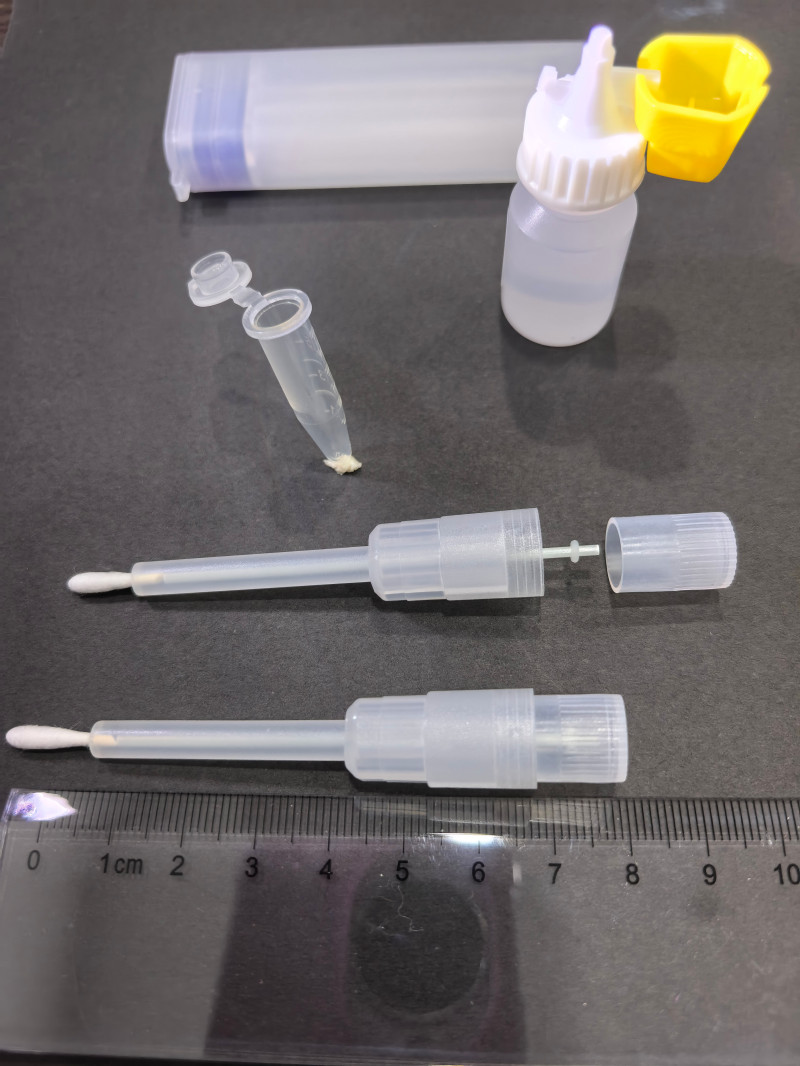
The initial step in any forensic DNA analysis is the collection of biological material, a process where the choice of tool is paramount. Forensic DNA swabs are the primary interface between potential evidence and the sophisticated laboratory workflow. Their design directly influences whether a viable genetic profile can be obtained. A suboptimal swab can retain precious cellular material or introduce contaminants, compromising the entire chain of custody. Therefore, understanding the science behind swab technology is not a minor detail but a foundational aspect of modern forensic science practice, ensuring that critical evidence is captured effectively from the moment it is discovered.
Why Swab Choice Directly Impacts DNA Yield and Purity
The efficiency of a forensic swab is measured by two key parameters: collection yield and elution efficiency. Collection yield refers to the swab's ability to pick up and retain cells from a surface during sampling. However, a high yield is meaningless if the cells remain trapped within the swab's fibers during the subsequent DNA extraction process. Elution efficiency is the swab's ability to release those collected cells into a solution for processing. Materials and construction that hinder this release directly reduce the final DNA concentration available for analysis. Furthermore, some swab materials may contain their own detectable DNA or PCR inhibitors, which can contaminate a sample or interfere with the amplification process, leading to false negatives or complex mixtures that are difficult to interpret.
From Crime Scene to Lab: Ensuring Sample Integrity with Proper Swabs
The journey of a DNA sample from a crime scene to the laboratory analyzer is fraught with potential hazards. Proper swabs are engineered to mitigate these risks at every stage. They are packaged in sterile, individual wrappers to prevent cross-contamination between samples or from the environment. Features like break-point handles allow the swab head to be cleanly deposited into a collection tube without the analyst needing to touch it, maintaining aseptic conditions. The swab material itself must be chemically inert to common preservation buffers and stable during storage and transport, preventing degradation of the biological material before it even reaches the DNA extraction workstation. This integrated design philosophy is crucial for preserving sample integrity from collection to analysis.
Our Forensic Swab Portfolio: Engineered for Excellence
Recognizing that no single crime scene or sample type is identical, a comprehensive forensic DNA laboratory requires a toolkit of specialized swabs. Our portfolio is developed to address the full spectrum of collection challenges, from minute touch DNA on a window frame to a biological stain on fabric. Each swab type is the result of targeted engineering, balancing material science with practical forensic application to provide investigators with the right tool for the task, thereby maximizing the potential for successful DNA profiling.
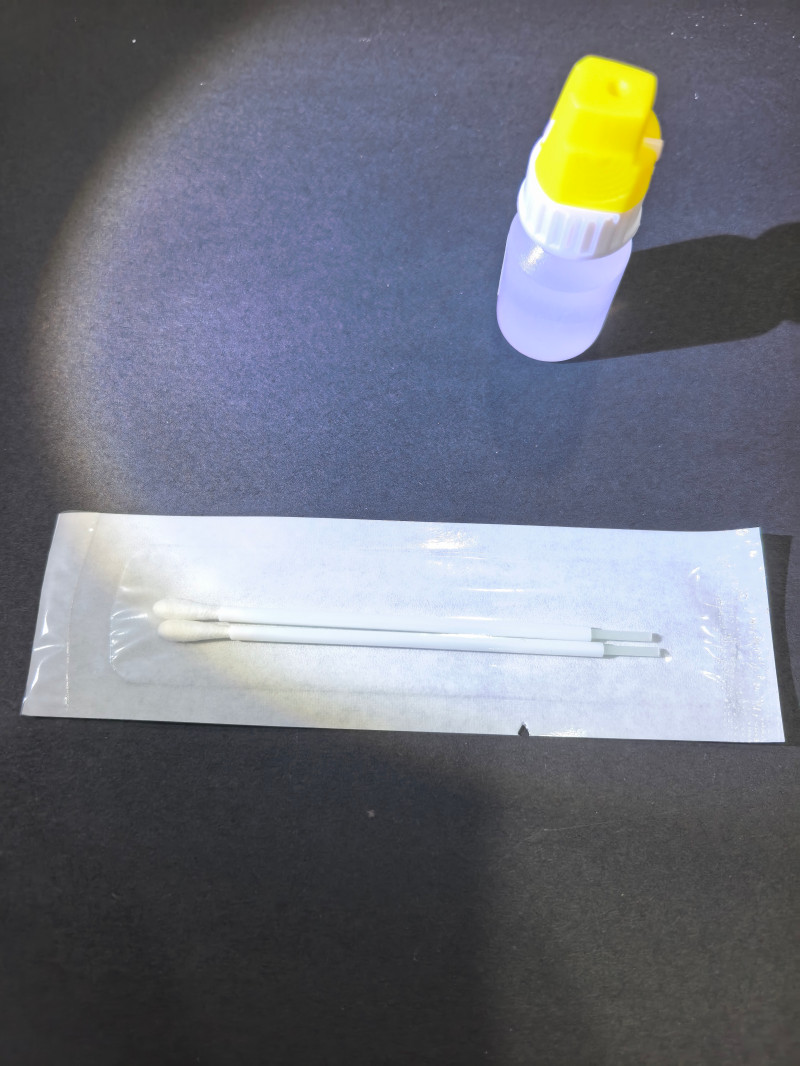
We offer several different types of swabs: push-rod self-breaking and non-self-breaking, and are divided into laboratory and field survey applications, optimized for different scenarios.
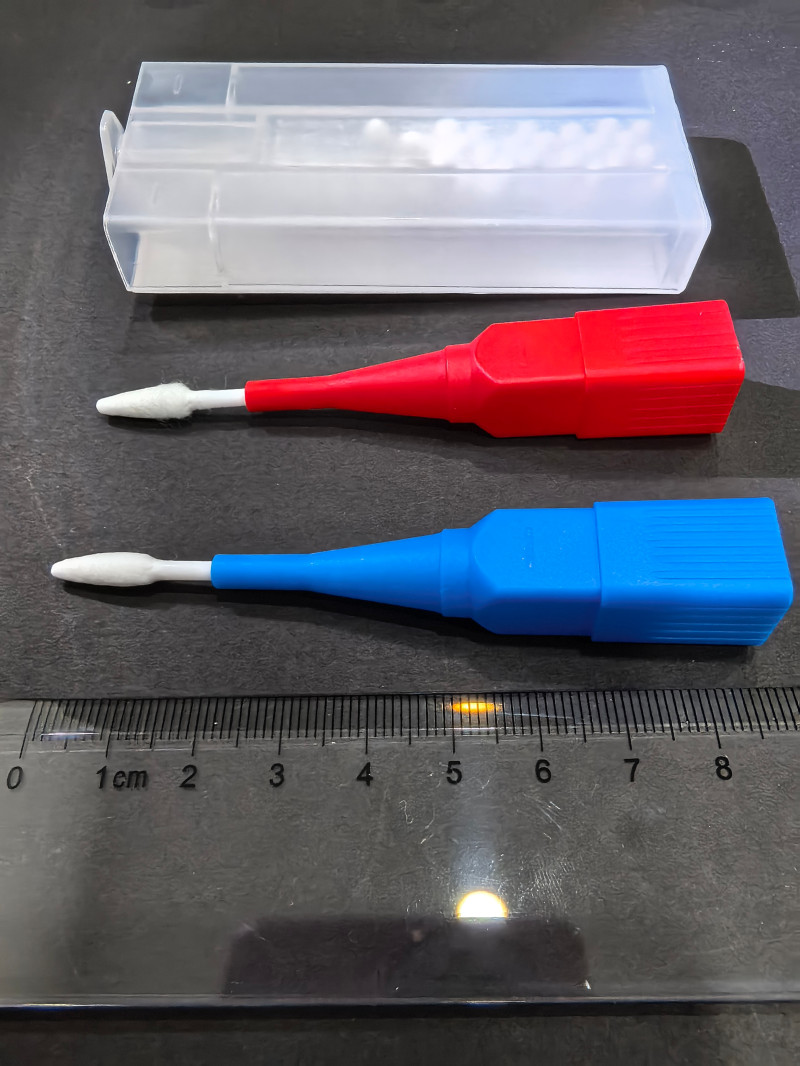
Key Features & Specifications for Forensic Applications
Beyond the core material, several engineered features define a swab's suitability for forensic DNA work. These specifications are not mere conveniences but essential controls that uphold the scientific rigor and legal defensibility of the evidence collection process. From packaging to handle design, each element is considered to support a seamless integration into standardized forensic protocols and to uphold the highest standards of forensic evidence integrity.
Sterile Packaging and Individually Wrapped for Contamination Control
Every forensic-grade swab is packaged as a single-use, sterile item. Individual wrapping in medical-grade paper or plastic peel pouches guarantees that the swab is free from biological contaminants, including human DNA, at the point of use. This is a non-negotiable feature for preventing sample-to-sample contamination and for defending the purity of evidence in court. The packaging is also designed for easy, one-handed opening in the field, allowing an investigator to access the swab without compromising its sterility or touching the working part of the tool.
Break-Point Handles for Safe, Aseptic Transfer to Tubes
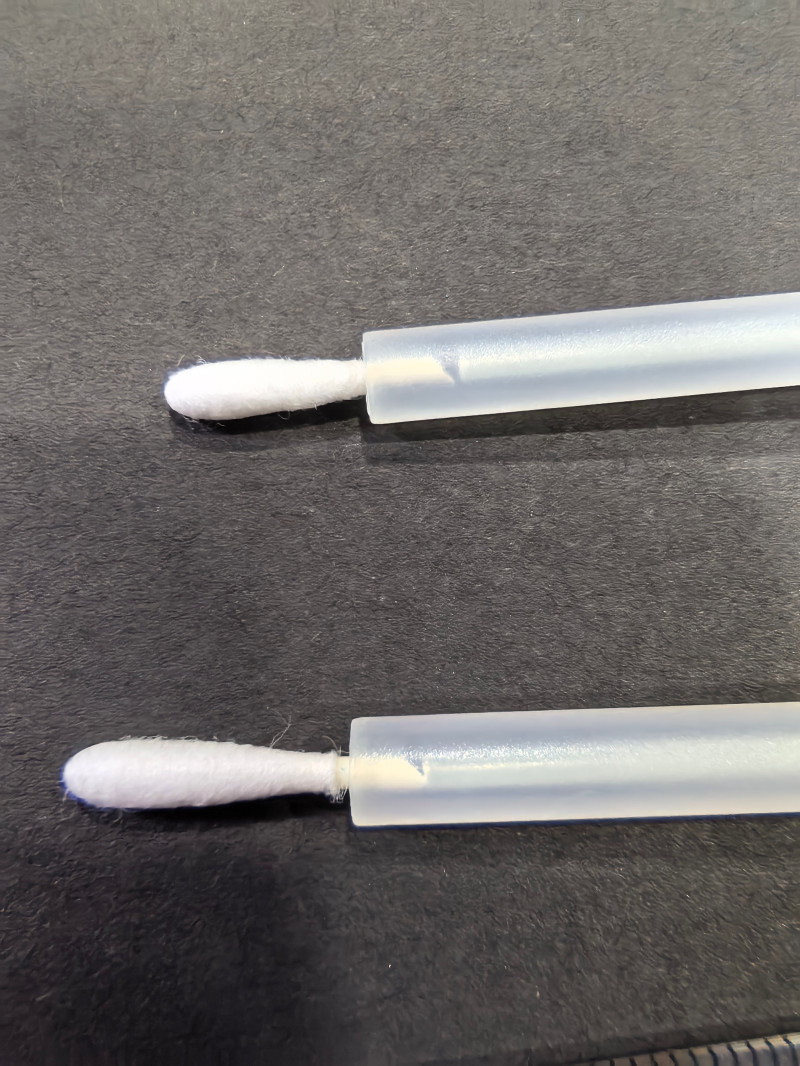
The break-point, or score line, on the swab handle is a critical safety and contamination control feature. After sample collection, the swab tip must be placed into a sterile evidence collection tube, often containing a stabilizing buffer. The break-point allows the user to snap the handle, letting the swab head fall into the tube without the need to touch it or use scissors, which could introduce contaminants. This closed-system transfer minimizes the risk of evidence loss, environmental contamination, and exposure of the analyst to potentially hazardous material, streamlining the process from collection to secure storage.
Swab Head Design and Material: Balancing Absorption and Release
The physical architecture of the swab head is a precise science. For fiber swabs, parameters like fiber length, density, and the method of attachment to the handle (twisted, glued, or flocked) are carefully controlled. For foam swabs, pore size and density are key. This engineering directly influences the swab's void volume—its capacity to hold a moistening agent—and its shear strength, which affects its durability during vigorous sampling. The ultimate goal is to achieve an optimal balance: a head that absorbs and retains the sample during collection but releases it completely and rapidly during the vital DNA extraction and elution stages in the laboratory.
Compatibility with Common Lysis Buffers and Extraction Kits
A forensic swab does not operate in isolation; it is the first component in a chain of chemical and mechanical processes. Therefore, compatibility with standard forensic laboratory reagents is essential. The swab material must not interact adversely with common lysis buffers, which are designed to break open cells and release DNA. Furthermore, it must not shed fibers or particulates that could clog automated extraction instruments or inhibit the polymerase chain reaction (PCR). Our swabs are tested and validated for use with a wide range of commercial DNA extraction kits and automated platforms, ensuring reliable performance within established laboratory workflows.
Optimizing Your DNA Swabbing Protocol
Using a high-quality forensic swab is only part of the equation; proper technique is equally vital. A standardized and optimized swabbing protocol maximizes DNA recovery and ensures consistency across different scenes and analysts. This involves considerations before, during, and after the physical act of swabbing, turning a simple tool into a powerful component of a scientific evidence-gathering system.
Best Practices for Swabbing Different Surface Types (Porous vs. Non-Porous)
The nature of the substrate dictates the swabbing technique. For non-porous surfaces like glass, metal, or painted wood, a slightly moistened swab is typically used in a rotating motion, covering the area systematically. Applying moderate pressure helps dislodge cells. For porous surfaces like cloth, paper, or untreated wood, a more saturated swab may be necessary, and a combination of swabbing and scraping may be employed, sometimes with a second, dry swab to absorb the residual moisture and collected material. The key is to use a technique that harvests cells without pushing them deeper into the material or destroying the substrate itself.
The Importance of Moistening Agents: Saline vs. Sterile Water
Moistening a swab prior to collection can significantly increase cell recovery, especially from dry surfaces. The choice of moistening agent is important. Sterile, distilled water is inert and readily available, but it can cause cells to lyse (burst) upon contact if left for too long before stabilization. A sterile saline solution (e.g., 0.9% sodium chloride) is isotonic, meaning it matches the salt concentration inside cells, helping to keep them intact during the collection and short-term transport phase. The protocol should specify the preferred agent and the proper method for moistening—typically just damp, not soaking wet—to avoid diluting the sample excessively.
Proper Storage and Transport of Swab Samples Post-Collection
Immediately after collection, the swab must be stabilized to prevent DNA degradation. This usually involves placing it in a dedicated evidence collection tube. Many such tubes contain a desiccant or a stabilizing buffer that preserves DNA at room temperature for extended periods. The tube must be clearly labeled and sealed. For transport, swabs should be kept in a way that prevents crushing or excessive heat exposure. Adherence to a defined chain of custody documentation from this point forward is legally mandatory, tracking every individual who handles the evidence until it is processed in the DNA laboratory.
Forensic DNA Swabs FAQs: Your Questions Answered
Common questions arise when selecting and implementing forensic swabs in a laboratory or field setting. Addressing these queries helps clarify the practical application of this essential technology and ensures that users can make informed decisions to support their forensic DNA analysis objectives.
What is the difference between flocked and traditional fiber swabs for DNA?
The fundamental difference lies in fiber orientation and its impact on elution. Traditional fiber swabs, like cotton, have their fibers twisted together around the handle. This can create a dense core where cells become trapped. Flocked swabs have millions of short fibers attached perpendicularly to the handle, creating a uniform brush. This open structure captures cells primarily on the surface of the fibers, allowing for much more efficient and complete release during the DNA extraction process, leading to higher final DNA yields, particularly from low-level samples.
How do I choose the right swab for touch DNA evidence?
Touch DNA evidence, consisting of just a few skin cells, demands a swab with maximum collection and elution efficiency. For most touch DNA scenarios on non-porous surfaces, a nylon flocked swab is the recommended choice. Its design maximizes cell capture from dry surfaces and then releases over 90% of those cells during elution. The swab should be slightly moistened with a sterile saline solution to help mobilize the cells from the surface. The protocol should emphasize a controlled, rotating swabbing motion with consistent pressure to harvest the minimal cellular material present.
Are your swabs validated for use with our DNA extraction systems?
Yes, our forensic DNA swabs undergo rigorous validation studies. We test them for compatibility and performance with major commercial DNA extraction systems and automated platforms commonly used in forensic laboratories. These studies assess DNA yield, purity, the absence of PCR inhibition, and physical compatibility with instrument racks and tubes. We provide detailed validation data and protocols upon request to support your laboratory's quality assurance and accreditation requirements, ensuring a seamless fit into your existing workflow.
Complete Your Forensic DNA Collection Kit
A forensic swab is most effective when used as part of a coordinated evidence collection system. Pairing the correct swab with purpose-designed storage and transport solutions creates a robust kit that protects the integrity of the sample from the crime scene to the laboratory bench, simplifying logistics and bolstering the chain of custody.
Pair with Our Evidence Collection Tubes and Transport Cases
Our swabs are designed to integrate perfectly with our range of evidence collection tubes. These tubes may contain stabilizing buffer for room-temperature storage or be supplied dry for use with your laboratory's preferred lysis buffer. They feature leak-proof seals, clear labeling areas, and are sized for compatibility with standard tube racks and automated instruments. For secure transport, we offer durable, organized cases that hold multiple tubes securely, protecting them from physical damage and environmental factors during transit from the field to the forensic DNA laboratory.
Browse Our Full Range of Crime Scene Investigation Supplies
Building a complete and reliable forensic toolkit extends beyond swabs. We supply a comprehensive array of crime scene investigation (CSI) supplies to support every phase of evidence gathering. This includes personal protective equipment (PPE) to ensure analyst safety, various evidence collection containers, specialized powders and brushes for latent fingerprint development, high-intensity forensic light sources for locating biological stains, and precision tools for evidence handling. Sourcing these coordinated, high-quality materials from a single provider streamains your procurement process and ensures consistency across your forensic operations.
Get a Quote
Contact our sales staff, tell us your needs, and we will provide you with the most suitable solution.
Contact Now