What Are FOB (Fecal Occult Blood) Test Strips?
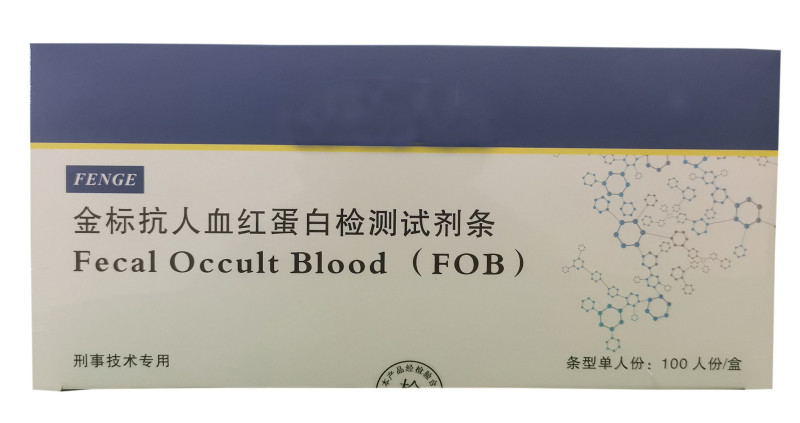
Fecal Occult Blood (FOB) test strips are rapid, immunochromatographic assays designed to detect the presence of human blood. Originally developed for clinical diagnostics, their application in forensic science provides a swift and presumptive test for blood on evidentiary items. These strips function by utilizing antibodies that are highly specific to human hemoglobin, the oxygen-carrying protein in red blood cells. When a sample extract is applied, a visible line appears on the test strip if the target antigen is present, offering a clear, binary result. This technology provides a crucial first step in the forensic analysis of biological stains.
The fundamental principle behind these immunochromatographic tests is a lateral flow assay. A liquid sample migrates along a membrane, and if human hemoglobin is present, it binds to conjugated antibodies, forming a complex that is captured at the test line. The simplicity of this mechanism allows for minimal training to administer, making it an accessible tool for both laboratory technicians and crime scene investigators. The design of forensic-grade strips prioritizes robustness to handle the complex and often degraded nature of samples encountered in casework, unlike their clinical counterparts which are optimized for fresh fecal matter.
The Role of FOB Testing in Forensic Investigations
In forensic investigations, the primary role of an FOB test strip is to conduct a presumptive test for blood. Before committing valuable time and resources to complex DNA extraction and STR analysis, a forensic biologist must first confirm that a visible or suspected stain is indeed blood. This screening step is vital for workflow efficiency. A positive result from a highly specific human hemoglobin test strongly indicates the presence of human blood, guiding analysts to proceed with confirmatory tests and subsequent DNA profiling from that particular sample.
This initial screening directly impacts the direction of an investigation. By quickly identifying items of evidence that bear biological material relevant to the case, investigators can prioritize their efforts. Furthermore, a negative result can be equally informative, potentially ruling out blood and prompting the use of alternative presumptive tests for other bodily fluids like semen or saliva. Thus, the integration of FOB strips into the forensic serology workflow creates a more targeted and efficient pathway for DNA recovery, ensuring that downstream processes like PCR amplification are focused on the most probative evidence.
Key Components and Technology of Forensic-Grade Strips
Forensic-grade FOB test strips incorporate several key components engineered for evidentiary analysis. The core is the nitrocellulose membrane, which contains the immobilized capture antibodies at the test line and control antibodies at the control line. The conjugate pad holds dried, colored particles (often colloidal gold or latex) linked to detection antibodies specific to human hemoglobin. The sample pad acts as the entry point for the liquid extract, while the absorbent pad at the end wicks the fluid through the system, ensuring complete lateral flow.
The critical technological differentiator for forensic use is the specificity of the antibodies employed. High-quality strips utilize monoclonal antibodies that react exclusively with human hemoglobin, minimizing cross-reactivity with animal blood which is a common contaminant at crime scenes. Additionally, the formulation is optimized to detect hemoglobin that may be denatured or degraded due to environmental exposure. Manufacturers also rigorously test for interference from common forensic substrates such as denim, leather, or soil, and from substances like rust or plant peroxidases that can cause false positives in less specific chemical tests like phenolphthalein.
Applications in Forensic DNA Laboratory Workflows
The integration of FOB test strips into forensic DNA laboratory workflows standardizes and accelerates the initial screening phase. Upon receipt of evidence, a forensic examiner can perform a non-destructive or minimally destructive test to locate stains not visible to the naked eye, a process known as targeted sampling. A small cutting or a moistened swab from a garment can be eluted into a buffer and applied to the strip. This application allows for the logical triage of items, directing the more labor-intensive DNA extraction protocols only towards samples that have screened positive for human blood.
This systematic approach conserves precious forensic reagents and instrument time. In a high-throughput laboratory dealing with numerous items from a single case, efficient screening is paramount. By employing FOB strips early in the process, laboratories can build a more robust chain of analysis, documenting the decision-making process from presumptive testing through to DNA profile generation. This documented workflow not only improves operational efficiency but also strengthens the laboratory's position when presenting findings in court, as it clearly demonstrates a reasoned and methodical approach to evidence examination.
Screening Biological Evidence for Blood Presence
Screening biological evidence with FOB strips is a fundamental step in forensic biology. The procedure involves extracting a small portion of a suspected stain using a specialized buffer that lyses red blood cells and releases hemoglobin. This extract is then applied to the sample window of the test strip. Within minutes, the results can be read: the appearance of both a control line and a test line indicates a positive result for human blood. If only the control line appears, the result is negative, suggesting the absence of detectable human hemoglobin.
The sensitivity of modern strips is remarkably high, capable of detecting blood dilutions that are invisible. This is particularly useful for screening large items like clothing or bedding, where visual inspection may miss minute spatter or transfer stains. It is important to note that this is a presumptive test; a positive result is a strong indicator but is typically followed by a confirmatory test, such as a species-specific test or directly proceeding to DNA analysis, which serves as the ultimate confirmation. This layered testing strategy ensures the integrity and reliability of the analytical conclusions.
Complementary Tool for DNA Extraction and STR Analysis
FOB test strips serve as a powerful complementary tool to the DNA extraction and STR analysis pipeline. A positive FOB test provides a green light for DNA analysts, indicating a high probability of successful DNA recovery from that sample. Since the test detects hemoglobin, which is co-located with nucleated white blood cells (the source of DNA) in a bloodstain, it effectively flags samples rich in genetic material. This allows technicians to optimize their extraction methods, perhaps choosing a protocol specifically validated for blood stains over a more general one.
Furthermore, by screening out items that test negative, laboratories can avoid wasting extraction kits and PCR reagents on samples unlikely to yield a DNA profile. This is both economically prudent and scientifically sound, as it reduces the number of negative controls and potential contamination vectors in the workflow. The streamlined process ensures that the capillary electrophoresis instruments used for STR analysis are running samples with a higher likelihood of producing interpretable profiles, thereby increasing the overall efficiency and success rate of the forensic DNA laboratory.
Use in Crime Scene Investigation (CSI) Kits and Field Testing
The portability and rapid results of FOB test strips make them an invaluable component of Crime Scene Investigation (CSI) kits. Crime scene technicians can use them for preliminary field testing to get real-time information about suspected bloodstains. This on-scene intelligence can immediately guide the investigation, helping to reconstruct events, identify areas of interest for more detailed processing, and prioritize which items to collect as evidence. Performing a presumptive test at the scene also provides a documented rationale for evidence collection, which can be crucial during trial testimony.
For field testing, the strips' stability across a range of temperatures and their simple protocol are essential. Investigators can test swabs from surfaces, small cuttings, or washes from suspected stains without the need for complex laboratory equipment. While field results are always considered presumptive and must be verified in the controlled laboratory environment, they offer a powerful triage tool. This capability ensures that the most relevant physical evidence is secured and transported to the forensic laboratory for confirmatory testing and DNA analysis, optimizing the use of investigative resources from the very beginning.
Selecting High-Quality FOB Test Strips for Your Lab
Selecting the appropriate FOB test strips is a critical decision for any forensic DNA laboratory, as the reliability of the screening step underpins the entire analytical workflow. Laboratories must evaluate products based on a matrix of performance characteristics beyond basic cost. The choice impacts not only the accuracy of initial findings but also the efficiency of downstream processes and the defensibility of the final report in a legal context. Therefore, procurement should be guided by technical specifications and validation data provided by the manufacturer, rather than price alone.
A key consideration is the intended application within the laboratory's specific evidence types. Labs processing a high volume of sexual assault evidence, for instance, must ensure the strips demonstrate no cross-reactivity with semen or other bodily fluids that may be co-located with blood. Similarly, laboratories examining evidence from outdoor crimes need strips validated against common environmental interferents. Establishing a partnership with a supplier who understands these forensic nuances and offers comprehensive technical support is as important as the product itself.
Sensitivity and Specificity: Critical Metrics for Forensic Use
For forensic applications, the sensitivity and specificity of an FOB test strip are non-negotiable metrics. Sensitivity refers to the lowest concentration of human hemoglobin the strip can reliably detect. High sensitivity is crucial for identifying old, diluted, or minute bloodstains. Specificity refers to the test's ability to react only with human hemoglobin and not with similar substances. Exceptional specificity prevents false positives from animal blood, certain chemical oxidants, or vegetable peroxidases, which is a known limitation of older chemical presumptive tests.
Manufacturers determine these metrics through rigorous validation studies. A reputable provider will supply detailed documentation on the limit of detection (sensitivity) and data from cross-reactivity panels (specificity). Forensic laboratories should conduct their own internal validation to confirm these performance claims with their standard operating procedures and typical sample types. This dual-layer of validation—vendor data and in-house verification—forms the bedrock of a quality management system, ensuring that the screening tool performs as expected in the unique environment of your forensic DNA laboratory.
Compatibility with Common Forensic Substrates and Contaminants
Forensic evidence is rarely pristine. Bloodstains are found on a vast array of materials, from cotton fabric and denim to wood, metal, and soil. Each substrate can introduce compounds that may inhibit the lateral flow assay or cause false reactions. High-quality forensic FOB strips are extensively tested for compatibility with these common substrates. The extraction buffer formulation is often optimized to minimize interference, allowing the hemoglobin to be efficiently released and detected despite the challenging matrix.
Furthermore, evidence is frequently contaminated with substances like rust, bleach, or household cleaners. A robust test strip will demonstrate resilience against such contaminants, maintaining its specificity. Laboratories should review the manufacturer's data on substrate and contaminant testing. It may also be prudent to perform supplemental validation on novel or particularly problematic substrates encountered in your jurisdiction's typical casework. This proactive approach ensures that the presumptive test remains a reliable gatekeeper for DNA analysis, regardless of the evidence's condition or origin.
Stability, Shelf Life, and Storage Requirements
The stability and shelf life of FOB test strips are practical concerns with direct operational and budgetary implications. Forensic laboratories must manage inventory to ensure reagents are always available for casework but are not used past their expiration date. High-quality strips typically have a shelf life of 12 to 24 months when stored according to manufacturer specifications, usually at room temperature or refrigerated conditions. Consistent storage is vital; fluctuations in temperature or exposure to humidity can degrade the antibody conjugates on the strip, leading to reduced sensitivity or invalid results.
When evaluating products, laboratories should consider the packaging. Individual foil pouches with desiccant are standard for high-quality strips, as they protect each test from moisture and contamination until the moment of use. Bulk packaging may offer cost savings but risks compromising the integrity of the entire batch if not used quickly. A reliable supplier will provide clear, data-backed storage guidelines and consistent batch-to-batch performance, allowing laboratories to plan their procurement and inventory management with confidence, ensuring that every test performed is under optimal conditions.
Integrating FOB Strips into Your Forensic Lab Protocols
Successfully integrating FOB test strips into a forensic laboratory's standard operating procedures (SOPs) requires careful planning and documentation. The goal is to create a seamless, validated workflow that begins with evidence screening and logically progresses to DNA analysis. The integration starts with the development of a detailed written protocol that covers every aspect, from the preparation of extraction buffers and the sampling technique to the interpretation of results and subsequent action steps. This protocol must be incorporated into the laboratory's quality assurance manual and followed by all analysts.
Training is a critical component of integration. All personnel who will use the strips must undergo competency testing to ensure they can perform the test correctly and interpret the results accurately, including recognizing invalid tests (e.g., no control line). Furthermore, the integration must include a clear policy on how positive and negative results dictate the next steps in the evidence processing chain. This policy should be visually represented in the laboratory's workflow diagrams, creating a clear, auditable path from presumptive testing to final report generation, thereby enhancing the overall robustness and transparency of the forensic DNA analysis process.
Step-by-Step Guide for Evidence Screening with FOB Tests
A standardized step-by-step protocol ensures consistency and reliability in evidence screening. First, the analyst dons appropriate personal protective equipment and works in a designated screening area to prevent contamination. A small, representative portion of the suspected stain is collected, often via a moistened swab or a small cutting. This sample is then immersed in the provided extraction buffer and agitated to release the hemoglobin. Using the provided transfer pipette, a few drops of the extract are applied to the sample window of the FOB test strip.
The strip is then placed on a flat, non-absorbent surface and the timer is started. Results should be read within the time window specified by the manufacturer, typically between 5 to 10 minutes. Reading the results after the maximum time can lead to false positive interpretations due to evaporation effects. The analyst documents the results immediately, noting the appearance of both the control line (which must always appear for a valid test) and the test line. This documentation, including the unique test strip lot number, becomes a permanent part of the case file, providing a clear record of the analytical steps taken.
Interpreting Results and Determining Subsequent DNA Analysis Steps
Interpreting FOB strip results is straightforward but must be done with precision and within the correct timeframe. A valid test requires a visible control line (C), indicating the test functioned properly. A positive result is indicated by both a control line (C) and a test line (T). A negative result shows only the control line (C). Any other outcome, such as no lines or only a test line, is considered invalid, and the test should be repeated with a new strip. It is crucial that analysts are trained to recognize these patterns to avoid misinterpretation.
The interpretation directly dictates the next steps in the forensic DNA workflow. A positive result authorizes the analyst to proceed with sampling that specific area for DNA extraction. The original positive test location should be clearly marked or documented photographically. A negative result suggests that human blood is not detectable in that sample. However, if the stain is visually compelling or case context suggests biological material should be present, the analyst may choose to sample the area for direct DNA extraction or employ a different presumptive test for other bodily fluids. This decision-making process, rooted in the FOB result, ensures a logical and efficient use of forensic resources.
Quality Control and Assurance for Reliable Screening Outcomes
Maintaining rigorous quality control (QC) and quality assurance (QA) is essential for reliable screening outcomes with FOB tests. QC measures are the daily checks that ensure the test is working. This includes running positive and negative controls with each batch of evidence samples. A positive control, using a known human blood sample, verifies the test's sensitivity. A negative control, using only extraction buffer, confirms the reagents are not contaminated. The consistent success of these controls is a fundamental requirement for trusting the evidentiary test results.
QA encompasses the broader system that guarantees quality. This includes initial and annual competency testing for analysts, regular audits of case files to ensure protocol adherence, and participation in proficiency testing programs where external agencies send mock evidence for analysis. Furthermore, the laboratory must have a procedure for validating new lots of test strips upon receipt and for investigating any anomalous results. By embedding FOB strip testing within this comprehensive QA framework, the forensic DNA laboratory demonstrates its commitment to scientific rigor, producing screening data that is both reliable and defensible in a court of law.
Forensic DNA Labs: Your Partner for Reliable Forensic Reagents
At Forensic DNA Labs, we understand that the foundation of any successful forensic analysis is the quality and reliability of the reagents used at every stage. Our commitment extends beyond simply supplying products; we aim to be a true partner in your laboratory's mission for justice. We meticulously source and provide forensic-grade FOB test strips that meet the exacting standards of modern forensic biology, ensuring your screening process is built on a platform of trust and scientific validity. Our products are selected for their proven performance in sensitivity, specificity, and compatibility with real-world evidentiary challenges.
We recognize that a forensic laboratory's needs are complex and interconnected. The efficiency gained from a reliable presumptive test like an FOB strip ripples through the entire DNA workflow, affecting downstream consumption of extraction kits, amplification reagents, and instrument time. By providing high-quality screening tools, we help you optimize this entire chain, conserving resources and increasing the probability of obtaining a usable DNA profile from critical evidence. Our role is to support your operational excellence with products you can depend on, case after case.
Our Range of Forensic Laboratory Supplies and Consumables
Forensic DNA Labs offers a comprehensive portfolio of supplies and consumables tailored to the forensic DNA laboratory. Beyond FOB test strips, our catalog includes a full spectrum of products for the biology and serology workflow. This encompasses other presumptive test kits for semen, saliva, and other bodily fluids, a variety of DNA extraction kits optimized for different sample types (from single-source bloodstains to complex mixture samples), PCR amplification master mixes, and all necessary consumables such as sterile swabs, microcentrifuge tubes, and pipette tips.
Our selection is curated to ensure compatibility and streamline your procurement process. We work closely with leading manufacturers to bring you products that are validated for forensic use. Whether you are setting up a new laboratory, expanding your capabilities, or simply restocking routine supplies, we provide a single, reliable source for your needs. This consolidated approach saves your laboratory valuable administrative time, allowing your scientists and technicians to focus on what they do best: conducting rigorous forensic analysis.
Expert Support for Forensic Biology and Serology Workflows
Our partnership includes access to expert technical support from professionals with deep experience in forensic biology and serology workflows. We understand that implementing a new screening protocol or troubleshooting an unexpected result requires more than just a product manual. Our support team is available to consult on protocol integration, assist with initial validation studies, and provide guidance on interpreting complex results. We can advise on best practices for incorporating FOB strips into your specific laboratory environment and casework mix.
This support is an integral part of our service. We offer training resources, application notes, and white papers that delve into the technical aspects of our products and their forensic applications. If your laboratory encounters a unique substrate or a challenging contaminant, our experts can work with you to design testing protocols to address the issue. By choosing Forensic DNA Labs, you gain not just a supplier, but a collaborative resource dedicated to the success and continuous improvement of your forensic DNA analysis program.
Streamlined Procurement for All Your DNA Lab Equipment Needs
We are dedicated to simplifying the procurement process for forensic DNA laboratories. Our streamlined system is designed to get the products you need into your hands quickly and efficiently. From easy online ordering and real-time inventory tracking to consolidated shipping and flexible purchasing agreements, we remove the administrative burden from your team. We understand the critical nature of your work and the importance of maintaining an unbroken supply chain for essential reagents and consumables.
Our services extend to major DNA lab equipment as well. We can assist with the procurement of thermal cyclers, genetic analyzers for capillary electrophoresis, automated extraction workstations, and other core instrumentation. We help navigate the specifications, financing options, and installation logistics, providing a single point of contact for your laboratory's growth and technological advancement. At Forensic DNA Labs, our goal is to be your comprehensive partner, supporting every facet of your operation—from the initial presumptive test strip to the final DNA profile—with reliability, expertise, and unwavering commitment to the forensic science community.
Get a Quote
Contact our sales staff, tell us your needs, and we will provide you with the most suitable solution.
Contact Now