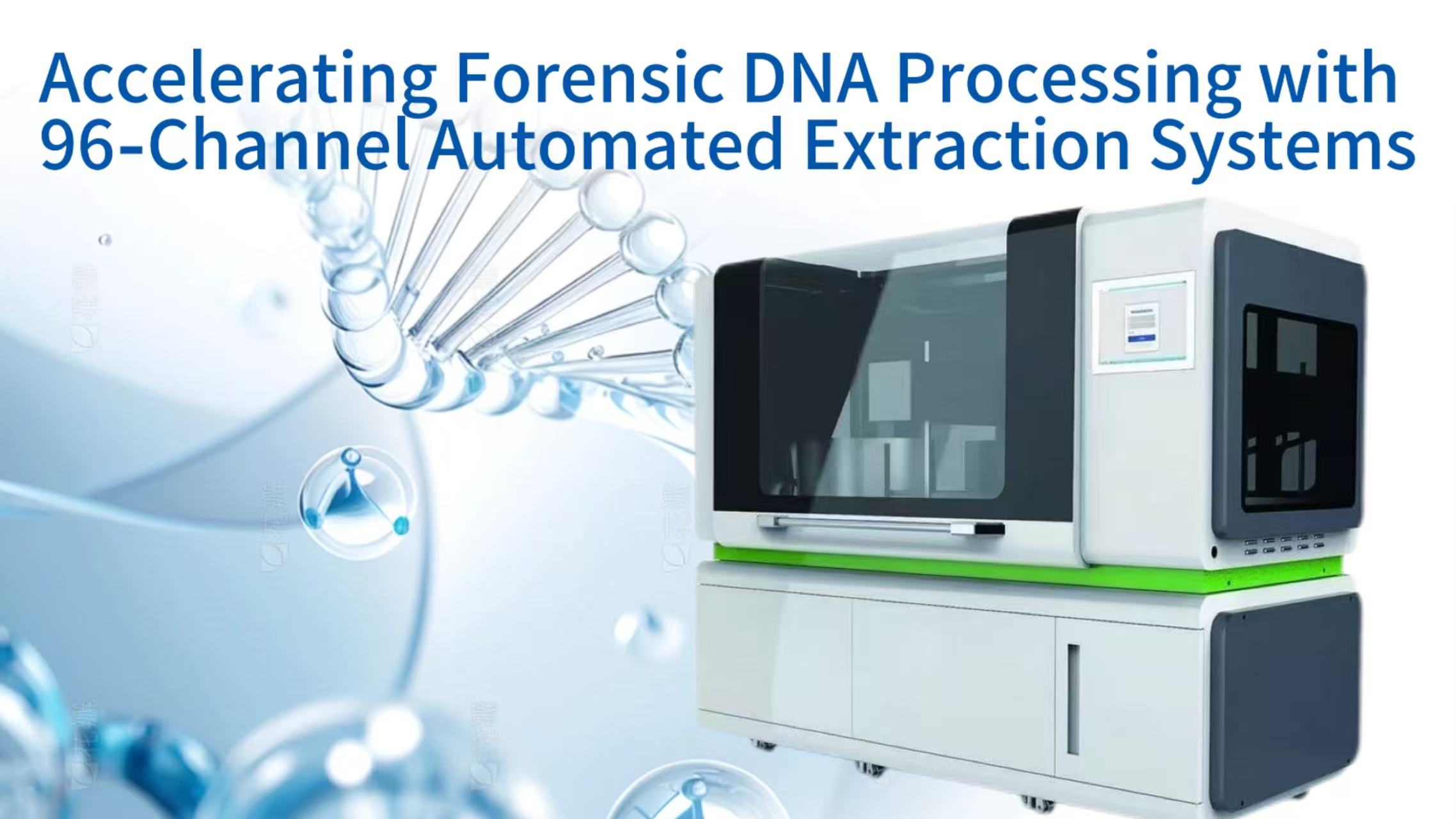
96-Channel Automated DNA Extraction Workflow
Sample Loading
96-well plate setup
Lysis
56-70°C incubation
Magnetic Binding
DNA capture on beads
Washing
2-3 cycles
Elution
70-95°C recovery
PCR-Ready DNA
A260/280: 1.7-2.0
Modern forensic DNA laboratories operate under constant pressure to deliver timely, accurate results from an ever‑increasing volume of evidence. From routine property crimes to major casework and national database backlogs, the demand for high‑throughput, reliable DNA analysis has never been greater. At the core of this workflow lies DNA extraction – a critical step that directly influences the quality of downstream profiling. Traditional manual methods, while once sufficient, now struggle to keep pace with caseloads and the rigorous standards of contamination control and reproducibility required for forensic admissibility. The transition to fully automated, high‑capacity extraction platforms represents a strategic evolution, enabling laboratories to process up to 96 samples simultaneously with robotic precision. This article explores how 96‑channel automated extraction systems address the fundamental challenges of modern forensic science, detailing their core technologies, diverse applications, and the tangible value they bring to accredited laboratories seeking to enhance efficiency, data integrity, and overall investigative impact.
The Evolution of Forensic DNA Extraction: Addressing the Throughput Challenge
The Rising Demand for High‑Throughput Forensic Analysis
Forensic laboratories worldwide are witnessing a surge in DNA evidence submissions, driven by expanding DNA databases, increased awareness of DNA’s investigative power, and legislative mandates for testing in offences such as burglary and sexual assault. National DNA databases, for instance, require the processing of hundreds of thousands of reference samples annually, while cold case initiatives and disaster victim identification (DVI) efforts generate sudden peaks in workload. This sustained demand necessitates a laboratory infrastructure capable of scaling throughput without compromising quality. High‑throughput extraction systems have therefore moved from being a luxury to a core operational necessity, enabling labs to process large batches efficiently while maintaining the rigorous standards expected by the criminal justice system.
Limitations of Manual and Semi‑Automated Methods
Manual DNA extraction, even when performed by skilled analysts, is inherently limited by human factors. Pipetting variability, fatigue, and the need for repetitive movements introduce inconsistencies that can affect DNA yield and purity. Semi‑automated methods that combine manual steps with basic liquid handling equipment often fail to eliminate the primary bottlenecks – they still require significant hands‑on time for sample transfer, reagent addition, and plate handling. These approaches also struggle to scale economically; doubling the sample count often requires proportionally more personnel and laboratory space. In contrast, a 96‑channel automated system consolidates the entire extraction process into a single, walk‑away run, fundamentally decoupling throughput from manual labour.
Contamination Risks and Workflow Inefficiencies
Perhaps the most insidious challenge in forensic DNA analysis is contamination. Manual processing exposes samples to the laboratory environment and the analyst, creating opportunities for cross‑contamination or introduction of exogenous DNA. Even with strict adherence to clean techniques, the risk persists, potentially leading to misinterpretation of evidence or costly re‑analysis. Workflow inefficiencies compound these risks: multiple transfer steps, open tubes, and shared equipment increase the probability of sample mix‑ups or environmental exposure. Automated 96‑channel systems are engineered to mitigate these risks through closed architectures, disposable tip usage, and integrated decontamination routines, thereby safeguarding the evidentiary chain of custody.
The Strategic Shift to Fully Automated 96‑Channel Platforms
Adopting a 96‑channel automated extraction platform represents a paradigm shift in laboratory operations. It transforms extraction from a rate‑limiting step into a streamlined, predictable process. Laboratories that have implemented such systems report not only increased throughput but also enhanced reproducibility and reduced turnaround times. This shift enables forensic scientists to redirect their expertise from repetitive pipetting to data interpretation, mixture deconvolution, and complex casework, thereby maximising the value of their professional skills. The strategic investment in automation aligns with the broader goals of forensic laboratories: to deliver justice faster, more reliably, and with greater transparency.
Core Technologies Powering the 96‑Channel Automated Extraction System
Core Technical Specifications
Magnetic Bead Extraction
>80%
DNA Recovery Rate
From 50pg input DNA
Liquid Handling Precision
<2%
Accuracy (10µL volume)
Sub-microliter resolution
Temperature Control
56-95°C
Operating Range
±0.5°C precision
Processing Speed
60 mins
Full plate (buccal swabs)
Direct-lysis protocol
Magnetic Bead‑Based DNA Purification Chemistry
At the heart of modern automated extraction lies magnetic bead technology. These paramagnetic particles, coated with silica or carboxyl groups, reversibly bind DNA in the presence of chaotropic salts and high concentrations of polyethylene glycol. During the lysis step, cellular membranes are disrupted by a combination of detergents and proteinase K, releasing DNA into solution. The magnetic beads are then mixed with the lysate, allowing DNA to adsorb onto their surface. A powerful magnet, integrated into the instrument’s deck, pulls the beads to the side or bottom of the well, enabling efficient washing to remove proteins, polysaccharides, and other inhibitors. Finally, DNA is eluted in a low‑salt buffer (typically Tris‑EDTA at pH 8.0‑8.5), yielding high‑molecular‑weight, PCR‑ready nucleic acid. This chemistry consistently achieves recovery rates exceeding 80% from samples with as little as 50 pg of input DNA, a critical requirement for trace evidence analysis.
Precision Robotic Liquid Handling and Deck Configuration
The physical architecture of a 96‑channel system is designed for accuracy and reliability. An array of 96 independent pipetting tips, often using disposable tips to eliminate cross‑contamination, moves across a precisely defined deck. The deck accommodates deep‑well plates for lysis and binding, wash buffer reservoirs, and elution plates. Liquid level sensing ensures that tips descend only far enough to aspirate the required volume, avoiding contact with sidewalls and reducing carryover. Advanced systems use air displacement or positive displacement pipetting to handle viscous reagents such as blood or bone lysates with sub‑microlitre precision. This mechanical reproducibility translates directly into analytical consistency, with coefficients of variation for DNA yield often below 5% across a full plate.
Integrated Heating and Mixing for Optimal Lysis and Elution
Efficient DNA extraction depends on controlled thermal conditions. Automated 96‑channel workstations incorporate onboard heating elements within the deck positions, allowing precise temperature control for lysis (typically 56°C to 70°C) and elution (70°C to 95°C, depending on the protocol). Mixing is achieved through orbital shaking or repeated pipetting, ensuring thorough contact between sample, lysis buffer, and magnetic beads. For challenging samples such as bone powder or tissue fragments, extended heating and aggressive shaking can be programmed without user intervention. This integration eliminates the need for separate incubators or mixers, creating a seamless, closed workflow from raw sample to purified DNA.
Engineered Contamination Control: HEPA Filtration and UV Decontamination
Forensic laboratories operate under stringent anti‑contamination requirements. Automated extraction systems address this through multiple engineered barriers. Many platforms feature HEPA‑filtered airflow that creates a positive pressure environment over the deck, preventing airborne particles from settling into open wells. Ultraviolet (UV) lamps inside the instrument housing are used to decontaminate surfaces and tips between runs, degrading any residual nucleic acids. Additionally, the use of individually wrapped, sterile disposable tips for each sample ensures that no liquid is carried over from one well to another. Some systems incorporate splash‑proof lids and sealed waste containers, further isolating biological hazards from the operator and the laboratory environment.
Intelligent Software with LIMS Integration and Audit Trails
Modern forensic laboratories operate within a framework of accreditation standards such as ISO/IEC 17025, which demand comprehensive documentation of all analytical steps. The software controlling 96‑channel extraction systems therefore includes features for user management, protocol version control, and full audit trails. Every action – from tip pickup to final elution – is logged with timestamps and operator identifiers. Crucially, these systems can interface bidirectionally with Laboratory Information Management Systems (LIMS). Sample worklists can be downloaded directly, eliminating manual data entry errors, and run results, including reagent lot numbers and any system flags, are uploaded to maintain a complete electronic chain of custody. This digital integration not only enhances efficiency but also provides the traceability required for forensic defensibility.
Versatile Configurations for Diverse Laboratory Demands
High‑Throughput Systems for Database and Volume Casework
For laboratories tasked with processing thousands of reference samples for national DNA databases, a fully configured 96‑channel system operating in continuous mode is indispensable. These systems are optimised for speed, with total run times as low as 60 minutes for a full plate of buccal swabs using direct‑lysis protocols. The ability to queue multiple runs and automatically notify operators upon completion maximises instrument utilisation. Such configurations often include integrated barcode scanners to track samples from collection tube to final extract, ensuring data integrity throughout the high‑volume workflow. By processing 96 samples in the time previously required for 12‑24, these systems directly address database backlog reduction goals.
Dedicated Trace DNA Kits for Low‑Biomass Samples
Not all forensic samples are created equal. Touch DNA, handled items, and other trace evidence may contain only picogram quantities of DNA, often accompanied by PCR inhibitors from the substrate. Automated systems accommodate specialised reagent kits designed for these challenging samples. These kits typically employ enhanced binding buffers and carrier RNA to maximise recovery from dilute solutions, along with extra wash steps to remove co‑extracted inhibitors. The automated platform ensures that these extended protocols are executed with the same precision every time, maximising the probability of obtaining a full STR profile from a minimal sample. Laboratories can therefore apply a single instrument to both high‑volume reference samples and sensitive casework evidence, simply by selecting the appropriate pre‑programmed method.
Specialized Protocols for Bone, Teeth, and Degraded Evidence
Disaster victim identification and missing persons cases often involve skeletal remains where DNA is highly degraded and embedded in a mineralised matrix. Extraction from bone and teeth requires prolonged decalcification and digestion steps, sometimes lasting several hours or overnight. Automated 96‑channel systems can be programmed to include these extended incubations, often with intermittent shaking to enhance tissue breakdown. Following digestion, the released DNA is purified using magnetic beads, with protocols optimised to recover short fragments characteristic of degraded samples. The system’s capacity to process multiple samples simultaneously is invaluable during DVI operations, where hundreds of bone fragments may need analysis within a constrained timeframe. By standardising these complex protocols, automation reduces variability and increases the success rate for obtaining usable DNA profiles from ancient or compromised remains.
Flexible Partial‑Plate Processing for Urgent Investigations
Forensic laboratories must balance routine workloads with urgent casework. A homicide or sexual assault investigation may require immediate extraction of a handful of evidence items, even while a full plate of database samples is scheduled. Advanced 96‑channel systems offer the flexibility to process partial plates without wasting reagents. The software allows the user to designate which wells contain active samples, and the instrument automatically skips empty positions, conserving tips and buffers. This capability ensures that priority evidence can be processed without delaying high‑volume work, maintaining laboratory agility. Some platforms even permit the interruption of a running protocol to insert a priority sample, though such features require careful validation to ensure no cross‑contamination occurs.
Key Functional Capabilities Delivering Reliable Forensic Results
Key Functional Capabilities
Precision Volume Handling
10-30µL elution volume for trace sample concentration
Inhibitor Removal
A260/280 ratio: 1.7-2.0 for PCR-ready DNA
Sample Tracking & Audit Trails
21 CFR Part 11 compliant electronic records
Real-Time Monitoring
Unattended operation with error alerts
Sub‑Microliter Accuracy for Maximizing DNA Recovery from Trace Evidence
When dealing with samples containing only tens of picograms of DNA, every nanolitre counts. Automated 96‑channel systems employ precision pumps and calibrated tip alignment to deliver volumes as low as 10 µL with better than 2% accuracy. During the binding step, this precision ensures that magnetic beads are resuspended uniformly, maximising DNA capture. In elution, the ability to dispense small volumes (down to 20‑30 µL) concentrates the purified DNA, increasing the template concentration for downstream PCR. For trace samples, this concentration effect can mean the difference between a full profile and a partial one. The system’s consistent performance across all 96 channels also ensures that no single sample is disadvantaged by positional effects, a common concern in manually loaded plates.
Consistent Inhibitor Removal Ensuring PCR‑Ready Eluates
Forensic samples often contain substances that inhibit PCR amplification – haem from blood, humic acids from soil, indigo from denim, or calcium from bone. Automated extraction protocols incorporate multiple wash steps to remove these inhibitors while retaining DNA. Magnetic beads are washed two or three times with ethanol‑based buffers, and the final elution buffer is formulated to stabilise DNA and minimise co‑elution of residual contaminants. The reproducibility of the robotic process means that each sample receives identical washing, resulting in consistently low inhibition across a batch. Quality control data from validation studies show that eluates from automated extraction typically have A260/280 ratios between 1.7 and 2.0, indicating high purity suitable for multiplex STR amplification. This reliability reduces the need for sample dilution or re‑extraction, streamlining the overall workflow.
Automated Sample Tracking and Chain of Custody Documentation
Maintaining the chain of custody is a legal requirement for forensic evidence. Automated extraction systems contribute to this by generating a detailed electronic record of the entire process. Barcode scanning at the time of plate loading links each well to its original evidence identifier. As the run proceeds, the software records every parameter: which protocol was used, the lot numbers of reagents, the temperatures achieved, and any deviations or errors. This log is time‑stamped and associated with the logged‑in user, creating an immutable audit trail. In the event of a challenge to the evidence, the laboratory can produce this documentation to demonstrate that the extraction followed validated procedures and that no unauthorised access or tampering occurred. Such capabilities are essential for maintaining accreditation and for defending analytical results in court.
Real‑Time Monitoring and Error Alerts for Unattended Operation
One of the primary benefits of automation is the ability to run extraction overnight or over the weekend, maximising instrument utilisation. To support unattended operation, systems are equipped with comprehensive monitoring features. Sensors track tip presence, liquid levels, and temperature at critical points. If an issue arises – such as a tip failing to eject, a reagent reservoir running low, or a heating block not reaching set point – the system pauses and sends an alert via email or SMS to designated personnel. This real‑time notification allows for rapid intervention, minimising wasted runs and ensuring that valuable samples are not compromised. The combination of robust hardware and intelligent software thus provides confidence that runs will complete successfully even when the laboratory is unstaffed.
Optimized Workflows for Challenging Evidence Types
Success Rates by Evidence Type (Automated vs Manual)
Touch DNA (70% vs 40%)
30% higher success with automated extraction
Skeletal Remains (85% vs 60%)
25% improvement in degraded sample recovery
Mixed Stains (80% vs 50%)
Differential lysis precision
Sexual Assault Kits (90% vs 65%)
Parallel processing efficiency
Processing Touch DNA and Contact Traces
Touch DNA, deposited when skin cells are shed onto surfaces, represents one of the most common yet challenging evidence types. The amount of DNA transferred can be extremely low, and it may be co‑extracted with skin oils and other contaminants. Automated 96‑channel systems optimise recovery from touch samples by using protocols that include a pre‑incubation step in a specialised lysis buffer designed to break down cellular material adhered to swabs or adhesive samplers. The high binding capacity of the magnetic beads ensures that even minute quantities of DNA are captured, while the automated wash steps remove PCR inhibitors introduced by the substrate. Laboratories using such automated workflows report success rates for touch DNA exceeding 70% in casework, a significant improvement over manual methods where variability is higher.
Extraction from Skeletal Remains for DVI and Cold Cases
Bone and teeth are often the only sources of DNA available in mass disasters, historical cases, or when soft tissue has decomposed. Extracting DNA from these materials requires specialised equipment and protocols. Automated systems can be paired with a forensic bone and teeth grinder to produce a fine powder, which is then subjected to prolonged digestion in a decalcification buffer containing proteinase K and EDTA. The automated workstation manages the entire post‑grinding process: incubation at 56°C for several hours, separation of the digest from residual solids, and purification using magnetic beads with extended wash cycles to remove humic substances and other inhibitors. For DVI operations, where hundreds of samples must be processed quickly, the parallel processing capability of a 96‑channel system is invaluable, enabling laboratories to deliver identifications to families and authorities without delay.
Resolving Mixed Stains with Differential Lysis Protocols
Sexual assault evidence often presents as mixed stains containing DNA from both the victim and the perpetrator(s). Differential lysis is a technique that exploits the greater resistance of sperm cells to lysis compared to epithelial cells. In an automated workflow, the sample is first incubated in a mild lysis buffer that breaks open epithelial cells, releasing their DNA, which can then be removed. The remaining intact sperm cells are then subjected to a harsher lysis buffer containing DTT to break disulphide bonds in the sperm head, releasing male DNA. Automated 96‑channel systems can execute this two‑step process with precise timing and reagent addition, minimising cross‑contamination between fractions. The result is a separated male DNA fraction with greatly reduced female background, increasing the likelihood of obtaining a single‑source perpetrator profile. This capability is central to modern sexual assault kit processing and has been instrumental in reducing case backlogs.
Handling Sexual Assault Kits with Parallel Sub‑Sample Processing
A single sexual assault kit may contain multiple swabs (e.g., vaginal, cervical, rectal, oral) as well as reference samples. Processing these efficiently without sample mix‑ups requires meticulous organisation. Automated extraction systems, integrated with LIMS, allow the laboratory to load all swabs from a case into adjacent wells, with the software tracking each swab’s origin. The instrument can then apply the appropriate differential or direct lysis protocol to each well based on sample type. After extraction, the purified DNA from all swabs is available for quantification and STR analysis, providing a comprehensive genetic picture of the evidence. This parallel processing, combined with robust sample tracking, ensures that the relationship between each swab and its resulting DNA profile is maintained, supporting the reconstruction of events and the identification of multiple contributors.
Adherence to Rigorous Forensic Standards and Quality Assurance
Compliance with ISO 18385 for DNA Contamination Control
ISO 18385 is the international standard specifically developed to minimise the risk of human DNA contamination in products used for forensic DNA analysis. Automated extraction systems and their associated consumables manufactured in compliance with this standard undergo rigorous controls during production to ensure they are free from detectable human DNA. This includes monitoring of cleanroom environments, testing of raw materials, and final product validation. By choosing ISO 18385‑compliant equipment, forensic laboratories can be confident that the extraction process itself is not introducing contaminating DNA that could be mistaken for evidence. This standard is increasingly a requirement for accreditation and for participation in international forensic collaborations.
Validation Protocols Meeting SWGDAM and FBI QAS Guidelines
In the United States, the Scientific Working Group on DNA Analysis Methods (SWGDAM) provides validation guidelines for forensic DNA laboratories, and the FBI’s Quality Assurance Standards (QAS) mandate specific performance checks. Automated extraction systems intended for forensic use are typically validated according to these guidelines, with studies assessing sensitivity, reproducibility, contamination, and performance with casework‑type samples. Validation data, including studies on mixtures, inhibited samples, and low‑template DNA, are made available to laboratories to facilitate their internal validation processes. This pre‑validation reduces the burden on laboratory staff and accelerates the implementation of new technology while ensuring that all quality assurance requirements are met.
Internal Quality Controls: Blanks, Positives, and Inhibition Monitors
A robust quality assurance program requires the inclusion of control samples in every extraction batch. Automated systems facilitate this by allowing designated wells for extraction blanks (to monitor for contamination during the process) and positive controls (to verify that all reagents and steps are functioning correctly). Some protocols also include an internal positive control (IPC) that is co‑extracted with the sample to detect inhibition; if the IPC fails to amplify, it indicates the presence of inhibitors that may have survived the extraction. The automated platform’s software can flag wells where controls do not meet acceptance criteria, prompting review before proceeding to downstream analysis. This systematic integration of quality controls ensures that only reliable extracts move forward, safeguarding the validity of the final DNA profiles.
Data Integrity and 21 CFR Part 11 Compatible Software
While 21 CFR Part 11 is a US Food and Drug Administration regulation primarily for the pharmaceutical industry, its principles of electronic records and signatures have been widely adopted in forensic science as a benchmark for data integrity. Automated extraction systems often include software features aligned with these principles: secure user accounts with password protection, audit trails that record all data changes, and electronic signatures for critical actions. These capabilities ensure that the data generated during extraction – including run logs, sample tracking information, and quality control results – are attributable, legible, contemporaneous, original, and accurate (the ALCOA principles). For laboratories undergoing accreditation audits, such features provide documented evidence of compliance and greatly simplify the review process.
Quantifiable Value: Enhancing Efficiency, Quality, and ROI
Quantifiable ROI & Efficiency Metrics
94%
Hands-on Time Reduction
Reallocates skilled staff to analysis
50%↓
Failed Extractions
Reduces reagent waste & rework
20-30%
Lower Per-Sample Cost
Optimized reagent consumption
30-50%↓
Turnaround Time
Faster investigative results
Reducing Hands‑On Time and Reallocating Skilled Personnel
The most immediate benefit of automation is the dramatic reduction in hands‑on time required for DNA extraction. A manual extraction of 96 samples might consume an entire analyst’s day, with repetitive pipetting and tube handling. With a 96‑channel automated system, the same batch requires approximately 30 minutes of setup time – loading samples, reagents, and tips – followed by unattended operation. This time saving accumulates across hundreds of batches per year, effectively adding weeks of productive analyst time back to the laboratory. Skilled forensic scientists can then focus on complex tasks such as mixture interpretation, report writing, and court testimony, tasks that truly require their expertise. The reallocation of human capital from repetitive labour to analytical work enhances job satisfaction and maximises the laboratory’s intellectual resources.
Minimizing Reruns and Failed Extractions through Consistency
Inconsistent manual extraction leads to variable DNA yields and purities, resulting in failed STR profiles that necessitate re‑extraction or re‑amplification. Each failure consumes additional reagents, instrument time, and analyst effort. Automated systems, by contrast, deliver highly consistent performance across runs and operators. Data from laboratories implementing 96‑channel automation typically show a reduction in extraction‑related failures of 50% or more. This improvement is particularly marked for challenging samples such as touch DNA or inhibited evidence, where manual techniques often struggle. By getting the extraction right the first time, automation reduces the total cost per reportable result and shortens turnaround times for investigative leads.
Lowering Per‑Sample Costs with Optimized Reagent Consumption
While the initial capital investment in an automated system is substantial, the operational cost per sample often decreases compared to manual methods. Automated platforms precisely dispense reagents, minimising waste from over‑aspiration or spillage. Bulk reagent configurations, such as 1‑litre bottles of wash buffer, are more economical than pre‑aliquoted single‑use tubes. Furthermore, the ability to process samples in 96‑well plates reduces plastic waste compared to individual tubes. When combined with reduced failure rates, the overall consumable cost per successful DNA profile can be 20‑30% lower than manual extraction. For high‑volume laboratories, these savings accumulate rapidly, contributing to a compelling return on investment.
Accelerating Turnaround Times for Casework and Database Backlogs
Perhaps the most impactful metric for law enforcement and judicial partners is turnaround time. Automated 96‑channel extraction compresses the time from evidence receipt to DNA profile generation. A batch of 96 database samples can be extracted in 90 minutes, quantified in 2 hours, and amplified and detected in another 4‑5 hours, potentially delivering results within a single workday. For casework, the ability to process urgent evidence without disrupting routine work ensures that priority investigations receive rapid attention. Laboratories that have adopted high‑throughput automation report reducing their overall casework turnaround times by 30‑50%, directly contributing to faster investigative outcomes and reduced backlogs.
Comprehensive Support and Integrated Forensic DNA Solutions
Integrated Forensic DNA Analysis Ecosystem
96-Channel Extraction
Automated DNA purification
Analysis Software
STR profile interpretation
Supporting Consumables:
Pre‑Validated Reagent and Consumable Kits for Seamless Operation
To achieve optimal performance, the automated extraction system must be paired with chemistry and consumables that have been rigorously tested together. Providers of forensic automation offer pre‑validated reagent kits specifically formulated for their instruments. These kits include all necessary buffers, magnetic beads, proteinase K, and lysis reagents, along with deep‑well plates, sealing films, and filtered tips. Each reagent lot is quality‑controlled to ensure consistent performance, and detailed protocols are pre‑loaded into the instrument software. This integrated approach eliminates the need for laboratories to develop and validate their own methods, reducing implementation time and risk. It also ensures that any issue can be traced to a single source, simplifying troubleshooting and support.
On‑Site Installation, Training, and Assay Customization
Transitioning to automated extraction requires more than simply placing an instrument on a bench. Professional installation by field application scientists ensures that the system is correctly positioned, networked, and integrated with existing laboratory infrastructure. These experts then provide hands‑on training for laboratory staff, covering routine operation, maintenance, and troubleshooting. For laboratories with unique requirements – such as a need to process a novel sample type or to incorporate an in‑house lysis protocol – customisation services are available. The provider can work with the laboratory to adapt existing methods or develop new ones, followed by validation support to ensure the modified protocol meets forensic standards.
Proactive Preventive Maintenance and Technical Support
Unplanned instrument downtime can cripple laboratory throughput. To mitigate this risk, comprehensive service plans include regular preventive maintenance visits. Certified engineers perform calibration checks, replace wear items, and update software to keep the system operating at peak performance. Technical support is available via phone, email, or remote access, with many providers offering 24/7 coverage for critical laboratories. This proactive approach ensures that minor issues are identified and corrected before they cause failures, maximising instrument uptime and protecting the laboratory’s investment.
A Full Ecosystem: From Extraction to Genetic Analysis
The value of automated extraction is fully realised when it is part of a seamless forensic DNA workflow. Providers that offer a complete ecosystem – including thermal cyclers for amplification, capillary electrophoresis genetic analyzers for fragment separation, and powerful analysis software – enable laboratories to standardise on a single platform. Integration across these components ensures that sample information flows electronically from extraction to final profile, minimising manual data entry and reducing errors. Consumables such as DNA‑free filtered pipette tips and PCR plate sealing films are designed to work seamlessly with the instrumentation, further enhancing reliability. This holistic approach simplifies supply chain management, training, and quality assurance, allowing forensic laboratories to focus on their core mission: delivering accurate, timely DNA analysis for justice.