What Are Alternate Light Sources (ALS) in Forensic Science?
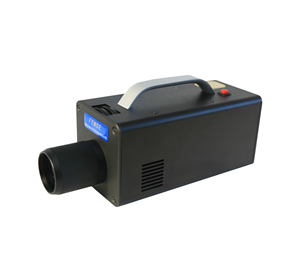
In the meticulous world of forensic science, an Alternate Light Source (ALS) is a pivotal tool that goes beyond standard white light. These specialized forensic light sources emit specific wavelengths of light, from ultraviolet (UV) to visible and into the infrared (IR) spectrum. When directed at a surface, certain materials, particularly biological evidence, absorb this light and re-emit it as visible fluorescence or luminescence, making previously invisible clues starkly apparent. This fundamental principle of light interaction with matter is what transforms a seemingly clean surface into a map of hidden evidence for a forensic investigator.
The Role of ALS in Crime Scene Investigation and Evidence Collection
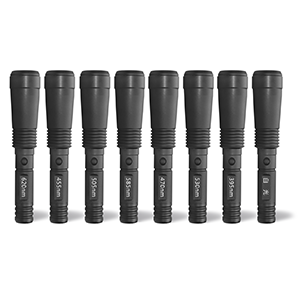
The primary role of an ALS unit begins at the crime scene. Before any evidence collection or DNA swabbing occurs, a forensic technician will systematically scan the area. This non-destructive preliminary examination is crucial for locating latent fingerprints, minute blood spatter, fibers, or bodily fluid stains that are otherwise imperceptible to the naked eye. By identifying these targets with a forensic light source, investigators can prioritize and precisely collect the most probative samples, thereby streamlining the entire chain of custody and preserving the integrity of the scene for subsequent DNA analysis.
Key Components: Wavelength Selection, Filters, and Light Intensity
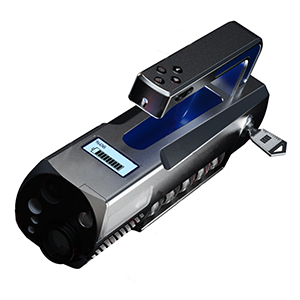
The effectiveness of an ALS system hinges on its core components. Modern ALS devices feature adjustable wavelength selection, allowing an operator to dial in specific bands of light—such as 450nm for general fluorescence or 515nm for enhanced blood detection. Complementary barrier filters, worn as goggles or placed over a camera lens, block the reflected excitation light, allowing only the emitted fluorescence to be seen. Furthermore, high light intensity output ensures sufficient energy to induce fluorescence even on suboptimal surfaces, while advanced cooling systems maintain low heat emission for safe, prolonged use during detailed evidence examination.
Types of Alternate Light Sources for Forensic Applications
The landscape of forensic light sources is diverse, catering to different operational needs. The choice between systems often depends on the required sensitivity, portability, and the specific types of trace evidence a laboratory or field unit expects to encounter. From compact, battery-operated units for on-scene work to powerful, multi-wavelength systems for the controlled environment of a forensic DNA lab, the technology is designed to adapt to the demands of modern criminal investigation.
UV Light Sources for Detecting Bodily Fluids and Trace Evidence
Ultraviolet light sources, particularly in the long-wave UV-A range (around 365nm), are exceptionally useful for preliminary screening of biological stains. Semen, saliva, and urine often exhibit strong fluorescence under UV illumination. Furthermore, certain fibers, dyes, and chemicals used in document forgery also react to ultraviolet wavelengths. It is important to note that while UV is a powerful screening tool, confirmatory testing and subsequent DNA extraction require specialized forensic reagents and laboratory protocols to be performed on the located evidence.
Infrared (IR) and Multi-Wavelength ALS Systems for Enhanced Sensitivity
For challenges requiring deeper penetration or different material interactions, Infrared and multi-wavelength ALS systems offer advanced capabilities. Infrared radiation can reveal writing obscured by inks or detect blood on dark fabrics where visual contrast is poor. High-performance multi-wavelength forensic light sources provide the ultimate flexibility, combining UV, visible, and IR outputs in one device. This allows a single instrument to be optimized for a vast array of applications, from revealing latent fingerprints treated with cyanoacrylate (super glue) fuming to examining altered documents, making them a cornerstone of a comprehensive forensic laboratory workflow.
Portable ALS vs. Laboratory-Grade Forensic Light Sources
The decision between a portable ALS and a laboratory-grade system is strategic. Portable alternate light sources are engineered for durability and ease of transport, featuring rechargeable batteries and rugged construction for crime scene investigation. Their light output, while effective, may be less powerful than stationary units. Conversely, laboratory-grade forensic light sources are workhorses designed for high-throughput evidence processing within a DNA lab. They typically offer superior light intensity, more precise wavelength control, and stable platforms for detailed examination and forensic imaging, supporting tasks like fingerprint development on items submitted for DNA analysis.
Applications of ALS in Forensic DNA Analysis and Evidence Processing
The integration of Alternate Light Sources into the forensic DNA analysis pipeline is transformative. By front-loading the evidence screening process, ALS technology ensures that DNA extraction kits and valuable laboratory time are focused on samples with the highest potential for yielding a genetic profile. This targeted approach not only increases efficiency but also conserves forensic reagents and reduces the risk of sample contamination, which is paramount for maintaining the integrity of DNA evidence.
Detecting Latent Fingerprints and Bloodstain Patterns with ALS
After standard powder or chemical processing, latent fingerprints can be dramatically enhanced under an ALS. The ridges may fluoresce, providing a clearer image for documentation and comparison. Similarly, bloodstain pattern analysis benefits immensely. Even cleaned or diluted blood traces can fluoresce under certain wavelengths, revealing spatter patterns, transfer marks, or flow directions that are critical for reconstructing events. Locating these patterns with an ALS guides precise swabbing for downstream DNA profiling, directly linking the biological evidence to the physical scene analysis.
Identifying Semen, Saliva, and Other Biological Evidence at Crime Scenes
The search for biological evidence is a primary ALS application. As mentioned, bodily fluids like semen and saliva often auto-fluoresce. An investigator can quickly scan large areas—bedding, clothing, or upholstery—to pinpoint stains for collection with specialized DNA collection swabs. This method is far more efficient and less speculative than random swabbing. Furthermore, locating these stains in situ allows for proper photographic documentation of their context before the evidence collection process begins, strengthening the evidentiary value for court proceedings.
ALS in Document Examination and Fiber Analysis for Criminal Investigations
Beyond biological evidence, ALS technology aids in other forensic disciplines integral to a full investigation. Questioned document examiners use specific wavelengths to detect erasures, alterations, or different ink types on a single document. In trace evidence analysis, fibers, hairs, or paint chips may fluoresce uniquely under an ALS, helping to differentiate them from background materials. While these items may not always be subjected to DNA analysis, their discovery and collection, facilitated by a forensic light source, can provide crucial associative links between suspects, victims, and locations.
Choosing the Right ALS for Your Forensic Laboratory Workflow
Selecting an Alternate Light Source is an investment in your laboratory's operational capacity. The ideal system should seamlessly integrate into your existing forensic lab equipment ecosystem, from the initial evidence screening station to the photography suite. Considerations must balance technical performance with practical utility, ensuring the tool enhances, rather than complicates, the standard operating procedures for evidence processing and DNA sample preparation.
Factors to Consider: Wavelength Flexibility, Portability, and Budget
Key decision factors start with wavelength flexibility. A system with a broad, adjustable range offers more application versatility. Portability needs must be assessed: does the unit need to travel to crime scenes, or will it reside in a dedicated examination room? Budgetary constraints are real, but it is essential to view an ALS as a long-term asset. A slightly higher initial investment in a robust, multi-wavelength system from a reputable provider of forensic science solutions can prevent the need for costly upgrades later and ensure compatibility with evolving forensic techniques.
Integrating ALS with Other Forensic Lab Equipment and DNA Extraction Tools
A modern ALS should not operate in isolation. Consider its compatibility with forensic imaging systems, such as cameras equipped with appropriate filters for capturing fluorescence. The workflow should logically flow from ALS examination to targeted evidence collection using sterile swabs from your DNA collection kits, and then into the extraction and amplification processes. Some advanced laboratories even use automated evidence finders that incorporate ALS technology, further streamlining the path from evidence discovery to DNA profile generation.
Maintenance and Calibration Tips for Long-Term ALS Reliability
To ensure consistent performance and evidentiary reliability, regular maintenance is non-negotiable. This includes keeping lenses and filters clean from dust and debris that can scatter light. Periodic calibration checks, as recommended by the manufacturer, are essential to verify that the output wavelengths and intensity remain accurate. Proper storage in a protective case and careful handling of the light guide or unit head will prevent damage to sensitive optical components, guaranteeing that your forensic light source remains a dependable tool for years to come.
Best Practices for Using Alternate Light Sources in Forensic Settings
Adhering to established best practices is critical for both investigator safety and the preservation of evidentiary value. The powerful light emitted by an ALS, particularly in the UV spectrum, requires respect and proper protocol. Furthermore, the manner in which evidence is handled and documented under ALS illumination can significantly impact its admissibility and weight in legal proceedings.
Safety Protocols: Eye Protection and Evidence Preservation Under ALS
The most immediate safety concern is ocular protection. Anyone in the vicinity of an active ALS, especially when using UV wavelengths, must wear appropriate laser safety goggles or glasses with the correct optical density rating for the emitted light. Regarding evidence, it is vital to remember that prolonged exposure to high-intensity light, particularly UV, can degrade DNA. Therefore, exposure time during examination should be minimized, and once a sample is located, the ALS should be turned off or directed away to preserve the integrity of the biological material for subsequent DNA extraction and analysis.
Optimizing ALS Settings for Different Surfaces and Evidence Types
There is no universal "best" setting for an ALS. A methodical approach is required. Start with a general wavelength known to produce fluorescence for the target evidence (e.g., ~450nm for general fluids) and adjust from there. Different surfaces—porous vs. non-porous, dark vs. light—will interact with light differently. Experimenting with various wavelength and filter combinations is often necessary to achieve the optimal contrast. Documenting the specific settings used to locate each piece of evidence is a key part of the forensic documentation process.
Documenting and Photographing ALS-Enhanced Evidence for Court Admissibility
Comprehensive documentation is the bridge between discovery and courtroom presentation. Photography under ALS must be conducted with a camera mounted on a tripod, using manual settings and the appropriate barrier filter. A sequence of photographs should be taken: one under normal room lighting for context, and then one or more under the ALS illumination with and without scale. Detailed notes must accompany the images, recording the ALS model, wavelength, filter used, exposure settings, and a description of the observed fluorescence. This rigorous protocol creates a clear and defensible chain of documentation for the evidence processing phase.
Why Choose Forensic DNA Labs for Your Alternate Light Source Needs?
At Forensic DNA Labs, we understand that your equipment is the foundation of reliable forensic science. We are more than just a supplier; we are a partner in building your laboratory's capabilities. Our focus is on providing not only premium tools but also the integrated support and expertise that ensures these tools deliver their full potential in your daily operations, from crime scene to genetic analysis.
Premium ALS Equipment from Trusted Forensic Science Manufacturers
We curate our portfolio of alternate light sources from the world's leading and most trusted forensic science manufacturers. Each ALS system we offer is selected for its proven performance, reliability, and innovation in wavelength technology and output stability. Whether you require a compact portable unit for field investigations or a high-power multi-wavelength system for your core laboratory, we provide equipment that meets the rigorous standards demanded by modern forensic DNA analysis and evidence processing protocols.
Customized ALS Solutions for DNA Labs and Crime Scene Units
We recognize that no two forensic operations are identical. Our experts work directly with you to understand your specific workflow, evidence volume, and application priorities. We then recommend a customized ALS solution that may include specific wavelength configurations, accessory filter sets, or integration advice with your existing forensic imaging systems and DNA workflow. This tailored approach ensures the technology aligns perfectly with your mission, enhancing efficiency in both crime scene investigation and laboratory evidence examination.
Expert Support: Training, Calibration, and Technical Assistance for ALS Systems
Our commitment extends beyond the point of sale. We provide comprehensive support packages that include on-site or virtual training for your team on optimal ALS operation and evidence photography techniques. We assist with initial setup and calibration and offer ongoing technical assistance and maintenance services to ensure your system operates at peak performance. When you partner with Forensic DNA Labs, you gain a dedicated resource for all your forensic light source needs, safeguarding your investment and the critical work it supports.
Frequently Asked Questions About Forensic Alternate Light Sources
How Does ALS Improve the Detection of Biological Evidence in Low Light?
An ALS improves detection not by providing general illumination, but by exploiting the photophysical properties of evidence. Biological materials contain molecules like proteins and enzymes that absorb specific light wavelengths and re-emit light at a different, often visible, wavelength (fluorescence). In a dark or low-light environment, with all ambient light removed and using protective goggles, this emitted glow becomes the only visible signal, creating extreme contrast against the non-fluorescing background and revealing evidence invisible under normal conditions.
What Wavelengths Are Most Effective for Revealing Latent Fingerprints?
The most effective wavelength depends heavily on the fingerprint development method used. For untreated latent prints, results can be variable. However, after processing with cyanoacrylate fuming, fingerprints often fluoresce well under blue light (around 450nm) when viewed through an orange barrier filter. Prints developed with fluorescent dyes, like Rhodamine 6G or Basic Yellow 40, are specifically designed to be excited by green light (around 515-535nm) and emit strong fluorescence, making them highly visible under a properly tuned forensic light source.
Can ALS Be Used in Combination with DNA Collection and Swabbing Kits?
Absolutely, and this combination represents a best practice in forensic biology. The ALS is used first as a non-destructive screening tool to precisely locate a biological stain. Once located and documented photographically, a sterile swab from a forensic DNA collection kit is then used to sample that specific, targeted area. This targeted collection minimizes the uptake of inhibitory environmental contaminants and increases the concentration of the relevant human DNA, thereby significantly improving the success rate of downstream DNA extraction and PCR amplification processes in the laboratory.
Alternate Light Source Technology for Drug Detection: Principles and Advantages of On-Site Rapid Screening
Learn how alternate light source technology enables rapid non-destructive drug detection at crime scenes. Understand excitation wavelengths, fluorescence principles, sensitivity benchmarks, and...
Get a Quote
Contact our sales staff, tell us your needs, and we will provide you with the most suitable solution.
Contact Now