What is a 3D Laser Reconstruction Scanner?
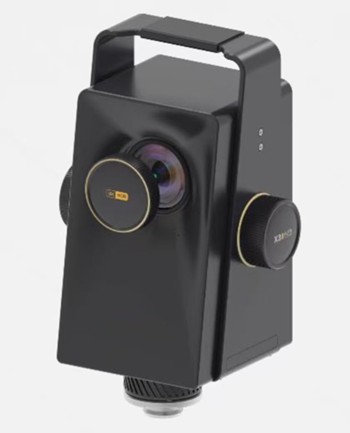
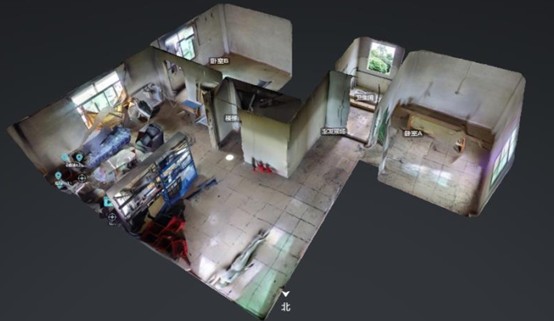
At its core, a 3D laser reconstruction scanner is a sophisticated measurement device that captures the physical world in digital form. It operates by projecting a laser beam onto surfaces and measuring the time or phase shift of the reflected light to calculate precise distances. This process, performed millions of times per second from a rotating scanner head, generates a dense "point cloud" - a massive collection of individual data points in three-dimensional space. Each point carries exact X, Y, and Z coordinates, collectively creating a highly accurate digital twin of a crime scene, an object, or an entire environment. The raw data from the laser rangefinder is then processed by specialized imaging software, which stitches individual scans together and converts the point cloud into actionable 3D models and visualizations for forensic analysis.
Defining High-Resolution 3D Scanning Technology
High-resolution in the context of forensic 3D scanning refers to the incredible detail and precision captured. This is primarily determined by two factors: point density and measurement accuracy. Point density describes how many individual measurement points are captured per unit of area; a higher density means finer details like tool marks, subtle indentations, or small blood spatter are recorded. Measurement accuracy defines how close each measured point is to its true real-world position, often within millimeters. This level of fidelity is what transforms a simple digital model into a forensically sound, court-admissible record. The technology ensures that critical spatial relationships and minute evidence are preserved exactly as found, without the distortion or perspective limitations of traditional photography.
Core Components: Laser Rangefinder, Scanner Head, and Imaging Software
The functionality of a forensic scanner hinges on the seamless integration of its hardware and software components. The laser rangefinder is the heart of the system, emitting the laser pulses and precisely timing their return. The scanner head, often mounted on a motorized base, rotates to capture a full 360-degree field of view, ensuring no evidence is missed. Modern systems may also incorporate high-dynamic-range (HDR) cameras to capture color information for each point, adding photographic realism to the geometric data. However, the true power is unlocked by the imaging software. This specialized forensic software manages the colossal point cloud datasets, allows for cleaning and filtering of noise, and enables the creation of detailed mesh models, cross-sectional diagrams, and precise measurements that are essential for analysis and courtroom presentation.
Key Applications in Forensic Science and Crime Scene Documentation
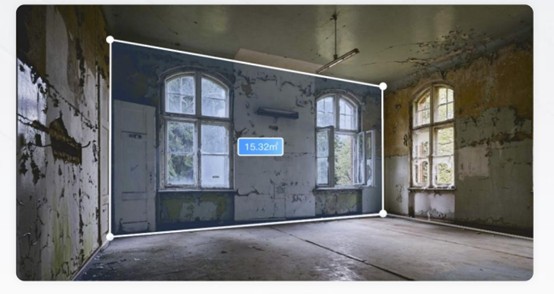
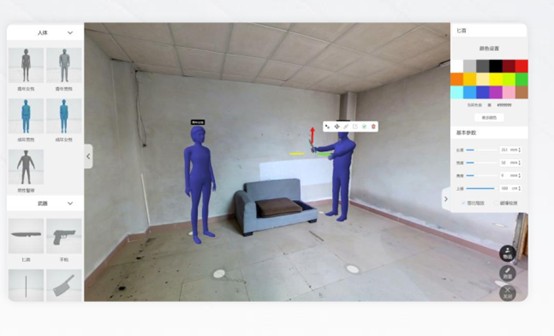
The adoption of 3D laser scanning represents a paradigm shift in crime scene documentation. It moves beyond static, two-dimensional photographs and sketches to create an interactive, measurable, and immutable virtual scene. This digital record can be revisited indefinitely, allowing investigators to take new measurements, test different hypotheses, and visualize scenarios long after the original scene has been released. The applications are vast, ranging from homicides and traffic accidents to arson investigations and mass disaster scenes. By providing an objective, data-rich foundation, this technology strengthens the entire investigative process and enhances the clarity of expert testimony.
Capturing Immutable Scene Data for Courtroom Presentation
One of the most powerful applications of 3D laser scanning is its ability to create a permanent, objective record for the judicial process. Unlike traditional methods, the resulting 3D model is an exact spatial replica that is difficult to dispute. Prosecutors and defense attorneys can use these models to "walk" judges and juries through the virtual crime scene, providing context and clarity that photographs alone cannot achieve. Expert witnesses can demonstrate sightlines, distances, and spatial relationships interactively. This immersive presentation aids in comprehension and helps establish a clear, data-backed narrative, making complex spatial information accessible and understandable to all parties in the courtroom.
Precise Bloodstain Pattern Analysis (BPA) and Trajectory Mapping
3D laser scanning brings unprecedented precision to bloodstain pattern analysis. Investigators can scan an entire room, capturing the exact size, shape, and, crucially, the three-dimensional location of each spatter on walls, ceilings, and complex surfaces. Specialized BPA software can then import this high-fidelity point cloud data. Analysts can select individual stains, and the software will calculate their angles of impact in 3D space. By tracing these angles back to their point of origin, the system can visually reconstruct the likely position of the victim or weapon at the moment of impact. This trajectory mapping provides powerful evidence regarding the sequence of events and the dynamics of the incident.
Documenting Vehicle Collisions, Bullet Trajectories, and Accident Reconstruction
In traffic accident reconstruction and shooting investigations, precise spatial data is paramount. A 3D laser scanner can rapidly document the final rest positions of vehicles, skid marks, debris fields, and the overall scene geometry. For bullet trajectory analysis, investigators can scan a room to record the exact location of bullet holes, casings, and ricochet marks. Using the scan data, forensic experts can digitally insert trajectory rods or lasers into the 3D model to visualize and calculate flight paths. This allows for the accurate determination of shooter position, shot sequence, and victim location, providing critical insights that are often unattainable through manual measurement alone.
Creating Durable Digital Models for Archival and Re-investigation
The digital assets created by a 3D laser scanner serve as a permanent archive of the scene. This is invaluable for cold case reviews, appeals, or when new investigative leads emerge years later. The original scene, often altered or cleaned shortly after investigation, exists in perfect digital form. New analysts can enter the virtual environment, take new measurements, and apply emerging analytical techniques to old evidence. This capability ensures the long-term integrity and utility of the scene documentation, protecting the investment in the initial investigation and safeguarding justice by preserving critical spatial evidence indefinitely.
Critical Features of a Forensic-Grade 3D Laser Scanner
Not all 3D scanners are created equal for the demanding environment of forensic investigation. A forensic-grade instrument must meet stringent criteria for accuracy, reliability, and operational efficiency. The choice of equipment directly impacts the quality of evidence, the speed of on-scene processing, and the admissibility of data in legal proceedings. Key specifications must be evaluated not in isolation, but as part of a complete system designed to withstand the pressures of real-world casework, from a rainy outdoor homicide scene to a complex indoor fire investigation.
Measurement Accuracy, Point Density, and Scan Range
The forensic value of a scan is fundamentally tied to its technical specifications. Measurement accuracy, often specified at a certain range (e.g., ±2 mm at 10 meters), is non-negotiable for creating evidence that will withstand legal scrutiny. Point density determines the level of detail; a scanner capable of capturing millions of points per second will render fine details like footwear impressions or fractured glass with high clarity. Scan range defines the operational distance. A long-range scanner is essential for large outdoor scenes like accident reconstructions on highways, while a shorter-range, high-density scanner might be preferred for detailed indoor documentation. The ideal forensic tool offers a balance suitable for a wide variety of scenes.
Scan Speed and On-Site Efficiency for Time-Sensitive Investigations
Crime scenes are often time-sensitive, requiring documentation before evidence degrades or the scene must be released. Therefore, scan speed is a critical operational feature. Modern forensic scanners can capture a full 360-degree scan in a matter of minutes. Faster scanning reduces the time investigators are exposed to hazardous environments and minimizes public disruption. On-site efficiency is also enhanced by features like onboard pre-processing, color capture, and real-time previews, allowing the team to verify data quality before leaving the location. This speed must not come at the cost of accuracy, making the evaluation of a scanner's performance under realistic time constraints a crucial part of the selection process.
Integration with Forensic Software for Analysis and Visualization
A scanner is only as useful as the software that interprets its data. Seamless integration with industry-standard forensic analysis and visualization software is essential. The workflow should allow for the direct import of point cloud data into specialized applications for bloodstain pattern analysis, trajectory mapping, and accident reconstruction. The software ecosystem should enable the creation of clear, annotated visualizations, animated fly-throughs, and precise 2D floor plans or elevation drawings derived from the 3D data. Compatibility and a streamlined workflow from capture to courtroom exhibit are key features that define a professional forensic scanning solution.
Ruggedness, Portability, and Performance in Diverse Environments
Forensic equipment must be built for field conditions. A forensic-grade scanner needs a rugged housing that is dust-proof and water-resistant (often with an IP rating) to operate in rain, snow, or dusty construction sites. It must be portable enough to be carried to remote locations, often with a robust carrying case and a reliable internal battery for operation where power is unavailable. Furthermore, performance must remain consistent across diverse lighting conditions, from pitch-black interiors to bright sunlight, and on a variety of surfaces, from reflective car bodies to absorptive drywall. This environmental resilience ensures evidence can be captured reliably anywhere it is found.
Integrating 3D Scanning into Your Forensic Laboratory Workflow
Adopting 3D laser scanning is not merely about purchasing new hardware; it is about integrating a powerful new data stream into the existing forensic laboratory workflow. Successful integration requires planning for the entire lifecycle of the data, from the moment it is captured in the field to its long-term archival. This involves training personnel, establishing new protocols for data handling, and creating bridges between the scanning team and the analysts in disciplines like DNA, firearms, and trace evidence. When done effectively, 3D data becomes a unifying layer of spatial context that enhances all subsequent forensic analyses.
From Field Deployment to Lab Analysis: A Seamless Process
The goal is to create a seamless pipeline from the crime scene to the analyst's workstation. After on-scene scanning, data is transferred to a secure, high-capacity storage system. Using the scanner manufacturer's or third-party forensic software, the individual scans are registered and aligned to create a unified 3D model of the entire scene. This model can then be referenced by other forensic specialists. For example, a DNA analyst can examine the virtual scene to understand the spatial context of a swab location relative to a bloodstain pattern analyzed by the BPA unit. This interconnected view fosters collaboration and ensures all analyses are grounded in the same objective spatial reality.
Data Management: Handling Large Point Cloud Datasets
A single forensic scan can generate tens of billions of data points, resulting in file sizes of hundreds of gigabytes. Effective data management is therefore a critical component of the workflow. Laboratories need a strategy for secure, redundant storage and efficient data processing hardware with powerful graphics capabilities. Establishing a standardized naming convention, version control, and a metadata tagging system is essential for organizing cases. Furthermore, protocols must be developed for sharing and presenting this data, which may involve creating lighter-weight, simplified models for use in reporting and courtroom presentations while preserving the full-resolution originals for analysis.
Combining 3D Scan Data with Photogrammetry and Other Forensic Techniques
3D laser scanning is most powerful when used in conjunction with other forensic documentation methods. For instance, close-range photogrammetry—creating 3D models from overlapping photographs—can be used to capture ultra-high-resolution detail of a specific item, like a damaged cartridge case, which is then precisely placed within the broader laser scan of the room. Similarly, scan data can be overlayed with total station survey points for geospatial referencing or used to map the locations where DNA samples, fingerprints, or trace evidence were collected. This multimodal approach creates a comprehensive and layered digital record where macro-scale context and micro-scale detail inform each other.
Choosing the Right 3D Laser Scanner for Your Forensic Lab
Selecting a 3D laser scanner is a significant investment that requires careful consideration of your laboratory's specific needs, caseload, and long-term goals. The decision should be driven by the types of cases you most frequently encounter and the analytical outcomes you need to support. A one-size-fits-all approach is rarely effective. The evaluation must extend beyond the initial purchase price to consider the total cost of ownership, including software licenses, maintenance, training, and the potential need for future upgrades. Partnering with a knowledgeable vendor who understands forensic applications is crucial for making an informed choice.
Assessing Your Casework Volume and Application Needs
The first step is a thorough needs assessment. A laboratory primarily investigating indoor crime scenes may prioritize very high point density and color accuracy. In contrast, a state police unit focused on major traffic accidents will need a scanner with a very long range and high speed for documenting extensive highway segments. Consider the volume of casework; a high-volume lab might benefit from features that accelerate processing, such as automated target recognition or faster data registration. Clearly defining your primary applications—whether it's bloodstain pattern analysis, shooting reconstruction, or general scene documentation—will guide you toward the scanner with the most appropriate specifications.
Total Cost of Ownership: Hardware, Software, and Training
The purchase price of the scanner hardware is just one part of the financial equation. The total cost of ownership includes essential recurring and one-time expenses. This encompasses the forensic analysis software licenses, which may be annual subscriptions. Budget must be allocated for comprehensive initial training for multiple operators to ensure proficiency and for periodic refresher courses. Consider the costs of calibration services, extended warranties, and technical support plans. Also, factor in the necessary IT infrastructure upgrades, such as high-performance workstations and network storage, required to handle the large datasets efficiently.
Vendor Support, Calibration Services, and Technical Expertise
The relationship with your technology vendor is a long-term partnership. Evaluate the vendor's reputation for forensic-specific support. Do they offer dedicated forensic application specialists who can assist with complex analysis questions? What is the structure of their technical support—is it responsive and knowledgeable? Understand their calibration service process; regular calibration is vital to maintain measurement accuracy for court-admissible data. A vendor with deep expertise in forensic science will not only provide reliable equipment but will also be a valuable resource for best practices, workflow optimization, and staying current with evolving technologies and legal standards.
Forensic DNA Labs: Your Partner in Advanced Forensic Technology
At Forensic DNA Labs, we understand that building and maintaining a cutting-edge forensic capability involves more than just instruments. It requires a holistic approach that combines the right equipment with deep expertise and unwavering support. Our mission is to serve as your dedicated partner in navigating the complex landscape of modern forensic technology. From the initial consultation to long after your scanner is deployed, we provide the guidance, solutions, and services necessary to integrate 3D documentation seamlessly into your pursuit of justice.
Expert Guidance on Forensic Laboratory Equipment Selection
Our team consists of professionals with real-world forensic experience who can translate your operational challenges into technical requirements. We guide you through the entire selection process, helping you evaluate scanners not just on paper specifications, but on their practical performance in scenarios mirroring your casework. We facilitate hands-on demonstrations and pilot projects, allowing you to validate the technology's fit within your specific workflow before making a commitment. Our objective advice is focused on helping you acquire a solution that delivers reliable, court-defensible data and a strong return on investment for your agency.
Comprehensive Solutions for Your Crime Scene Investigation Toolkit
We provide comprehensive solutions tailored to the modern crime scene investigation toolkit. Beyond the 3D laser scanner itself, we can assist in assembling the complete package: from the ruggedized field laptops and secure data storage devices to the powerful forensic workstations and specialized software for analysis and visualization. We help you design a cohesive ecosystem where hardware and software work in harmony. Furthermore, we offer solutions for related documentation needs, such as high-resolution macro photography systems for evidence capture or alternative 3D imaging technologies, ensuring you have a robust and versatile documentation strategy.
Ongoing Support for Your 3D Documentation and Reconstruction Needs
Our partnership continues long after installation. We provide comprehensive training programs designed to bring your entire team up to operational proficiency, from field scanning protocols to advanced data analysis techniques. Our technical support is accessible and staffed by experts familiar with forensic applications. We manage scheduled calibration services to ensure your system's accuracy remains certified. As your needs evolve and new software updates or analytical methods emerge, we are here to provide upgrade paths and continued consultancy, ensuring your laboratory remains at the forefront of forensic scene documentation and reconstruction technology.
3D Laser Reconstruction Scanner: A Complete Guide to Principles, Applications, and Forensic Workflow Integration
Complete guide to 3D laser reconstruction scanners for forensic applications. Learn measurement principles, point cloud processing, bloodstain pattern analysis, trajectory mapping, and how to select...
Get a Quote
Contact our sales staff, tell us your needs, and we will provide you with the most suitable solution.
Contact Now