Why Precise DNA Quantitation is Critical for Forensic Success
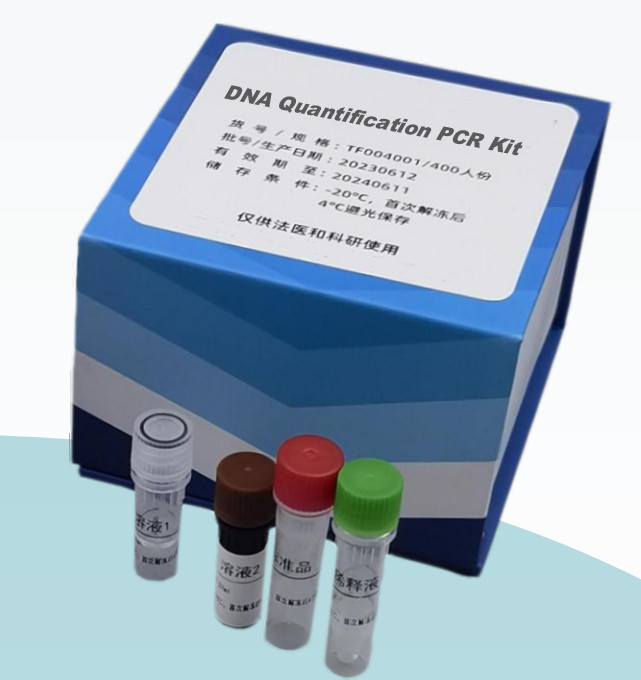
In the meticulous world of forensic DNA analysis, success hinges on the very first measurement. The process of DNA quantitation, which determines the exact amount of human DNA present in a sample, is not merely a preliminary step; it is the critical foundation upon which every subsequent result is built. Without an accurate DNA concentration value, the powerful technique of Short Tandem Repeat (STR) profiling can yield incomplete or unreliable data, potentially compromising an entire investigation. This initial quantification directly informs how much of the sample is used in the amplification process, ensuring the genetic signal is strong enough to interpret but not so overwhelming that it causes technical artifacts.
Forensic samples are notoriously challenging. They often contain substances that can inhibit the enzymatic reactions crucial for analysis, or the DNA itself may be degraded due to environmental exposure. A robust DNA quantification kit must be designed to overcome these hurdles. By utilizing chemistry that remains stable and accurate in the presence of common inhibitors, and by targeting specific regions of the human genome that are more likely to persist in degraded samples, reliable quantitation becomes possible even from the most compromised evidence. This resilience transforms a potentially failed analysis into a viable genetic profile.
Furthermore, precise DNA quantitation is the cornerstone of laboratory standardization. Consistent and accurate measurement ensures that results are reproducible not just within a single case, but across thousands of samples processed over years. This standardization is vital for maintaining the integrity of DNA databases and for upholding the rigorous accreditation standards, such as ISO/IEC 17025, that govern modern forensic science laboratories. It creates a reliable, auditable trail from the initial evidence sample to the final report presented in court.
The Foundation of Reliable STR Profiling
The relationship between DNA quantitation and STR amplification is a precise calibration. The polymerase chain reaction (PCR) process used to copy specific DNA regions requires an optimal amount of genetic template. If too little DNA is added, the amplification may fail to produce a detectable signal, leading to a false negative. Conversely, adding too much DNA can lead to over-amplification, causing peak height imbalances, off-scale data, or the masking of minor contributors in a mixture. Accurate quantitation provides the laboratory analyst with the essential information to normalize the DNA input, ensuring the subsequent capillary electrophoresis run produces a clean, balanced, and interpretable electropherogram.
This calibration extends to the analysis of complex mixtures, where DNA from two or more individuals is present. Precise quantification helps analysts assess the ratio of contributors, which is a key factor in deconvoluting the mixed profile using probabilistic genotyping software. An inaccurate initial concentration can skew these ratios, making statistical interpretation less robust. Therefore, the fidelity of the final STR profile, which serves as the genetic fingerprint for comparison, is intrinsically linked to the accuracy of the very first quantitative real-time PCR (qPCR) measurement.
Overcoming Inhibitors and Degraded Samples
Forensic evidence is rarely collected from pristine conditions. Substrates like denim, soil, or leather, and substances like hematin from blood or humic acids from soil, can carry potent PCR inhibitors into the extraction. These inhibitors can bind to the DNA polymerase enzyme or other reaction components, effectively shutting down the amplification process. A sophisticated human DNA quantitation assay addresses this challenge head-on by incorporating an Internal Positive Control (IPC). This control is a synthetic DNA sequence added to every reaction well. If the IPC fails to amplify, it signals the presence of inhibitors, alerting the analyst that the quantitation result for that particular sample may be compromised and that further sample cleanup or dilution is required.
Degradation presents a different obstacle. Environmental factors like UV light, heat, and moisture can break the long strands of DNA into smaller fragments. Traditional quantification methods might underestimate the amount of human DNA if they target a long genomic region that has been severed. Modern forensic quantification kits employ probe-based assays that target shorter, more stable amplicons. By focusing on these resilient genetic markers, the kit can provide a more accurate representation of the quantity of amplifiable DNA actually available for the downstream STR process, even from old or environmentally exposed evidence.
Key Features of Our Forensic Human DNA Quantitation Kit
Our Human DNA Quantitation PCR Kit is engineered with the specific demands of the forensic laboratory in mind. It combines high sensitivity with exceptional specificity to deliver trustworthy data from a wide array of sample types. The assay's core chemistry is optimized to perform consistently, providing the confidence needed for both routine casework and critical, high-profile investigations. Each component, from the proprietary primer sequences to the stabilized master mix, is selected and tested to ensure maximum performance and reliability under the rigorous conditions of forensic DNA analysis.
The design philosophy centers on creating a seamless workflow. The kit format minimizes hands-on time and reduces the potential for pipetting errors, which is crucial in a high-throughput environment processing database samples or multiple items from a single case. Furthermore, the compatibility with standard real-time PCR platforms found in most forensic DNA laboratories means integration is straightforward, requiring no capital investment in new instrumentation. This allows laboratories to enhance their quantitation protocol immediately, leveraging their existing thermal cyclers and detection systems.
High Sensitivity and Broad Dynamic Range
Forensic samples can present extremes in DNA concentration. A single touch DNA sample may contain only picogram quantities of genetic material, while a blood stain could yield nanograms of DNA. A robust quantification assay must accurately measure across this vast dynamic range without requiring sample dilution or multiple runs. Our kit achieves this through optimized reaction kinetics and probe chemistry, allowing for reliable detection from fractions of a nanogram per microliter up to high concentrations, all within a single plate setup. This wide linear range streamlines the workflow, as analysts can confidently quantify both low-copy number samples and concentrated extracts side-by-side, saving valuable time and reagents.
Human-Specific Primers/Probes
Specificity is paramount. Evidence items, especially those from outdoor scenes or certain body sites, can be contaminated with non-human DNA from bacteria, fungi, or other microbial sources. A total DNA quantitation method would measure all of this genetic material, grossly overestimating the amount of human DNA available for STR profiling. Our kit utilizes primers and TaqMan probes that are designed to target sequences unique to the human genome. This high degree of specificity ensures that the reported concentration reflects only human DNA, providing a true and actionable value for downstream analysis. This focus prevents the waste of precious evidence on an STR amplification that is destined to fail due to insufficient human template.
Internal Positive Control (IPC)
The Internal Positive Control is a critical quality assurance feature embedded within the assay. It consists of a defined DNA sequence and a unique fluorescent dye, separate from the dye used to detect the human DNA target. This IPC is co-amplified in the same reaction well as the forensic sample. Successful amplification of the IPC confirms that the PCR conditions were suitable and that no significant inhibitors are present. If the IPC signal is delayed or absent, it provides a clear, sample-specific indicator of inhibition. This allows the forensic scientist to make informed decisions, such as recalculating the DNA concentration with an inhibition correction factor or reprocessing the sample extract, thereby safeguarding against reporting false negative quantitation results.
Streamlined Workflow: From Sample to Quantitation Value
Efficiency in the forensic DNA laboratory is essential for managing caseloads and meeting judicial timelines. Our quantitation kit is designed to integrate smoothly into an established workflow, minimizing complexity and opportunities for error. The process begins with a straightforward plate setup. The ready-to-use master mix reduces the number of pipetting steps, and the inclusion of pre-mixed standards allows for a quick and consistent creation of the calibration curve on every plate. This simplicity is especially beneficial during high-volume runs, such as those for processing offender database samples, where reproducibility and speed are equally important.
Once the plate is loaded into the real-time PCR instrument, a rapid thermal cycling protocol takes over. This protocol has been optimized to provide accurate quantification in a shortened run time compared to older methods, without sacrificing the robustness of the data. For time-sensitive cases, this acceleration can be a significant advantage, moving samples more quickly to the next stage of analysis. Following the run, the data analysis phase is equally streamlined. The kit is compatible with the standard software packages of major instrument manufacturers, allowing for automated calculation of DNA concentration based on the cycle threshold (Ct) values and the standard curve. The output is a clear, reliable concentration value for each sample, ready to guide the subsequent normalization step for STR amplification.
Clear Data Analysis and Interpretation
The output from a real-time PCR run is a set of amplification curves and associated cycle threshold (Ct) values. Our kit is designed to produce clean, unambiguous curves that facilitate straightforward interpretation. The software automatically plots these curves against the known concentrations of the standards to generate a calibration curve with a high coefficient of determination (R² value), indicating a reliable fit. For the forensic analyst, this translates to a high-confidence numerical concentration for each unknown sample. The software report typically includes not only the final concentration but also flags for any anomalies, such as IPC inhibition, making the final data review process efficient and thorough. This clarity is crucial for maintaining meticulous case documentation and for explaining the scientific process during testimony.
Get a Quote
Contact our sales staff, tell us your needs, and we will provide you with the most suitable solution.
Contact Now