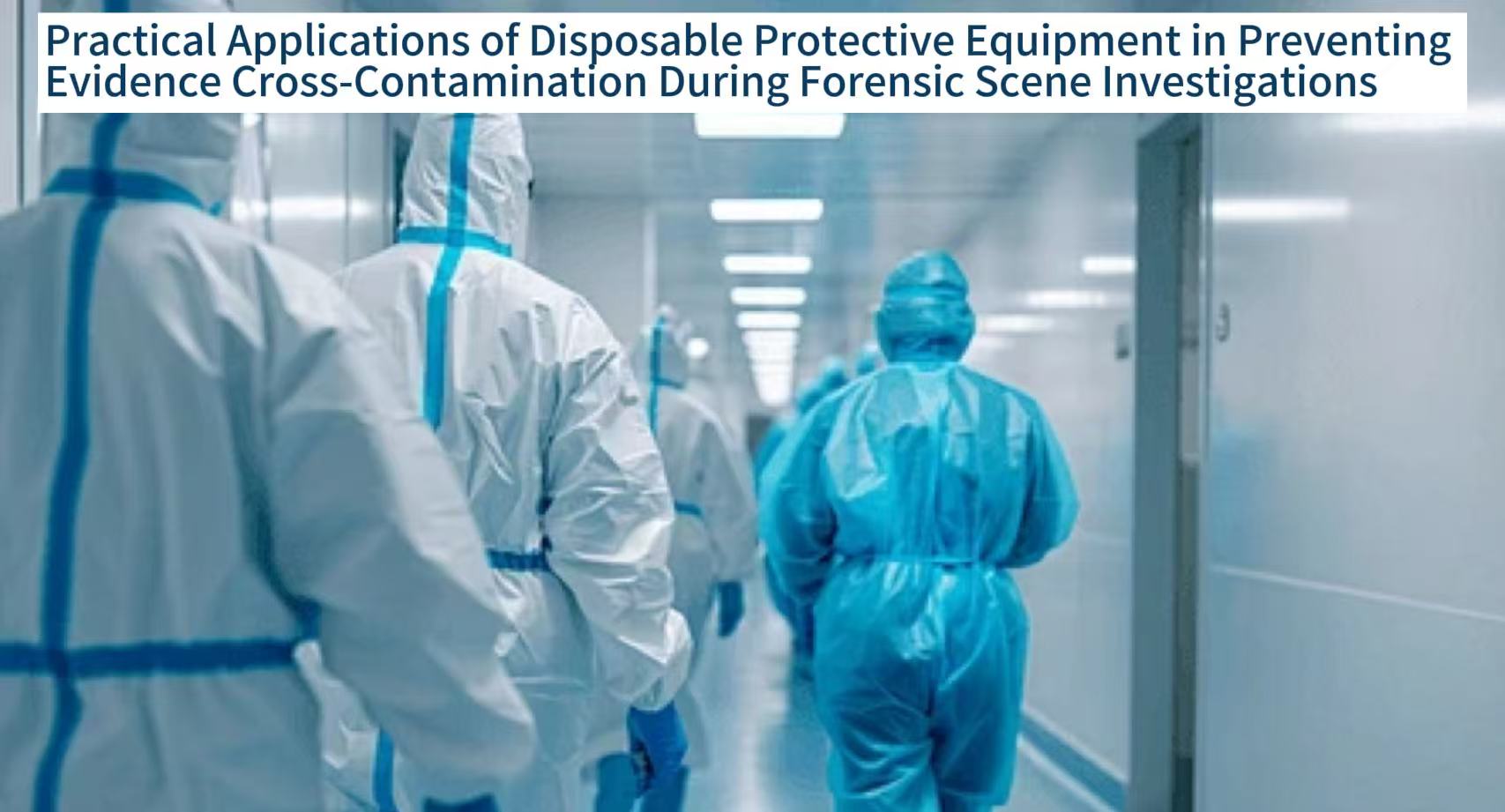
Forensic PPE Workflow for Evidence Contamination Control
Forensic science has evolved to a point where the detection and analysis of biological evidence can reach extraordinary levels of sensitivity. A single cell transferred through touch can now yield a full DNA profile, making the integrity of evidence collection more critical than ever. This high sensitivity, however, creates a parallel vulnerability: the risk of cross-contamination during the initial stages of a scene investigation. Disposable protective equipment serves as the primary physical barrier between the investigator and the evidence, playing a foundational role in ensuring that the genetic material collected is unequivocally linked to the scene or the individuals involved, rather than introduced by the personnel present.
The practical application of this equipment extends far beyond simply putting on gloves. It involves a systematic approach to how investigators move through a scene, how they interact with surfaces, and how they manage their own biological signatures. This article explores the core principles of contamination control through protective gear, the specific functions of different equipment types, the scenarios where their use is most critical, and how a well-structured protocol supports the ultimate goal of producing defensible, reliable forensic results. Understanding these practical applications is essential for any agency seeking to maintain the highest standards of evidence integrity, and organizations like Forensic DNA Laboratory solutions providers emphasize these principles as foundational to their operational frameworks.
The Fundamental Role of Personal Protective Barriers in Contamination Control
PPE Material Barrier Integrity for DNA Contamination Control
| Equipment Type | Barrier Effectiveness | DNA-Free Certification |
|---|---|---|
| Powder-Free Nitrile Gloves | 99% | Required |
| Non-Textured Shoe Covers | 95% | Standard |
| Forensic Disposable Suits | 98% | Required |
| Head Covers & Masks | 97% | Standard |
The central concept behind using disposable protective equipment at a crime scene is the creation of a defined barrier between the investigator and the environment. Human beings are constant sources of biological material. Epithelial cells are shed continuously from the skin, hair can fall unnoticed, and saliva can be expelled through speaking or breathing. Without proper barriers, these biological signatures become potential contaminants, indistinguishable from true scene evidence. The purpose of protective gear is to contain these emissions, preventing them from being deposited onto surfaces, tools, or the evidence itself.
This barrier function is not passive. The selection and application of equipment must be deliberate. For instance, powder-free forensic nitrile gloves are chosen not only for their tactile sensitivity but also because they lack the particulate matter found in powdered alternatives, which can interfere with downstream analysis. Similarly, non-textured shoe covers are designed to minimize the transfer of debris while preventing the investigator's own footwear from introducing foreign materials. Each item of gear serves a specific purpose in a layered defense, creating a controlled personal microenvironment that allows the investigator to operate without becoming a source of contamination.
Barrier Integrity: How Material Selection Prevents DNA Transfer
The materials used in forensic-grade disposable equipment are selected based on their ability to resist the transfer of biological material. Nitrile, for example, provides an impermeable layer that prevents sweat, oils, and epithelial cells from reaching surfaces. The integrity of this barrier depends on consistent use, including proper donning techniques that avoid touching the outer surfaces of gloves, and regular changes, particularly after handling potentially contaminated items or moving between distinct zones within a scene.
Beyond the material itself, the manufacturing process is critical. High-quality disposable gloves and shoe covers are produced in clean environments with rigorous quality controls to ensure they are free from detectable human DNA before packaging. This pre-certification is essential for forensic work, as it establishes a known clean baseline. When investigators don these products, they are not merely protecting themselves; they are introducing a sterile, validated tool into the evidence collection process, reducing the variable of unknown background contamination. This principle extends to other consumables such as DNA-free filtered pipette tips, which similarly undergo stringent manufacturing controls to ensure they do not introduce exogenous genetic material into the analytical workflow.
The Concept of the "Clean Zone": Managing Personnel Movement
A crime scene is often conceptualized as a series of concentric zones, with the innermost area containing the most critical evidence. Disposable protective equipment enables the practical implementation of this zoning principle. Investigators entering the inner zone must be fully equipped with fresh gloves, shoe covers, and often full-body suits or lab coats. This outer layer serves as a clean slate, ensuring that no material from the outer zones is tracked into the sensitive area.
Managing movement between zones is equally important. When an investigator exits the inner zone to obtain tools or consult with colleagues, the outer layer of protective gear should be removed or replaced before re-entry. This practice, known as "staging," is a cornerstone of contamination control. Disposable equipment is designed for this purpose—it is intended to be changed frequently, with each fresh set representing a new, uncontaminated interface between the investigator and the evidence. The practical discipline of staging prevents the inadvertent transfer of materials from less sensitive to highly sensitive areas, preserving the integrity of the core scene. Proper biosafety cabinet use within laboratory settings follows a similar zoning logic, where clean and contaminated areas are strictly separated to prevent cross-contamination during evidence processing.
Preventing Cross-Contamination Between Multiple Evidence Items
In a typical investigation, multiple items of evidence are collected, each from different locations or associated with different individuals. The risk of cross-contamination—transferring biological material from one evidence item to another—is significant. Disposable protective equipment, particularly gloves, is the primary tool for preventing this. The standard practice is to change gloves after handling each distinct item or after moving to a different area of the scene. This simple yet critical action ensures that any DNA picked up from one piece of evidence is not subsequently transferred to another.
This protocol extends to other gear as well. Shoe covers can carry trace materials across a scene, linking areas that should remain separate. Implementing a protocol where shoe covers are changed when moving between different rooms or outdoor areas prevents this form of contamination. The practical application of this principle requires careful planning and awareness, but it is fundamental to maintaining the independence and integrity of each piece of collected evidence, ensuring that later laboratory analysis does not yield misleading mixed profiles. The use of forensic DNA consumables such as individually wrapped swabs and sterile collection tubes further supports this principle by ensuring that each evidence item is handled with dedicated, single-use tools.
The Chain of Custody: Protective Gear as a Documentation Tool
While protective equipment primarily functions as a physical barrier, it also plays a role in the documentary chain of custody. The moment an investigator dons a fresh pair of gloves, that action represents the start of a defined period of evidence handling. Detailed notes or logs that record when gloves were changed, when new shoe covers were applied, and who was present in which zones contribute to a comprehensive record of the evidence's journey. This documentation demonstrates to the court that deliberate, systematic steps were taken to prevent contamination.
In practice, this means that the use of disposable gear is not merely a field activity but is integrated into the case file. Photographs taken at the scene often capture investigators in their protective gear, providing visual confirmation of the protocols followed. The management of used equipment also becomes part of the record. Discarded gloves and shoe covers are considered potential sources of trace evidence themselves, containing materials that may have been inadvertently collected. Proper disposal and retention protocols ensure that this "waste" is managed in a way that does not compromise the investigation, further reinforcing the integrity of the entire process. This meticulous documentation aligns with broader laboratory practices such as those used in genetic analysis workflows, where chain of custody and data traceability are equally paramount.
Essential Types of Disposable Protective Equipment for Scene Work
Usage Frequency of Forensic Disposable PPE
The selection of protective equipment for a forensic scene is dictated by the nature of the environment and the type of evidence anticipated. No single item serves all purposes; rather, a coordinated ensemble of gear works together to provide comprehensive coverage. The choice of materials, the fit, and the design features of each item directly impact both the level of protection and the investigator's ability to perform delicate tasks. Understanding the specific role of each piece of equipment allows for informed decisions that balance safety, contamination control, and operational efficiency.
The equipment used in scene investigation differs from standard medical or industrial protective gear in several key respects. Forensic-grade products are designed to minimize the introduction of foreign particles and to be free from detectable DNA. They are manufactured under controlled conditions and individually packaged to maintain sterility until the moment of use. This level of specification is essential for an environment where the presence of a single stray cell can alter the outcome of an investigation. The following sections detail the primary types of disposable protective equipment and their practical applications in the field.
Powder-Free Nitrile Gloves: Tactile Sensitivity and Barrier Integrity
Powder-free nitrile gloves have become the standard for forensic scene investigation due to their combination of barrier protection and tactile sensitivity. Nitrile is a synthetic rubber that is highly resistant to punctures and chemical permeation while remaining flexible enough to allow fine motor control. The absence of powder is crucial; powdered gloves can release cornstarch particles that may carry DNA or interfere with laboratory processes. Forensic-grade nitrile gloves undergo additional processing to ensure they are free from detectable human DNA, providing a reliable baseline for evidence handling.
In practice, these gloves are used for virtually all direct contact with evidence. Their tactile sensitivity allows investigators to handle small items, such as a single fiber or a fragment of glass, without crushing or damaging the material. The durability of nitrile means that gloves can withstand the rigors of outdoor scenes, including sharp edges and rough surfaces. Changing gloves frequently is a necessary practice, and the use of high-quality, well-fitting gloves makes this process efficient. Gloves that are too loose can compromise dexterity, while those that are too tight may tear easily. Proper sizing and material selection are therefore integral to effective scene work. When combined with other protective elements such as disposable non-textured forensic shoe covers, these gloves form part of a comprehensive barrier system that protects evidence integrity from the ground up.
Disposable Non-Textured Shoe Covers: Preventing Trace Transfer Across Surfaces
Shoe covers serve a dual purpose at a crime scene: they prevent the investigator's footwear from introducing contaminants into the scene and, equally importantly, they prevent scene material from being tracked out. Non-textured covers are preferred because they do not have the fibrous surface that can trap and release particulates. Smooth covers are easier to clean and less likely to harbor trace evidence that could be inadvertently transferred. They are typically made from polyethylene or similar materials that provide a moisture barrier while being lightweight and disposable.
The practical use of shoe covers requires attention to the transitions between surfaces. Entering a scene from a grassy exterior onto a hard floor inside a residence represents a significant potential for cross-contamination. Changing shoe covers at such thresholds ensures that materials from the exterior are not carried indoors. Similarly, when moving between different rooms or distinct areas within a scene, fresh covers should be applied. This discipline is particularly important in cases involving multiple locations or when the scene includes areas where different activities may have occurred. The simple act of changing shoe covers is one of the most effective means of controlling the spatial distribution of trace evidence. These practices are reinforced by the use of DNA remover solution for surface decontamination in staging areas, ensuring that transitional spaces do not become sources of cross-contamination.
Forensic Protective Gear: Suits, Lab Coats, and Head Covers
In many crime scene contexts, particularly those involving extensive biological material or sensitive trace evidence, full-body protective gear is necessary. Disposable coveralls or lab coats made from low-lint materials provide a barrier for the investigator's clothing, which can be a significant source of contamination through shed fibers, skin cells, and hair. These garments are designed to be worn over personal clothing and are typically made from breathable yet impermeable fabrics that prevent the passage of biological material while maintaining comfort during extended scene work.
Head covers are an equally important component. Human hair is a potent source of DNA, and loose strands can easily fall onto surfaces without the wearer's awareness. Disposable bouffant caps or hoods that fully contain the hair are essential for any investigator working in the immediate vicinity of evidence. In cases where the scene involves extensive debris or hazardous materials, full suits with integrated hoods and boot covers provide the highest level of protection. The choice of protective gear must be scaled to the scene: a small indoor scene with limited evidence may require only gloves and shoe covers, while a complex outdoor scene or a scene involving violent crime may necessitate full protective ensembles. The key is that the level of protection is matched to the risk, ensuring both personnel safety and evidence integrity. Comprehensive forensic protective gear solutions are available to meet the full spectrum of scene investigation requirements.
Integrated Systems: How Equipment Works Together for Complete Coverage
The true effectiveness of disposable protective equipment lies in how the individual components work together. A complete barrier is only as strong as its weakest point. When gloves, shoe covers, and body suits are worn together with proper overlap—for example, the glove cuff covering the sleeve of the suit—the system provides continuous protection. Any gap between components represents a potential pathway for contamination. In practice, this means careful attention to donning order, ensuring that each layer covers the previous one, and that transitions between zones involve the coordinated change of multiple gear items.
This integrated approach also extends to the management of equipment during and after the scene. Designated clean and dirty areas are established where fresh gear is donned and used gear is removed and properly disposed of. A systematic approach to equipment management reduces the cognitive load on investigators, allowing them to focus on the evidence rather than constantly evaluating their own contamination status. When the use of protective equipment becomes an ingrained routine, supported by clear protocols and high-quality products, it operates as a seamless system that protects the evidence without impeding the investigation. This integrated philosophy is mirrored in laboratory environments where automated DNA workstations combine multiple processing steps into a single, controlled system to minimize manual handling and contamination risk.
Critical Scenarios Requiring Rigorous Protective Equipment Protocols
Contamination Risk Level in Critical Forensic Scenarios
While the use of disposable protective equipment is a standard practice in all forensic scene investigations, certain scenarios demand an elevated level of rigor. These are situations where the evidence is particularly vulnerable to contamination, where the consequences of a compromised sample are especially high, or where the scene itself presents unusual challenges. Recognizing these scenarios and adapting protocols accordingly is a mark of a mature forensic practice. The protocols for a routine property crime scene may differ from those for a complex homicide or a mass disaster recovery, but the underlying principles of barrier protection remain constant, only intensified in their application.
The scenarios described below illustrate the range of situations where meticulous attention to protective equipment becomes paramount. In each case, the goal is not simply to follow a checklist but to understand the unique contamination risks presented and to deploy protective gear in a way that actively mitigates those risks. This adaptive approach ensures that the integrity of the evidence is preserved under the full spectrum of conditions encountered in forensic practice.
Touch DNA Evidence Collection from Non-Porous Surfaces
Touch DNA, consisting of only a few skin cells transferred through contact, represents one of the most sensitive types of evidence. The collection of touch DNA from surfaces such as glass, metal, or plastic requires an almost sterile environment. Any investigator handling these items without fresh, DNA-free gloves risks overwriting the latent cellular material with their own. The protocol for touch DNA collection often includes the use of multiple glove changes throughout the process, with investigators handling the evidence only with freshly donned gloves and using tools such as swabs or adhesive lifters that further distance them from the surface.
The practical application extends to the investigator's entire ensemble. In a scene where touch DNA is the primary evidence, full protective suits may be used to minimize any shedding from clothing. Shoe covers prevent particulate matter from being kicked up onto surfaces. The use of face masks is also common to prevent saliva droplets from landing on the evidence. This comprehensive approach recognizes that the target DNA is present in such minute quantities that any addition of foreign cellular material can overwhelm the sample, making the difference between a usable profile and an inconclusive result. Specialized collection tools such as touch DNA adhesive samplers are often employed in these scenarios to maximize recovery while minimizing the potential for investigator-introduced contamination.
Processing Scenes with Extensive Biological Fluid Stains
Scenes involving blood, saliva, or other biological fluids present a different set of challenges. While these materials are often more abundant than touch DNA, they carry a higher risk of cross-contamination between multiple stains. Each stain may represent a different individual, and the transfer of fluid from one stain to another through gloves or shoe covers would produce a mixed sample that is difficult to interpret. In these scenarios, the discipline of changing gloves and shoe covers between each stain or between distinct areas is strictly enforced.
Additionally, the presence of biological fluids increases the importance of the barrier function for investigator safety. Bloodborne pathogens pose a significant health risk, and the protective equipment must provide reliable impermeability. Double gloving is a common practice in such scenes, providing an extra layer of protection. The outer gloves are changed frequently, while the inner gloves remain as a final barrier. This approach balances the need for frequent changes with the practical reality that complete removal and replacement of all gear between every item would be prohibitively time-consuming. The selection of equipment with documented resistance to fluid penetration is a key consideration in these high-risk scenes. When collected, these fluid stains are often processed using specialized DNA extraction systems designed to handle complex biological samples with high efficiency.
Outdoor Scenes and Environmental Contamination Factors
Outdoor crime scenes present unique contamination challenges. Environmental debris, soil, vegetation, and moisture can all act as vectors for the transfer of biological material. The use of protective equipment in outdoor scenes must account for these factors. Shoe covers are particularly important, as footwear can track materials from one part of the scene to another, potentially linking areas that should remain distinct. In muddy or wet conditions, durable, slip-resistant covers that maintain their integrity are essential. The practical reality is that outdoor scenes often require more frequent changes of shoe covers and gloves due to the accumulation of environmental material.
Weather conditions also affect the selection of equipment. In hot climates, breathable suits and gloves help maintain investigator comfort, reducing the tendency to touch the face or adjust gear in ways that could compromise the barrier. In cold conditions, layering may be necessary, but care must be taken to ensure that the outer protective layer remains intact and that the donning and doffing process remains controlled. The unpredictability of outdoor scenes demands that investigators carry an adequate supply of multiple sizes and types of protective equipment, allowing them to adapt to changing conditions while maintaining rigorous contamination control. Proper evidence handling in these environments often requires the use of robust biological evidence bags that protect collected materials from environmental degradation during transport.
Post-Blast and Mass Disaster Scene Management
Mass disaster scenes, whether resulting from explosions, natural disasters, or transportation accidents, present the most complex challenges for contamination control. The scale of these scenes, combined with the presence of fragmented and commingled remains, requires a systematic approach to protective equipment that extends beyond individual evidence items to the overall scene management strategy. In such contexts, protective gear serves not only to prevent contamination but also to provide a visual system for distinguishing personnel roles and zones. Different colors of suits or coveralls may be used to designate recovery teams, documentation teams, and command personnel.
The practical application in these scenes involves a coordinated entry and exit protocol. Staging areas are established where personnel don fresh equipment before entering the operational zone. Upon exit, equipment is removed and often collected as potential evidence itself, as it may contain trace materials from the scene. This high level of discipline, supported by an ample supply of disposable gear, is essential for maintaining the integrity of the hundreds or thousands of individual items that may be recovered. The protocols developed for mass disaster response represent the most rigorous application of protective equipment principles, serving as a model for best practices across all forensic scene work. Identification efforts in these contexts rely heavily on advanced disaster victim identification workflows that integrate robust contamination control from the recovery phase through to laboratory analysis.
Developing and Implementing Effective Equipment Protocols
Forensic PPE Protocol Implementation Process
The presence of disposable protective equipment at a scene is not sufficient to ensure contamination control; the equipment must be used within a well-defined protocol that guides investigator behavior. Effective protocols are developed with input from laboratory personnel, scene investigators, and quality assurance specialists, ensuring that they address the practical realities of scene work while meeting the stringent requirements of DNA analysis. A protocol is a living document, refined through experience and updated as new technologies and understanding emerge. Its implementation requires training, supervision, and a culture that values the discipline of contamination control.
The development process begins with a clear understanding of the contamination risks associated with different scene types and evidence categories. From this risk assessment, protocols are established for donning and doffing procedures, equipment change frequencies, zone management, and waste disposal. These protocols must be practical enough to be followed consistently under the stressful conditions of an actual scene, yet rigorous enough to withstand scrutiny in court. The following sections outline the key elements of a comprehensive protective equipment protocol and how they are applied in practice.
Pre-Scene Preparation: Stocking and Staging Supplies
Effective contamination control begins before the investigator arrives at the scene. A well-stocked vehicle or response kit contains a sufficient quantity of protective equipment to support the anticipated duration and complexity of the scene work. This includes multiple sizes of gloves to accommodate different team members, a range of shoe cover options for different surfaces, and a supply of full suits, masks, and head covers. The equipment is organized for rapid deployment, with clear labeling and easy access. Pre-scene preparation also includes a briefing process where the investigation leader reviews the equipment protocols with the team, assigning roles and designating clean and dirty areas.
Staging areas are established as part of this preparation. These are designated locations, typically at the perimeter of the scene, where equipment is donned and removed. A staging area includes seating or benches, a supply of fresh equipment, and containers for used gear. The physical arrangement of the staging area supports the protocol by providing a controlled environment where the disciplined process of donning and doffing can be carried out efficiently. Adequate lighting, weather protection, and space for team members to work without crowding are all considerations that contribute to the successful implementation of the protocol. Proper staging also includes access to forensic evidence drying cabinets when biological evidence requires controlled drying conditions before packaging.
On-Site Discipline: Donning, Doffing, and Change Procedures
The execution of the protocol at the scene requires consistent discipline from every team member. Donning procedures are standardized to ensure that equipment is applied correctly and in the proper order. Typically, shoe covers are applied first, followed by the suit or lab coat, then head cover, and finally gloves, with glove cuffs overlapping the suit sleeves. This sequence ensures that there are no gaps in coverage. The act of donning is performed in the staging area, away from the scene itself, to prevent contamination of the fresh equipment.
Doffing, or removal of equipment, follows an equally structured procedure designed to contain any contaminants on the outer surface. Equipment is removed in a sequence that minimizes the risk of transferring material to the wearer's skin or clothing. Used gear is placed directly into designated collection containers. The protocol also specifies the circumstances that trigger equipment changes, such as moving between zones, handling specific items, or any observed breach of the barrier. These change procedures are not left to individual discretion but are embedded in the operational workflow, with team members reminding each other and supervisors verifying compliance.
Training and Competency Assessment for Investigators
Protocols are only as effective as the personnel who implement them. Comprehensive training programs ensure that all investigators understand not only the steps of the protocol but also the underlying principles of contamination control. Training includes hands-on practice in donning and doffing procedures, scenario-based exercises that simulate the pressures of an actual scene, and instruction on the consequences of contamination for laboratory analysis. Competency assessment verifies that investigators can consistently perform these procedures correctly, both in training settings and through periodic observation during actual scene work.
Continuing education is an essential component of maintaining competency. As new research emerges on contamination risks and as new equipment becomes available, training is updated to reflect best practices. Investigators are encouraged to participate in proficiency testing programs that evaluate their ability to collect evidence without introducing contamination. The investment in rigorous training and competency assessment demonstrates an agency's commitment to producing reliable forensic results and provides a strong foundation for expert testimony regarding the integrity of the evidence handling process. These training principles extend to laboratory operations as well, where forensic thermal cycler operation and maintenance require similar levels of precision and contamination awareness.
Documentation and Quality Assurance Review
The use of protective equipment must be documented as part of the overall case record. This documentation typically includes a log of who entered the scene, when they entered, what equipment was used, and when changes occurred. Photographs and video recordings often capture the protective gear in use, providing visual evidence of protocol adherence. This documentation serves multiple purposes: it supports the chain of custody, provides material for quality assurance review, and offers a basis for expert testimony about the steps taken to prevent contamination.
Quality assurance programs review this documentation to identify areas for improvement. Patterns of protocol deviations, equipment failures, or incidents of suspected contamination are analyzed to refine procedures and training. Regular audits of protective equipment inventory, storage conditions, and expiration dates ensure that supplies are always ready for use. This systematic approach to quality management ensures that the protocols for protective equipment use are not static but continuously improving, adapting to new challenges and maintaining the highest standards of forensic integrity.
Maintaining Equipment Integrity from Storage to Disposal
PPE Lifecycle Management Distribution
The integrity of disposable protective equipment is established at the point of manufacture but must be maintained through proper storage, handling, and disposal practices. Equipment that is stored in conditions that compromise sterility, handled in ways that introduce contamination before use, or disposed of in a manner that does not contain potential evidence can undermine all the efforts made at the scene. A comprehensive approach to equipment management extends the principles of contamination control to the entire lifecycle of the gear, from the moment it is received by the agency to its final disposal.
This lifecycle perspective recognizes that protective equipment is itself a potential vector for contamination. If gloves are stored in a dusty environment, the dust can transfer to evidence. If used equipment is discarded in a way that mixes materials from different scenes, cross-contamination between cases can occur. The practical management of protective equipment therefore requires attention to detail at every stage, supported by clear procedures and adequate facilities. The following sections address the key phases of equipment management and their importance to overall forensic integrity.
Proper Storage and Inventory Management
Protective equipment should be stored in clean, climate-controlled environments that preserve its integrity until the moment of use. Individual packaging protects each item from environmental contaminants, and storage areas should be free from dust, moisture, and potential sources of biological material. Inventory management systems track expiration dates, as some materials can degrade over time, compromising their barrier properties. A first-in, first-out system ensures that older stock is used before it expires, preventing waste and maintaining a supply of fresh equipment.
The organization of storage areas also supports operational efficiency. Equipment is grouped by type and size, with clear labeling that allows quick identification during the pre-scene preparation phase. Emergency response vehicles maintain their own inventory, which is regularly inspected and replenished. The goal is to ensure that when an investigator reaches for protective gear, they can be confident that it is in optimal condition, free from pre-existing contamination and ready to perform its critical function. This level of inventory control mirrors the management of other critical forensic supplies such as forensic DNA swabs and collection devices, which also require strict storage protocols to maintain their certified DNA-free status.
On-Site Equipment Handling and Change Station Setup
At the scene, the handling of fresh equipment must be as disciplined as the handling of evidence. Equipment is kept in its original packaging until the moment it is needed. Change stations are set up with a clean side and a dirty side, providing a clear physical separation between fresh and used gear. This arrangement supports the donning and doffing protocol by making it obvious which equipment is available for use and which is awaiting disposal. The change station is positioned at the scene perimeter, away from the area where evidence is located, preventing any contamination from the removal process from affecting the scene.
Personnel responsible for managing the change station wear their own protective gear and follow protocols for handling both fresh and used equipment. Fresh items are dispensed individually, and used items are collected in sealed containers. The change station also serves as a checkpoint, where supervisors can verify that team members are correctly equipped before they enter the scene. This controlled approach to equipment handling on-site ensures that the protective barriers are established correctly and maintained throughout the investigation.
Disposal Protocols and Containing Used Equipment
Used protective equipment is considered potentially contaminated and must be handled accordingly. Disposal protocols specify that all used gear is placed in designated containers that are sealed before leaving the scene. These containers are clearly labeled with the case number and scene location. In many jurisdictions, used equipment is retained as part of the case file until the investigation is complete, providing a record of what was used and offering a source of trace material if questions arise about the handling of the scene.
The disposal process itself is designed to prevent any cross-contamination between scenes or cases. Containers of used equipment are transported separately from fresh supplies and stored in secure areas dedicated to case materials. When final disposal is authorized, it is carried out through methods that ensure the destruction of any biological material, such as incineration. This careful management of used equipment reflects the same principles of chain of custody and contamination control that apply to evidence itself, closing the loop on the protective equipment lifecycle.
Auditing Equipment Quality and Supplier Reliability
The quality of protective equipment directly affects its performance. Agencies must have processes for auditing the quality of the products they purchase and the reliability of their suppliers. This includes reviewing certificates of analysis, conducting in-house testing of glove integrity and DNA-free status, and monitoring for any patterns of defects or failures. Suppliers that consistently provide high-quality, DNA-free equipment become trusted partners in the contamination control effort, and long-term relationships with such suppliers contribute to operational stability and confidence.
Quality audits also extend to evaluating the suitability of equipment for different applications. As forensic techniques evolve, the demands on protective gear may change. For example, the increased sensitivity of modern DNA analysis may require gloves with even lower backgrounds of human DNA. Staying informed about advances in materials science and manufacturing processes allows agencies to continuously improve their equipment selection. Regular review of equipment performance, informed by both laboratory feedback and scene investigator experience, ensures that the protective gear used in the field remains fit for its critical purpose.
Building a Culture of Contamination Control in Forensic Practice
Framework for Building Contamination Control Culture
The most detailed protocols and the highest quality equipment are of limited value if the organizational culture does not prioritize contamination control. A culture of contamination control is one where every team member understands the importance of their actions, takes personal responsibility for following protocols, and feels empowered to speak up when they observe deviations. This culture is built through leadership, training, and a shared commitment to the integrity of the forensic process. It recognizes that contamination control is not an obstacle to efficient scene work but an essential component of producing reliable results.
Building such a culture requires consistent messaging from leadership about the value of quality evidence handling. It involves recognizing and celebrating successes, such as cases where meticulous contamination control contributed to a successful prosecution. It also involves learning from incidents where contamination occurred, using those events as opportunities for improvement rather than blame. When contamination control becomes embedded in the identity of the forensic unit, it transforms from a set of rules to be followed into a professional standard that investigators take pride in upholding.
Leadership and Accountability in Protocol Adherence
Leaders in forensic organizations set the tone for contamination control practices. When supervisors consistently model correct protocol adherence, they send a clear message that these practices are non-negotiable. This includes leaders themselves donning protective gear correctly, changing gloves as required, and participating in training exercises. Accountability is established through clear expectations, regular observation, and constructive feedback. When deviations occur, the focus is on understanding the root cause and improving systems, reinforcing that contamination control is a shared responsibility rather than a set of individual burdens.
Effective leaders also advocate for the resources needed to support contamination control. This includes adequate budgets for high-quality protective equipment, sufficient staffing to allow proper staging and change procedures, and time allocated for training and quality assurance activities. By prioritizing these resources, leaders demonstrate that contamination control is not an afterthought but a core operational requirement. This commitment filters down through the organization, creating an environment where every team member understands the importance of their role in protecting evidence integrity.
Cross-Disciplinary Collaboration Between Scene and Laboratory
A strong culture of contamination control extends beyond the scene investigation team to include laboratory personnel. Regular communication between those who collect evidence and those who analyze it creates a feedback loop that improves both scene protocols and laboratory processes. Laboratory analysts can provide insights into the types of contamination that most commonly affect downstream analysis, allowing scene investigators to refine their practices. Conversely, scene investigators can share information about scene conditions and evidence characteristics that help laboratory personnel interpret results.
This collaboration often takes the form of joint training sessions, where scene investigators learn about the sensitivity of modern DNA techniques and laboratory analysts learn about the practical challenges of scene work. Cross-disciplinary case reviews, where the full team discusses the handling of specific cases, build mutual understanding and respect. When scene investigators see the direct impact of their contamination control efforts on successful laboratory results, the motivation to maintain high standards is reinforced. This partnership between the field and the lab is a hallmark of a mature forensic practice, where the entire workflow is viewed as an integrated system. Comprehensive forensic DNA workflow solutions are designed to facilitate this integration, ensuring that contamination control principles are consistently applied from evidence collection through to final analysis.
Continuous Improvement Through Case Review and Feedback
No contamination control system is perfect, and there is always room for improvement. A culture of continuous improvement embraces this reality, using every case as an opportunity to learn and refine practices. Post-case reviews, whether formal or informal, examine how protective equipment protocols were implemented and whether any contamination incidents occurred. When issues are identified, they are analyzed to determine whether they stemmed from protocol gaps, equipment failures, training deficiencies, or unexpected scene conditions. The insights gained are then incorporated into updated protocols and training materials.
This improvement process is most effective when it is systematic and documented. Quality management systems track indicators such as the frequency of contamination-related case delays, the results of equipment integrity testing, and the outcomes of proficiency exercises. This data provides objective measures of performance, allowing organizations to identify trends and target resources where they are most needed. By treating contamination control as an area of ongoing development rather than a static requirement, forensic agencies can maintain the high standards demanded by modern DNA analysis and the courts that rely on their results.
For further information on establishing comprehensive contamination control protocols or to explore our range of disposable protective equipment designed specifically for forensic applications, please contact us. Our team of forensic specialists can provide guidance on equipment selection, protocol development, and training programs to support your agency's commitment to evidence integrity. Explore our complete decontamination and PPE portfolio to learn more about our comprehensive solutions for contamination control throughout the forensic workflow.