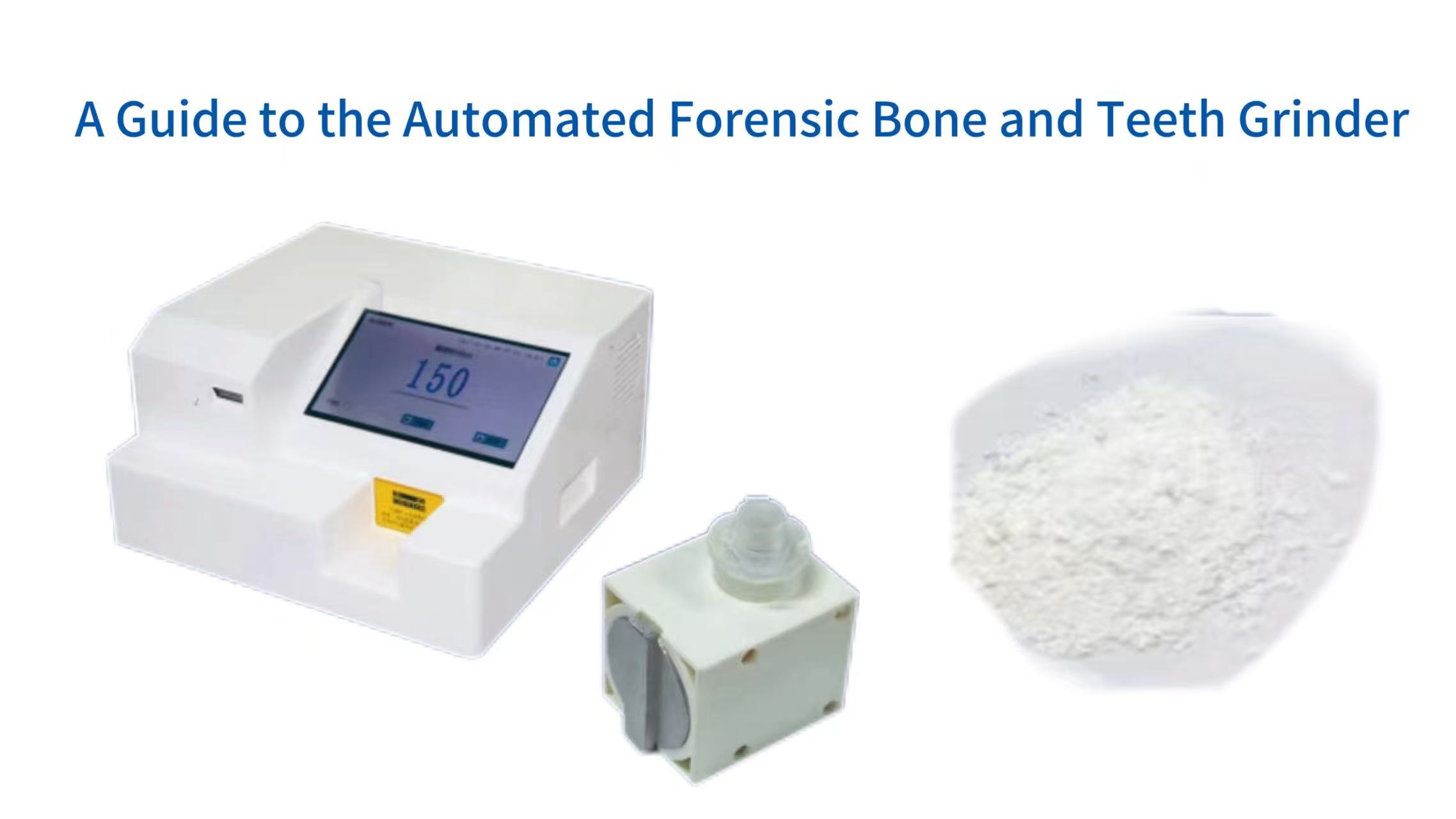
Automated Forensic Bone & Teeth Grinding Workflow
This page provides a comprehensive, step-by-step overview of how to properly operate an automated forensic bone and teeth grinder using disposable grinding cassettes. Designed for a wide audience, from students to seasoned lab professionals, this guide breaks down the technology, workflow, and best practices that ensure the highest quality DNA recovery from challenging skeletal remains. We will explore the principles behind the equipment, its core components, and the meticulous procedures that safeguard sample integrity and prevent contamination in the modern forensic DNA laboratory.
The Critical First Step in Forensic DNA Analysis
The journey to identify an individual from skeletal remains begins long before a DNA sequence is read. It starts with a seemingly simple, yet incredibly critical step: transforming a fragment of bone or a tooth into a fine, homogeneous powder. This process, known as hard tissue sample preparation, is the foundation upon which all subsequent DNA analysis is built. If this initial step is performed poorly, the chances of obtaining a usable DNA profile from an already challenging sample drop significantly. The quality of the powder directly impacts the efficiency of the DNA extraction process, making it a pivotal moment in the entire forensic workflow.
For decades, this task was performed manually, often using a mortar and pestle. This method, while simple, is fraught with variability. The physical effort required means results can differ from one analyst to the next. More critically, the friction generated during manual grinding produces heat, which can degrade the already fragile DNA molecules present in aged or compromised bones. Furthermore, cleaning reusable equipment between samples presents a constant and significant risk of cross-contamination, a threat that can invalidate an entire investigation. These challenges have driven the need for a more reliable, standardized, and safe approach.
The automated forensic bone and teeth grinder, used in conjunction with disposable grinding cassettes, was developed specifically to address these long-standing issues. By automating the process, it eliminates user-to-user variability and ensures a consistent outcome every time. The technology is designed not just to pulverize, but to do so in a way that protects the genetic material within. This represents a fundamental shift from a manual, artisanal technique to a precise, engineered process, setting the stage for more successful DNA analysis from the most difficult of samples.
Core Technologies: How the Grinder Protects and Processes
Core Technology Capabilities
| Technology | Key Function | Benefit |
|---|---|---|
| Cryogenic Grinding | Maintains low temperature throughout grinding cycle | Preserves DNA integrity, prevents thermal degradation |
| Disposable Grinding Cassette | Single-use, sterile, sealed containment | Eliminates cross-contamination, 100% single-source DNA |
| Intelligent Operation System | Touchscreen control, barcode scanning, audit trail | Minimizes user error, full data traceability |
| Closed-System Design | Dual-layer containment of sample and aerosols | Operator safety, no lab environment contamination |
Cryogenic Grinding for DNA Integrity
The single greatest enemy of DNA during mechanical processing is heat. When bone or tooth enamel is fractured, the energy released manifests as friction, which in turn generates significant heat. If unchecked, this heat can denature proteins and, most importantly, fragment the DNA double helix. This fragmentation reduces the yield of high-molecular-weight DNA needed for accurate Short Tandem Repeat (STR) analysis, the gold standard in forensic identification. The automated forensic grinder tackles this problem at its source through a process known as cryogenic grinding.
This technology ensures that the sample remains at a consistently low temperature throughout the entire grinding cycle. The system often incorporates pre-programmed cycles that allow for the sample and the grinding cassette to be pre-chilled, sometimes using liquid nitrogen, before the mechanical action even begins. During operation, the chamber's design and the grinding motion itself are optimized to minimize heat buildup. This meticulous temperature control is not an optional extra; it is a fundamental requirement for preserving the integrity of the DNA, ensuring that the maximum amount of genetic information survives the pulverization process and is available for extraction and amplification using a forensic thermal cycler.
The Disposable Grinding Cassette: A Zero-Contamination Protocol
Cross-contamination is the specter that haunts every forensic DNA analysis. A single cell from a previous sample finding its way into a current case can lead to a mixed or false profile, with devastating consequences for an investigation. The automated forensic grinder eliminates this risk through an elegantly simple yet profoundly effective design: the single-use, disposable grinding cassette. This cassette is the only component that ever comes into contact with the biological sample. It is manufactured to be sterile and is used for one sample, for one case, one time only.
The workflow is straightforward. An analyst places the cleaned bone or tooth fragment into a fresh cassette and seals it. This sealed unit is then inserted into the instrument. The grinding mechanism acts upon the cassette, but the sample itself remains completely isolated within its disposable container. After the cycle completes, the cassette is removed, and the powdered sample remains safely inside. The instrument's interior never touches the bone or the powder, rendering complex cleaning and decontamination protocols between samples unnecessary. This method guarantees 100% single-source DNA recovery, as the chain of evidence for the sample's purity is maintained from the moment it is placed into its own dedicated, sterile environment.
Intelligent Operation and Data Integrity
Modern forensic science demands more than just a physical result; it requires a complete and unbroken digital record of how that result was achieved. The automated forensic grinder is equipped with an intelligent operating system designed to meet these stringent requirements. A central, user-friendly interface, typically a large color touchscreen, allows the operator to control the instrument, select pre-programmed cycles for different sample types, and monitor the process in real-time. This simplifies operation and minimizes the potential for user error.
Beyond simple control, the system is built for data integrity. An integrated barcode scanner allows for the seamless entry of sample information at the start of a run. The instrument then automatically logs every critical parameter of the grinding cycle, including the date, time, user ID, sample ID, and all chosen settings. This creates a detailed, time-stamped audit trail that can be exported via USB or network connection to a Laboratory Information Management System. This digital record is invaluable for laboratory quality assurance, accreditation audits, and providing a verifiable chain of custody for the sample preparation phase, reinforcing the credibility of the final analytical results.
Engineered for Operator Safety
Processing human skeletal remains involves inherent biological hazards. Bone dust and aerosols generated during grinding can contain pathogens or other harmful biological material. Protecting the laboratory personnel from these risks is a paramount design consideration for professional forensic equipment. The automated grinder achieves this through its robust, closed-system design. The grinding process occurs within a sealed chamber, and the sample itself is contained within its own sealed disposable cassette. This dual-layer of containment ensures that no powder or aerosol is released into the laboratory environment.
This sealed operation protects the analyst from inhaling potentially hazardous particulate matter. It also prevents the contamination of the broader lab space and other evidence being processed simultaneously. The need for working inside a fume hood or biosafety cabinet during this specific step is negated, freeing up those valuable resources for other tasks. The instrument's design prioritizes personnel safety without compromising the integrity of the sample, creating a secure and controlled workspace that aligns with the highest standards of modern forensic DNA analysis. For comprehensive laboratory protection, facilities often incorporate anti contamination lab design principles.
A Step-by-Step Guide to the Standardized Workflow
Standardized Grinding Workflow Details
Sample Preparation & Cassette Loading
Surface decontamination of bone/tooth fragment (chemical/physical cleaning)
Load cleaned sample into sterile disposable cassette (add grinding beads if needed)
Securely seal cassette to isolate sample
Cassette Insertion & Sample Registration
Insert sealed cassette into grinder's dedicated holder (safety interlock engaged)
Scan sample barcode to link physical sample with digital record
Select pre-validated grinding program for sample type
Automated Grinding Cycle
2-3 minute fully automated cycle (no user intervention)
Cryogenic temperature control maintains low temp throughout
Precision mechanical forces reduce sample to fine, homogeneous powder
Post-Grinding Powder Recovery
Remove sealed cassette from grinder (powder remains contained)
Transfer powder directly to extraction tube in clean workspace
Dispose of used cassette as biohazardous waste
Step One: Sample Preparation and Cassette Loading
The process begins with the physical sample itself. Before it ever touches the grinder, the bone or tooth fragment must be prepared. This typically involves a surface decontamination step to remove any external contaminants or modern DNA that might have been introduced since the evidence was collected. Common methods include physically removing the outer surface with a sterile tool or using a series of chemical washes. Once the surface is cleaned, the fragment is ready for the grinder. Proper evidence collection tools, such as buccal DNA collection cards for reference samples, are critical in the overall identification process.
The analyst then takes a fresh, sterile disposable grinding cassette from its packaging. The cassette is opened, and the cleaned bone or tooth fragment is carefully placed inside. For some samples, sterile grinding balls or beads may also be added to the cassette at this stage to assist in the pulverization process. The cassette is then securely closed, locking the sample inside its own dedicated, sealed environment. This simple action is the most critical step in guaranteeing contamination-free processing, as the sample is now isolated from the outside world and from every other sample that will be processed.
Step Two: Cassette Insertion and Sample Registration
With the sample safely sealed in its cassette, the analyst moves to the instrument. The sealed cassette is inserted into the specially designed holder within the instrument's grinding chamber. The fit is precise and secure, ensuring that the mechanical energy from the grinder will be effectively transferred to the sample inside. Once the cassette is properly seated and the instrument's safety interlock is engaged, the sample is physically ready for processing.
Before starting the cycle, the operator registers the sample with the instrument's intelligent system. Using the integrated barcode scanner, the analyst scans the barcode present on the cassette or on the associated case file paperwork. This single action automatically links the physical sample to its digital record. The instrument's touchscreen interface then displays the sample information, allowing the operator to confirm the match and select the appropriate grinding program from the library of pre-validated protocols. This step ensures that every action is tracked and that the correct parameters are applied to the specific sample type, be it a dense tooth or a brittle bone fragment.
Step Three: The Automated Grinding Cycle
With the sample registered and the program selected, the operator initiates the automated grinding cycle with a single command on the touchscreen. From this moment on, the process is entirely under the instrument's control, eliminating any user intervention that could introduce variability. The machine begins its work, applying precisely controlled mechanical forces to the cassette. The sample inside is subjected to high-frequency impacts and shearing actions that rapidly reduce it to a fine powder.
Throughout the cycle, which typically lasts between two and three minutes, the system's core technologies are at work. The cryogenic mechanism maintains a low temperature, safeguarding the DNA from thermal damage. The sealed environment of both the chamber and the cassette continues to contain all material. The instrument's software constantly monitors the process, ensuring that all parameters stay within the defined limits. The operator can observe the cycle's progress on the screen, but the process itself is fully automated, guaranteeing a standardized, repeatable result that is independent of the person who started the machine.
Step Four: Post-Grinding Powder Recovery
Once the automated cycle is complete, the instrument signals the operator. The analyst then opens the chamber and removes the sealed cassette. The bone or tooth sample has been transformed into a fine, homogeneous powder, but it remains completely contained within its disposable cassette. This is a crucial feature, as it means there is no loose powder to handle or transfer from a contaminated machine part. The operator takes the sealed cassette to a clean workspace, separate from the grinder itself.
In this clean area, the analyst carefully opens the cassette. The fine powder is now ready for the next stage of the forensic workflow. It can be directly transferred into a pre-labeled tube for DNA extraction using specialized reagents such as forensic proteinase K for efficient cellular digestion. The entire process, from sample to powder, has been controlled, documented, and kept free from contamination. The used cassette, now empty, is disposed of as biohazardous waste. This simple, four-step workflow replaces a manual process that was slow, inconsistent, and risky with a rapid, standardized, and scientifically robust method for preparing the most challenging forensic samples for DNA analysis.
Tailoring the Process for Different Evidence Types
Grinding Parameters by Evidence Type
| Evidence Type | Key Characteristics | Optimized Grinding Settings | Critical Considerations |
|---|---|---|---|
| Dense Bone (Petrous/Temporal) | Highest density, best DNA preservation, hard to pulverize | "Hard bone" program: aggressive motion/longer duration | Increased cryogenic cooling to counter heat from high mechanical energy |
| Teeth/Dental Fragments | Hard enamel exterior, soft inner dentin/pulp (high DNA content) | Two-stage cycle: crack enamel → gentle grind dentin | Contain small fragments to prevent sample loss |
| Trace/Fragmented Remains | Minute quantity (mg scale), weathered, high loss risk | Closed-vessel grinding in dedicated cassette | Direct buffer addition to cassette (no transfer loss), ~100% material utilization |
Processing Dense Bone Samples
Not all bones are created equal. The density and structure of skeletal elements vary significantly across the human body. The petrous portion of the temporal bone, located in the skull, is the densest bone in the human body and is known to protect DNA exceptionally well, even for centuries. However, its very density makes it a formidable challenge for sample preparation. A standard, one-size-fits-all grinding approach may not be sufficient to fully pulverize this tough material, potentially leading to incomplete DNA release.
The automated forensic grinder addresses this through programmable logic. An analyst faced with a petrous bone or a dense femoral fragment can select a specific pre-programmed cycle designed for "hard bone." This program typically utilizes a more aggressive grinding motion or a longer duration to ensure complete pulverization. The cryogenic technology is even more critical here, as the increased mechanical energy required to fracture these dense tissues generates more frictional heat. The system's ability to maintain a low temperature during this intense process is what makes the difference between recovering a full DNA profile and destroying the genetic material in the very act of trying to access it. For particularly challenging samples, specialized solutions like DNA extraction from trace evidence protocols may be employed in downstream processing.
Optimizing for Teeth and Dental Fragments
Teeth are a unique and valuable source of DNA in forensic investigations. The hard enamel exterior and the protective cementum layer create a sealed environment that preserves the DNA-rich pulp and dentin inside. This makes teeth particularly useful in cases involving fire, decomposition, or other harsh conditions. However, the same properties that protect the DNA also make the sample difficult to process. The enamel is extremely hard and brittle, requiring a specific approach to effectively access the inner material without damaging it.
The ideal workflow for a tooth often involves a two-stage process within the same disposable cassette. The first phase of the grinding program is designed to crack and fragment the hard outer shell. Once the enamel is breached, the second phase can be gentler, focused on pulverizing the softer inner dentin and releasing the cellular material from the pulp chamber. This nuanced, programmable approach ensures that the maximum amount of DNA is liberated from the tooth's protective structure. The disposable cassette ensures that even small fragments of a broken tooth are contained and processed, preventing the loss of this precious evidentiary material. After grinding, the DNA can be quantified using a human DNA quant PCR kit to ensure optimal amplification.
Handling Trace and Fragmented Remains
Perhaps the greatest challenge in forensic DNA analysis comes from samples that are not intact bones or teeth, but rather small, weathered fragments or trace amounts of hard tissue. In cases of mass disasters, severe fragmentation, or very old remains, the available material for testing can be measured in milligrams. The traditional manual methods of handling and grinding such tiny fragments are highly prone to sample loss. A piece of bone can easily be flicked away during mortar and pestle work, or powder can be left behind on a reusable grinding surface, representing an irreplaceable loss of evidentiary material.
The use of a dedicated disposable cassette is the key to successfully processing these trace samples. The analyst can place the minute bone fragment directly into the sterile cassette. The entire grinding and pulverization process happens within this single vessel. After the cycle is complete, the powdered sample remains inside the same cassette. There is no need for a difficult and loss-prone transfer from a grinding chamber to a tube. The analyst can simply open the cassette and add the lysis buffer directly to the powder inside, or carefully transfer the concentrated powder with minimal loss. This closed-vessel workflow ensures that nearly 100% of the available trace material is converted into a form suitable for DNA extraction, dramatically increasing the chances of obtaining a profile from the most challenging of samples, which is a core principle in low copy number DNA analysis. This capability is essential for successful disaster victim identification operations where sample quantities are extremely limited.
Ensuring Compliance and Validated Performance
Key Compliance Standards
Validation & Compliance Benefits
Independent Third-Party Validation: Testing by national forensic authorities verifies grinding efficiency, powder consistency, and DNA yield superiority vs manual methods
ISO 17025 Alignment: Comprehensive audit trails (date/time, user ID, sample ID, settings) support traceability requirements for accreditation
ISO 18385 Compliance: Disposable cassette system eliminates cross-contamination risks, meeting human DNA contamination minimization standards
Court-Admissible Results: Validated performance ensures results are legally defensible in judicial proceedings
The Importance of Independent Validation
In the rigorous world of forensic science, a manufacturer's claims are not enough. For a piece of equipment to be trusted in casework, its performance must be independently verified by an authoritative third party. This is particularly true for a device like an automated bone grinder, whose performance directly impacts the success of downstream DNA analysis. Laboratories require confidence that the instrument will perform consistently and effectively under the demanding conditions of real-world forensic casework, where samples are often compromised and the stakes are incredibly high.
Leading automated forensic grinders undergo such rigorous independent testing. For example, an instrument may be evaluated by a national forensic science authority. These evaluations are not cursory; they involve a comprehensive assessment of the instrument's key performance metrics. This includes quantifying its grinding efficiency, measuring the consistency of the resulting powder particle size, and, most importantly, conducting comparative DNA analysis. By directly comparing the DNA yield and profile quality from samples prepared with the automated grinder against those prepared with traditional manual methods, these independent tests provide objective, quantifiable proof of the instrument's superiority and its fitness for purpose in generating court-admissible results. Such validated systems are crucial for rapid DNA analysis systems where speed and accuracy are paramount.
Meeting International Forensic Standards
Forensic DNA laboratories operate within a strict framework of international standards and accreditation requirements. These standards, such as ISO 17025 for testing and calibration laboratories and ISO 18385 for minimizing the risk of human DNA contamination in products used for forensic analysis, govern every aspect of laboratory practice. Equipment used in these labs must be designed and manufactured in a way that supports, rather than hinders, compliance with these rigorous protocols. The automated forensic bone grinder, particularly through its use of disposable cassettes, is a prime example of equipment engineered for regulatory compliance.
The single-use cassette system directly addresses the core requirement of ISO 18385 to minimize contamination risk. By eliminating the need for cleaning reusable parts that contact the sample, the technology removes a major potential source of cross-contamination. Furthermore, the instrument's comprehensive audit trail functionality directly supports the traceability requirements of ISO 17025. Every grinding cycle generates a permanent, unalterable record. This allows the laboratory to demonstrate, during an accreditation audit, exactly how a particular sample was processed, by whom, and under what conditions. This built-in compliance support is not just an added feature; it is a fundamental component of the instrument's design, making it an asset for any laboratory seeking to maintain the highest standards of quality and reliability. Many facilities choose to implement these solutions as part of a comprehensive forensic DNA workflow solution.
The Value and Return on Investment
Integrating an automated forensic bone and teeth grinder into a laboratory represents a significant step forward in capability. The return on this investment is realized across multiple dimensions of laboratory operations. The most immediate benefit is a dramatic increase in efficiency. A process that could take thirty minutes of strenuous manual effort is reduced to a two-to-three-minute automated cycle. This frees up skilled forensic analysts to focus on higher-value tasks, such as data interpretation and report writing. The increased throughput allows laboratories to process more cases, reduce backlogs, and provide faster results to investigators. This efficiency is particularly valuable when integrated with an automated 96 channel integrated DNA workstation for high-volume casework.
The investment also pays dividends in the quality and reliability of results. By standardizing the sample preparation process, the instrument eliminates a major source of variability and error. The consistent production of fine, homogeneous powder improves the efficiency and reproducibility of subsequent DNA extraction and amplification steps. The reduction in failed analyses and the increased success rate with challenging samples translates directly into cost savings by reducing the need for repeat testing and conserving precious evidentiary material. Furthermore, the instrument's robust data logging and compliance-friendly design streamline the accreditation process, reducing the administrative burden on laboratory staff. Ultimately, this technology empowers a laboratory to handle its most difficult cases with a higher degree of confidence, bolstering its reputation and its contribution to the pursuit of justice. For any facility committed to excellence in forensic identification, this grinder is an indispensable tool that supports critical missions such as missing persons DNA identification.