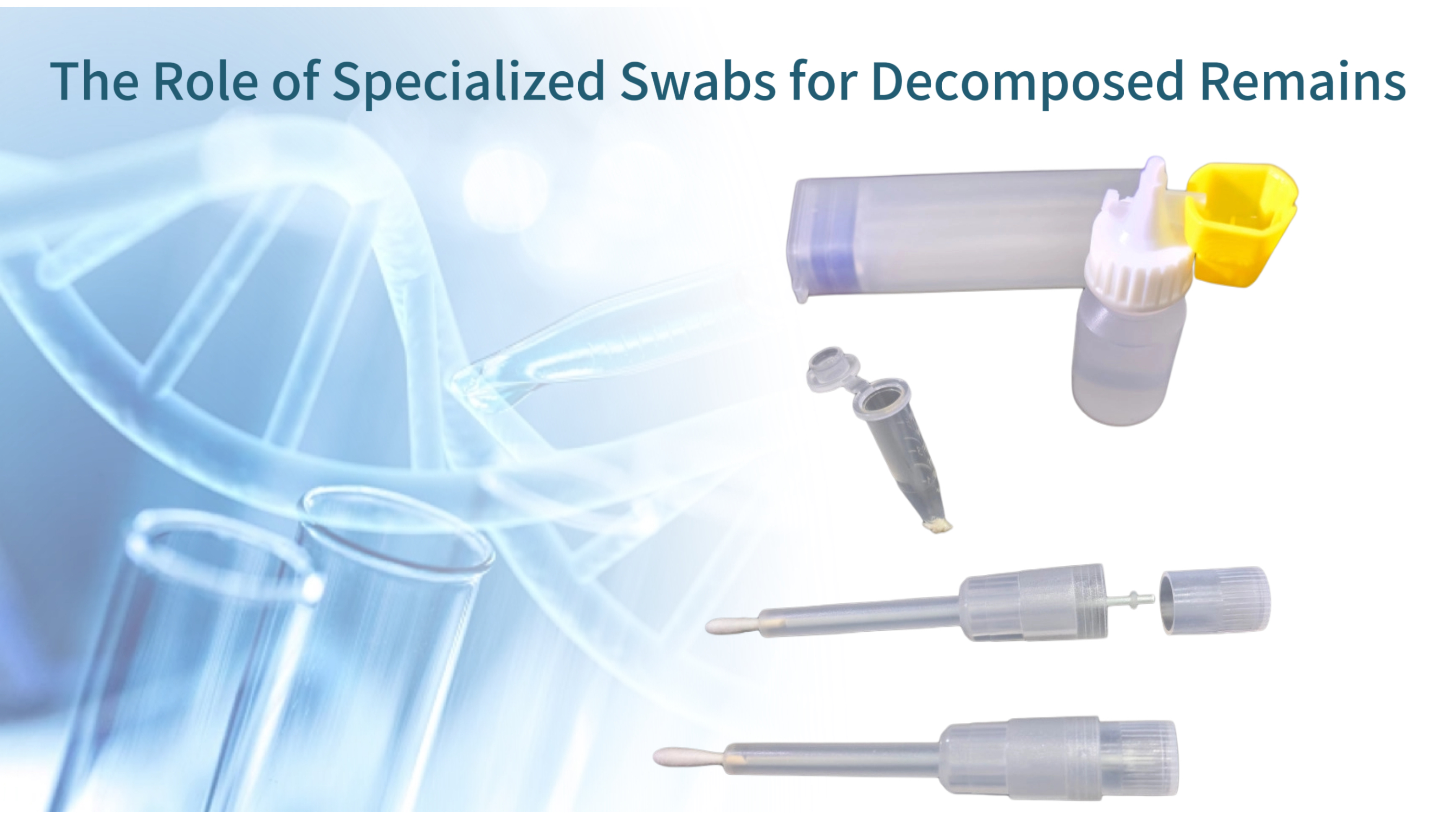
The field of forensic DNA analysis has advanced considerably, yet one of the most persistent challenges remains the successful recovery of genetic material from decomposed human remains. When a body undergoes decomposition, cellular structures break down, and the surrounding environment introduces a host of inhibitory substances that can compromise standard DNA collection and analysis methods. This page explores the specialized forensic DNA swab technologies designed specifically for highly decomposed environments, focusing on how these products overcome the inherent difficulties of working with compromised biological material. The discussion covers the nature of decomposition-related inhibition, the engineering principles behind specialized swab designs, and how these tools integrate into the broader forensic DNA workflow to ensure reliable results even under the most demanding circumstances.
Understanding the Inhibitory Challenges in Decomposed Environments
Decomposition is a complex biological process that creates a uniquely challenging environment for DNA recovery. As tissues break down, cellular contents are released into the surrounding environment, creating a mixture where DNA becomes diluted among numerous cellular debris, bacterial byproducts, and environmental contaminants. The primary challenge lies not simply in the reduced quantity of DNA but in the presence of substances that actively interfere with the enzymatic processes central to DNA analysis. Humic acids, which leach from surrounding soil, bind to DNA molecules and inhibit polymerase activity during amplification. Bacterial enzymes released during putrefaction can degrade DNA strands before they can be stabilized. Hematin from blood breakdown products and various phenolic compounds also contribute to a complex inhibitory mixture that can render conventional collection methods ineffective.
Standard forensic swabs, designed for fresh biological material, are often inadequate for these scenarios because they lack the necessary features to either avoid or overcome these inhibitors. Traditional fiber swabs may absorb inhibitory substances alongside cellular material, concentrating these compounds during the extraction process. The physical structure of conventional swabs can also fail to effectively capture the limited cellular material present in decomposed tissues, particularly when those tissues have become liquefied or are embedded in soil matrices. Recognizing these limitations has driven the development of specialized collection tools engineered specifically to address the unique challenges presented by decomposed remains, tools that can separate the target DNA from its inhibitory environment from the moment of collection.
Sources of PCR Inhibitors in Decomposed Samples
Decomposed samples contain a complex mixture of substances that interfere with downstream DNA analysis, particularly the polymerase chain reaction. The decomposition process releases large quantities of humic and fulvic acids from soil contact, compounds that bear structural similarities to DNA and competitively inhibit polymerase binding. Hematin and its degradation products from blood breakdown directly interfere with the activity of thermostable DNA polymerases. Calcium ions released from bone decomposition can precipitate DNA and inhibit enzymatic reactions. Additionally, bacterial DNA and enzymes from the extensive microbial community present during decomposition can introduce contamination and degrade target human DNA before stabilization occurs.
The concentration of these inhibitors varies significantly depending on environmental conditions, post-mortem interval, and the specific decomposition stage. Samples recovered from aquatic environments contain different inhibitory profiles than those from terrestrial settings. Advanced decomposition stages often involve extensive soil contact, introducing higher levels of humic compounds. These variations mean that no single approach works for all decomposed samples, requiring collection and extraction strategies that are robust enough to handle a wide range of inhibitor types and concentrations. The specialized swab products designed for decomposed environments incorporate features that begin addressing these challenges immediately upon sample collection, providing the foundation for subsequent purification steps. Laboratories processing these challenging samples often rely on optimized trace DNA extraction kits designed to work in conjunction with specialized collection tools.
Impact on Downstream DNA Analysis Success
The presence of inhibitors in decomposed samples creates a cascade of technical challenges throughout the forensic DNA analysis workflow. During the extraction phase, inhibitors can interfere with cell lysis and DNA binding to purification matrices, resulting in reduced DNA recovery even before amplification begins. In the PCR step, even trace amounts of certain inhibitors can completely block amplification, producing partial profiles or no results at all despite the presence of intact DNA. The consequences extend beyond simple failure; partial profiles with stochastic effects can be difficult to interpret and may lead to inconclusive results that provide limited investigative value.
Laboratories processing decomposed samples frequently encounter the need for repeated extraction attempts, dilution of extracts to reduce inhibitor concentrations, or the use of specialized purification methods that add time and cost to casework. Each failed attempt represents not only wasted resources but also the consumption of limited sample material that cannot be replaced. The forensic community has therefore placed significant emphasis on developing collection and processing strategies that maximize the probability of obtaining interpretable results from these challenging samples. Specialized swab technologies represent the first line of defense in this effort, providing a foundation of sample quality that supports the entire analytical process. For laboratories seeking comprehensive solutions, integrated forensic DNA workflow solutions offer coordinated approaches to evidence processing from collection through analysis.
Specialized Swab Technology for Decomposed Sample Collection
Specialized Swab Performance vs. Standard Swab
The evolution of forensic swab technology for decomposed environments reflects a deep understanding of the interaction between sample collection tools and the challenging matrices encountered in these cases. Modern specialized swabs incorporate multiple engineering features that collectively address the unique requirements of decomposed sample collection. The design philosophy centers on achieving three critical objectives: efficient collection of limited cellular material from degraded tissues, separation of target DNA from inhibitory substances during the collection process, and compatibility with downstream extraction and purification methods designed to handle compromised samples.
These specialized swabs represent a departure from universal collection tools. Rather than attempting to work well across all sample types, they are optimized specifically for the challenging conditions presented by decomposed remains. This optimization involves careful selection of fiber materials, swab head geometry, and even the chemical treatment of collection surfaces. The result is a tool that can accomplish what generic swabs cannot: consistent recovery of analyzable DNA from samples that would otherwise yield no useful genetic information. The integration of these specialized collection tools into comprehensive forensic workflows has significantly improved success rates for decomposed casework in laboratories worldwide. Many laboratories complement these swabs with biosafety cabinets that provide controlled environments for processing hazardous decomposed samples.
Advanced Fiber Materials and Surface Chemistry
The selection of fiber materials for specialized decomposition swabs is guided by principles that extend beyond simple absorption capacity. Nylon flocked fibers, arranged perpendicular to the swab shaft, create a three-dimensional structure that captures cellular material on fiber surfaces rather than trapping it deep within the swab head. This architecture facilitates both efficient collection and, equally important, efficient release during extraction. The perpendicular fiber orientation provides mechanical advantages when sampling decomposed tissues, allowing the swab to effectively harvest cells from soft, degraded surfaces without pushing material deeper into the substrate.
Surface chemistry modifications represent an additional layer of engineering sophistication in specialized decomposition swabs. Some advanced products incorporate chemical treatments that preferentially bind cellular material while repelling common inhibitors such as humic acids and hematin. This selective collection approach begins the purification process at the moment of sample collection, reducing the inhibitor load that must be removed during subsequent extraction steps. The combination of physical fiber architecture and chemical surface properties creates a collection tool that actively contributes to sample quality rather than serving as a passive transfer vehicle. Laboratories processing decomposed evidence have reported significantly improved success rates when switching to these advanced swab technologies for challenging casework. These improvements are particularly evident when the swabs are used with dedicated forensic DNA extraction systems optimized for inhibitor removal.
Swab Head Geometry and Mechanical Design
The mechanical design of specialized decomposition swabs addresses the physical challenges of sampling from decomposed tissues that have lost their structural integrity. Traditional swab shapes may be ineffective when sampling liquefied or semi-solid decomposed material, failing to capture sufficient cellular content. Specialized designs incorporate broader heads, modified tapers, and textured surfaces that improve mechanical collection efficiency across the range of tissue states encountered in decomposition cases. The swab head geometry is engineered to maximize contact area while maintaining sufficient pressure to dislodge cells from the underlying substrate.
Handle design also receives careful attention in specialized decomposition swabs. Longer handles allow analysts to maintain distance from potentially hazardous decomposed material while still applying controlled sampling pressure. Break-point features engineered into the handle enable clean transfer of the swab head into extraction tubes without requiring additional handling steps that could introduce contamination. The mechanical reliability of these features is particularly important in decomposition cases, where sample material is often limited and each collection attempt must be optimized for maximum yield. Laboratories have noted that the thoughtful mechanical design of specialized swabs reduces the variability inherent in manual sampling, producing more consistent results across different analysts and sampling scenarios. The use of DNA-free filtered pipette tips during subsequent processing steps further maintains the integrity of these carefully collected samples.
Integration with Automated DNA Extraction Systems
The specialized swabs designed for decomposed samples achieve their greatest effectiveness when integrated with automated DNA extraction systems optimized for challenging forensic samples. This integration represents a significant advancement over manual extraction methods, which can introduce variability and fail to consistently remove the inhibitors characteristic of decomposed material. Modern forensic laboratories increasingly rely on automated extraction platforms that process swab samples through standardized protocols, applying precisely controlled conditions for lysis, binding, washing, and elution.
The compatibility between specialized collection swabs and automated extraction systems requires careful engineering at both ends. Swab designs must accommodate the physical constraints of automated platforms, including proper fit within extraction cartridges and reliable handling by robotic arms. Extraction protocols must be optimized for the specific characteristics of swabs designed for decomposed samples, accounting for differences in cell release characteristics and inhibitor profiles. Laboratories that have successfully integrated these specialized swabs with automated extraction workflows report not only improved success rates but also enhanced consistency and throughput for their decomposition casework. Advanced automated DNA workstations represent the culmination of this integration, providing complete sample-to-result processing capabilities.
Compatibility with High-Throughput Processing Platforms
High-throughput forensic laboratories processing large volumes of casework require collection tools that integrate seamlessly with automated extraction systems capable of processing 96 samples simultaneously. Specialized decomposition swabs have been developed with this requirement in mind, featuring standardized dimensions and consistent physical properties that ensure reliable performance across hundreds of samples. The swab heads must release collected material efficiently within the automated extraction workflow, with the release kinetics matched to the timing of lysis and binding steps programmed into the extraction instruments.
Validation of swab-automation compatibility involves rigorous testing across multiple instruments and protocol variations. Laboratories verify that the swab material does not shed particles that could clog automated pipetting systems or interfere with magnetic bead separation steps. The physical robustness of the swab must withstand the mechanical forces applied during automated processing without compromising the integrity of the collected sample. When these compatibility requirements are met, forensic laboratories can apply the same high-throughput workflows to decomposed samples that they use for routine casework, significantly reducing the time required to process these challenging evidence types. Many laboratories have found that 96-channel extraction systems provide the necessary throughput while maintaining the precision required for decomposition casework.
Protocol Optimization for Degraded Sample Processing
Optimizing extraction protocols for samples collected with specialized decomposition swabs requires consideration of the unique properties of degraded biological material. The lysis conditions must be sufficiently rigorous to release DNA from cells that have been compromised by decomposition while avoiding further degradation of already fragile DNA molecules. Proteinase K concentrations and incubation times may need adjustment to effectively digest the proteinaceous matrix that can trap DNA in decomposed tissues while maintaining enzyme activity in the presence of inhibitors that may have been collected alongside cellular material.
Washing steps in the extraction protocol become particularly critical when processing decomposed samples. Additional washes or modified wash buffer compositions may be required to remove the elevated levels of inhibitors present in these samples while retaining DNA bound to the extraction matrix. Elution conditions must be carefully controlled to maximize recovery of the limited DNA present, often requiring smaller elution volumes than would be used for fresh samples. Laboratories have developed extensive experience with these protocol modifications, establishing best practices that balance the need for inhibitor removal against the risk of losing already limited DNA during processing. The integration of specialized collection swabs with optimized extraction protocols represents a comprehensive approach to decomposition casework that maximizes the probability of obtaining usable genetic profiles. Specialized reagents such as forensic lysis buffers are often formulated specifically to address the challenges presented by decomposed samples.
Application Across Challenging Evidence Types
Application Success Rate of Specialized Swabs
Decomposed remains present forensic laboratories with a wide variety of evidence types, each requiring specific collection approaches. Specialized decomposition swabs have demonstrated effectiveness across this spectrum, from soft tissue sampling to bone surface collection. The common thread across these applications is the need for collection tools that can effectively harvest the limited cellular material present while minimizing the uptake of inhibitors that will complicate downstream analysis. Forensic practitioners have developed specialized techniques for each evidence type, adapting their sampling approaches to the specific challenges presented by different decomposed tissues.
The versatility of modern specialized swabs extends to sampling from associated evidence such as clothing, burial wrappings, and soil matrices. In cases where remains have been buried, swab sampling of internal surfaces of containers or contact areas can yield usable DNA even when direct tissue sampling is compromised. The ability to successfully recover DNA from these associated materials expands the evidence available for analysis and can provide critical investigative leads. Laboratories processing complex decomposition cases routinely employ multiple swab types and sampling strategies, selecting the approach best suited to each specific evidence item encountered. Comprehensive case management often incorporates criminal investigation solutions that address the full range of evidence types encountered in decomposition cases.
Skeletal Remains and Bone Surface Sampling
Bone represents one of the most common and challenging sample types in decomposition cases. While the internal structure of bone can preserve DNA for extended periods, the surface of skeletal remains often contains a complex mixture of decomposed tissue residues, environmental contaminants, and inhibitory compounds. Specialized swabs designed for bone surface sampling incorporate features that maximize collection of the DNA-containing material that adheres to bone surfaces while minimizing uptake of soil-derived inhibitors. The swab head geometry must allow effective sampling of curved and irregular surfaces characteristic of skeletal elements.
Forensic practitioners have developed techniques that combine swab sampling with gentle abrasion to access cellular material embedded in bone surfaces. The specialized swabs used for this purpose must be durable enough to withstand the mechanical forces involved without shedding fibers that could contaminate the sample. The collected material typically requires extraction protocols optimized for the simultaneous presence of decomposed tissue residues and mineral components from the bone itself. Laboratories successfully processing bone surface samples often employ specialized extraction kits designed specifically for skeletal material, creating a complete workflow from collection through analysis that addresses the unique challenges of bone evidence. When additional processing is required, automated bone grinding systems can prepare skeletal samples for more comprehensive DNA analysis.
Mixed Stain and Complex Biological Mixtures
Decomposed remains frequently involve mixtures of biological materials that complicate DNA analysis. Tissues from the deceased individual may be mixed with bacterial biofilms, insect residues, and environmental materials that have become incorporated into the decomposition matrix. Specialized swabs designed for these complex mixtures must balance the need to collect representative material with the equally important requirement to avoid overwhelming the subsequent purification process with non-human biological content. The selective collection properties engineered into some advanced swab designs can help analysts target human cellular material while minimizing collection of contaminating organisms.
The analysis of mixed samples from decomposition cases requires careful interpretation of the resulting genetic profiles. The presence of bacterial DNA and environmental inhibitors can create amplification artifacts that complicate profile interpretation. Specialized collection tools that reduce inhibitor load and minimize non-human DNA co-collection contribute to cleaner amplifications that are easier to interpret. Forensic laboratories processing decomposition cases have found that investment in specialized collection technologies pays dividends throughout the analytical process, reducing the need for complex statistical corrections and increasing confidence in the resulting profiles. Advanced sexual assault forensic evidence solutions often employ similar principles for processing complex mixed samples.
Contamination Control and Sample Integrity
Contamination control takes on heightened importance when processing decomposed samples, where the limited quantity of target DNA makes it particularly vulnerable to being masked by introduced genetic material. Specialized decomposition swabs are manufactured under rigorous quality control conditions that ensure freedom from detectable human DNA and other contaminants that could compromise forensic analysis. The packaging systems for these swabs maintain sterility and DNA-free conditions through individual wrapping that protects each swab until the moment of use in evidence collection.
Laboratory workflows for decomposition casework must incorporate multiple layers of contamination control that begin with sample collection and extend through the entire analytical process. The use of specialized swabs with integrated break-point features supports these workflows by enabling aseptic transfer of the collected sample into extraction tubes without additional handling steps. This design reduces opportunities for contamination introduction at the critical interface between sample collection and laboratory processing. Forensic laboratories have documented significant improvements in contamination control following the adoption of integrated collection and extraction systems that minimize sample handling. Complementary contamination control products such as DNA removal solutions provide additional safeguards for laboratory surfaces and equipment.
Individual Packaging and Sterility Assurance
Each specialized decomposition swab is packaged individually in medical-grade materials designed to maintain sterility and prevent cross-contamination. The packaging must be robust enough to withstand the rigors of field use while remaining easily opened under the conditions encountered during evidence collection. The integrity of individual packaging is particularly important in decomposition cases, where multiple samples may be collected from a single scene and the consequences of cross-contamination would be severe.
Sterility assurance for forensic swabs involves rigorous quality control testing throughout the manufacturing process. Swab lots are tested for the absence of amplifiable human DNA, bacterial DNA, and PCR inhibitors that could affect downstream analysis. The manufacturing environment is controlled to prevent introduction of contaminants, and packaging materials are selected to maintain sterility throughout the product shelf life. Laboratories can trace each swab lot through manufacturing documentation, providing the chain of custody information necessary for evidentiary purposes. The use of powder-free forensic gloves during evidence handling provides an additional layer of contamination control that complements the integrity of individually packaged collection tools.
Chain of Custody Considerations
The documentation requirements for evidence collected from decomposed remains are particularly stringent, as the results may be subject to intense scrutiny in legal proceedings. Specialized swab products support chain of custody requirements through clear labeling systems and packaging designs that maintain evidence integrity from collection through analysis. The individual packaging can be labeled with case identifiers at the time of collection, and the break-point handle design provides a visual indication that the sample has been used and transferred to the extraction tube.
Laboratory information management systems integrated with swab tracking capabilities provide additional layers of documentation for decomposition casework. Each swab can be logged into the system at the time of evidence receipt, with its progress through the analytical workflow recorded in an auditable trail. The integration of specialized collection tools with these management systems supports the comprehensive documentation required for forensic accreditation and provides the evidentiary foundation necessary for the results to be admissible in court proceedings. For laboratories establishing new facilities, turnkey forensic DNA laboratory solutions provide integrated systems that incorporate these chain of custody considerations from the ground up.
Value Proposition for Forensic Laboratories
Laboratory Value Improvement
Forensic laboratories face increasing pressure to process decomposition casework efficiently while maintaining the highest standards of analytical quality. The adoption of specialized swab technologies represents an investment that delivers returns across multiple dimensions of laboratory operations. The improved success rates achieved with these specialized tools reduce the need for repeated sampling and reanalysis, conserving limited sample material and laboratory resources. The consistency provided by standardized collection tools supports quality management programs and accreditation requirements.
The value of specialized decomposition swabs extends beyond immediate casework outcomes to encompass the broader capabilities of the forensic laboratory. Laboratories equipped to successfully process decomposition evidence can take on a wider range of casework, from historical investigations involving exhumed remains to current cases involving advanced decomposition. This expanded capability enhances the laboratory's reputation and its ability to serve the forensic community. The investment in specialized collection technologies signals a commitment to excellence that resonates with both clients and accreditation bodies. Many laboratories complement these collection tools with comprehensive forensic DNA laboratory solutions that address all aspects of casework processing.
Improved Success Rates for Challenging Casework
The implementation of specialized swab technologies for decomposition casework has produced measurable improvements in laboratory success rates. Forensic laboratories tracking their performance with these specialized tools report significant increases in the proportion of decomposed samples yielding interpretable DNA profiles. The improvements are most dramatic for the most challenging samples, where conventional methods previously produced no usable results. These success rate improvements translate directly into more cases solved and more questions answered for the investigative community.
The factors contributing to improved success rates extend beyond the physical properties of the swabs themselves. The adoption of specialized collection tools often catalyzes broader improvements in laboratory workflows, encouraging analysts to optimize extraction protocols and downstream analysis specifically for decomposed samples. The cumulative effect is a systematic enhancement of laboratory capabilities for processing the most challenging evidence types. Laboratories that have made these investments find that they can approach decomposition casework with confidence, knowing that their tools and protocols have been validated for these demanding applications. Advanced amplification systems such as forensic thermal cyclers provide the necessary sensitivity to work with the low DNA yields typical of decomposition samples.
Cost-Effectiveness and Resource Optimization
The initial investment in specialized swab technologies is offset by significant downstream cost savings for forensic laboratories. The reduction in repeated extraction attempts and reanalysis of failed samples directly reduces reagent consumption and analyst time. The improved success rates mean that fewer cases require the costly and time-consuming alternative approaches that would otherwise be necessary for decomposed samples. Laboratories can process decomposition casework within their standard workflows rather than dedicating specialized resources to these challenging samples.
Resource optimization extends to the management of limited sample material, which is often a critical concern in decomposition cases. When initial sampling with specialized swabs yields usable results, the need for additional destructive sampling is eliminated. This conservation of evidence allows for confirmation testing or retention of material for future reanalysis using advanced technologies. The ability to preserve evidence while still obtaining timely results represents an optimal outcome that balances the competing demands of casework urgency and evidence conservation. For laboratories seeking to maximize efficiency, rapid DNA analysis systems offer accelerated processing options that complement specialized collection technologies.
Future Developments in Decomposed Sample Collection
The field of forensic DNA collection continues to evolve, with ongoing research and development focused on further improving success rates for decomposed samples. Emerging technologies promise to provide even greater capabilities for overcoming the challenges presented by these difficult evidence types. The integration of nanomaterials into swab surfaces may enable selective capture of target DNA while repelling inhibitors more effectively than current technologies. Microfluidic systems that incorporate collection and preliminary sample processing into integrated devices could reduce the steps between evidence collection and analysis.
Research into the fundamental biology of decomposition continues to provide insights that inform the development of improved collection methods. Understanding how DNA degrades and how inhibitors interact with DNA molecules during the decomposition process enables more targeted approaches to preservation and recovery. The forensic community's commitment to continuous improvement ensures that each generation of specialized swab technology represents a meaningful advance over its predecessors, delivering better results for the most challenging casework. These advances are often developed in conjunction with specialized degraded DNA analysis technologies that push the boundaries of what is possible with compromised samples.
Emerging Technologies and Materials
Advanced materials research is opening new possibilities for forensic swab technology. Nanofiber structures can provide greater surface area for cell capture while maintaining the open architecture that facilitates inhibitor removal during extraction. Functionalized surfaces incorporating chemical groups that specifically bind DNA while repelling common inhibitors represent a promising direction for next-generation collection tools. These advanced materials may enable more selective collection approaches that begin the purification process at the swab surface rather than waiting for laboratory extraction steps.
The integration of collection swabs with field-deployable analysis systems represents another frontier in decomposition sample processing. Portable devices capable of preliminary screening or even complete analysis at the scene could transform the approach to decomposition cases, enabling real-time decision making about sampling strategies. While current technology requires laboratory processing for full forensic DNA analysis, ongoing development work aims to bring more analytical capability to the point of collection, reducing turnaround times and preserving sample material. These innovations build upon established principles of low copy number DNA analysis that have already transformed forensic capabilities for trace evidence.
Integration with Advanced Forensic Analysis Methods
The evolution of forensic DNA analysis methods, including massively parallel sequencing and advanced statistical interpretation tools, creates new requirements for sample collection. These advanced methods often require higher quality starting material than traditional STR analysis, placing greater demands on collection tools and extraction protocols. Specialized decomposition swabs must continue to evolve to meet these requirements, providing the sample quality necessary to support the full range of analytical approaches available to modern forensic laboratories.
The integration of collection technologies with emerging analysis methods requires close collaboration between swab manufacturers, forensic laboratories, and research institutions. Validation studies must demonstrate that samples collected with specialized decomposition swabs are suitable for the full range of analytical methods that may be applied to the evidence. This validation work ensures that the investment in specialized collection tools continues to pay dividends as forensic analysis capabilities advance, maintaining the laboratory's ability to address decomposition casework with the most powerful tools available. For laboratories preparing for these advances, comprehensive anti-contamination laboratory design principles provide the foundation for integrating new technologies into existing workflows.