What is the Automated 24-Channel Trace DNA Kit?
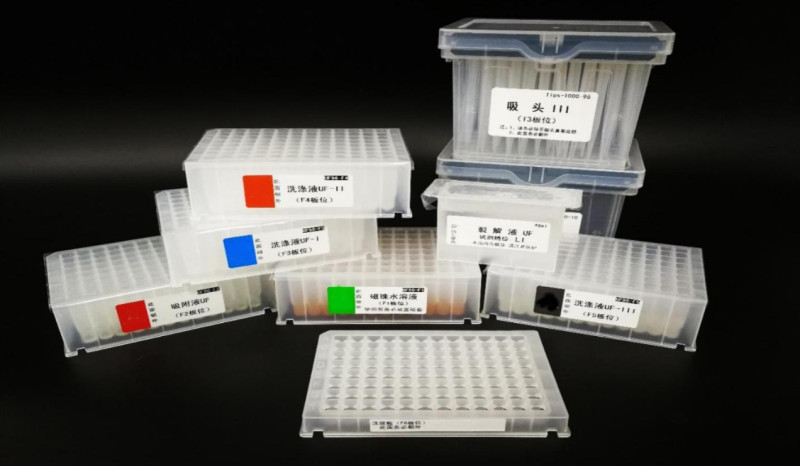
In modern forensic science, processing multiple samples simultaneously is crucial for efficiency. The Automated 24-Channel Trace DNA Kit represents a specialized solution designed for this high-throughput environment. It is a complete reagent and consumable set configured for use with automated liquid handling workstations, enabling the parallel processing of up to 24 forensic samples in a single run.
The core innovation of this kit lies in its adaptation of proven silica-based DNA extraction chemistry for full automation. This approach is specifically optimized for the challenges of forensic casework, where sample integrity and minimizing cross-contamination are paramount. By moving from manual, single-tube methods to an automated, multi-channel platform, laboratories can significantly scale their DNA processing capabilities.
Defining High-Throughput Trace DNA Processing
High-throughput processing in a forensic DNA laboratory refers to the ability to handle a large volume of samples with minimal direct analyst intervention. This is particularly vital for touch DNA evidence, which often involves numerous samples from a single scene, such as swabs from weapons, clothing, or entry points. The 24-channel format is engineered to tackle these complex cases and growing evidence backlogs by standardizing the extraction phase across a full microplate.
The transition to a high-throughput workflow is not merely about speed; it is about applying consistent, robotic precision to every sample. This level of standardization is key for generating reproducible data that can withstand legal scrutiny. The automated protocol ensures that each sample undergoes identical lysis, binding, wash, and elution steps, reducing variables introduced by manual technique.
Core Components of the 24-Channel Kit for Forensic Labs
This comprehensive kit provides all the necessary reagents pre-formulated for use with automated liquid handlers. Central to the process are the specialized buffers: a lysis buffer designed to efficiently release DNA from difficult substrates, binding buffers that optimize DNA capture onto silica-coated magnetic beads, and a series of wash buffers that remove inhibitors common in forensic samples like dyes, humic acids, or ionic detergents.
Beyond the chemistry, the kit is designed with laboratory workflow in mind. It includes compatibility with standard laboratory consumables such as 96-deep well plates and specific tip sizes for the liquid handler. This integration ensures that from the moment the kit is unpacked, it is ready to be incorporated into the laboratory's existing automated DNA extraction setup, minimizing setup time and validation hurdles.
Key Features & Advantages for Your Forensic DNA Laboratory
Implementing an automated trace DNA extraction system brings transformative advantages to a forensic DNA laboratory. The primary benefit is the dramatic increase in analyst productivity, allowing skilled personnel to focus on data interpretation and complex case analysis rather than repetitive pipetting tasks. This shift not only accelerates turnaround times but also enhances job satisfaction and resource allocation within the lab.
Furthermore, the consistency afforded by automation directly contributes to data quality. By removing the manual pipetting variable, the coefficient of variation between samples and across different runs is significantly reduced. This leads to more reliable quantitation results downstream and more uniform STR amplification, which is critical for generating clear, interpretable DNA profiles from low-level samples.
Unmatched Efficiency with 24-Channel Parallel Processing
The 24-channel parallel processing capability is the engine of this kit's efficiency. A laboratory can process a full plate of 96 samples in just four automated runs, a task that would be prohibitively time-consuming and labor-intensive manually. This parallel processing is especially beneficial for batch processing similar sample types, such as a series of buccal swabs for a DNA database or multiple items from a single crime scene.
This efficiency extends to reagent usage and waste generation. Automated systems use precise, micro-volume dispensing, which often reduces overall reagent consumption compared to manual protocols scaled for worst-case scenarios. The standardized format also simplifies inventory management and kit ordering, as labs can predict usage based on plate counts rather than individual sample tubes.
Optimized for Low-Template and Touch DNA Evidence
Touch DNA evidence, containing only a few cells, presents one of the greatest challenges in forensic DNA analysis. The reagents in this kit are formulated to maximize the recovery of these minute amounts of genetic material. The lysis conditions are robust enough to break open epithelial cells but gentle enough to prevent excessive shearing of the already limited DNA, preserving the longer fragments necessary for successful STR analysis.
The purification chemistry is specifically designed to co-purify inhibitors that are prevalent in low-template samples, such as those from handled objects. The wash buffer formulations are critical here, ensuring that substances like indigo dye from denim or calcium from bone dust are effectively removed, leaving a clean eluate that is highly compatible with subsequent PCR amplification using sensitive STR kits.
Seamless Integration with Major Automated Liquid Handling Platforms
A key consideration for any laboratory is whether a new kit will work with their existing capital equipment. This trace DNA kit is developed with open-platform compatibility in mind. It functions seamlessly with leading robotic liquid handling systems commonly found in forensic laboratories. The provided protocols are often available in native scripting languages for these platforms, allowing for easy import and minimal programming adjustment.
This seamless integration reduces the validation burden. Laboratories can often perform a verification study rather than a full validation, as the core extraction chemistry may already be validated in a manual format. The focus shifts to demonstrating that the automated method performs equivalently or superiorly on the laboratory's specific instrumentation, a faster path to implementation.
Workflow Integration: From Evidence to DNA Profile
Integrating this automated kit into the forensic DNA workflow creates a more streamlined and efficient pipeline from evidence receipt to DNA profile generation. The process begins post-sample collection, where cuttings or swabs are placed directly into deep-well plates. The automated system then takes over, performing all fluidic steps without further manual intervention until the purified DNA is eluted into a fresh plate.
This eluted DNA is then perfectly formatted for the next steps in the workflow. The elution buffer is compatible with downstream quantification methods, such as real-time PCR assays, and does not inhibit the enzymes used in STR amplification. This end-to-end compatibility ensures that the gains in efficiency and quality achieved during extraction are maintained throughout the entire DNA analysis process.
Pre-PCR Setup: Sample Lysis, Binding, and Wash Steps
The pre-PCR phase handled by the automated kit is methodical and critical. The initial lysis step, often incorporating proteinase K and chaotropic salts, is optimized to break down cellular and nuclear membranes while inactivating nucleases. For challenging substrates like fabric or adhesive tapes, extended or heated lysis protocols can be part of the flexible method parameters.
Following lysis, the binding conditions are adjusted to ensure maximum adsorption of DNA onto the magnetic beads, even in the presence of common forensic inhibitors. The subsequent wash steps are where purification is achieved. A typical protocol involves two or three wash cycles with buffers of decreasing ionic strength to remove proteins, salts, and other contaminants while keeping the DNA securely bound. The precision of an automated system in aspirating and dispensing these wash buffers is key to achieving high-purity eluates without losing precious low-template DNA.
Post-Elution Compatibility with STR Amplification Kits
The final elution step yields DNA in a low-ionic-strength buffer, typically TE or a proprietary solution, which is ideal for long-term storage and downstream applications. This eluate is directly compatible with major commercial STR amplification kits used for human identification. The automated extraction removes PCR inhibitors effectively, which means the DNA is "amplification-ready," leading to more balanced peak heights and fewer amplification failures.
This compatibility is rigorously tested during kit development. Performance metrics such as peak height ratio, signal balance, and overall profile quality are evaluated using standard control DNA and challenging mock forensic samples. The goal is to ensure that the DNA purified by this automated method consistently produces high-quality STR profiles that meet or exceed the laboratory's analytical thresholds and interpretation guidelines.
Why Choose Our Trace DNA Kit for Your Lab?
Selecting a core extraction technology is a significant decision for any forensic DNA laboratory. Our kit is the product of extensive research and collaboration with working forensic scientists. It is designed not just as a collection of reagents, but as a holistic solution to the real-world problems of throughput, sensitivity, and reproducibility faced by laboratories today.
The decision ultimately impacts operational efficiency, staff morale, and the quality of justice served. A reliable, automated extraction process forms the dependable foundation upon which all subsequent DNA analysis is built. By reducing hands-on time and variability, laboratories can process cases more swiftly and with greater confidence in the results.
Reducing Hands-On Time and Potential Contamination
Manual sample processing is a known source of potential contamination from analyst handling and aerosol generation. By enclosing the entire extraction process within the deck of a liquid handler, often with optional HEPA filtration, the automated system drastically reduces this risk. Samples are transferred by disposable tips, and plates are sealed during incubation, creating a more controlled environment.
The reduction in hands-on time is quantifiable. What might take an analyst several hours of focused pipetting can be accomplished by the robot in the background. This frees the analyst to perform other tasks that require human expertise, such as microscopy, sample screening, or complex data review, thereby optimizing the use of highly trained personnel and increasing overall laboratory output.
Supported by Our Expert Forensic Science Support Team
Implementation of new technology is supported by our dedicated forensic science support team. This team consists of scientists with direct experience in forensic DNA laboratory operations, from casework to quality assurance. They provide not just technical assistance for the instrumentation, but also application-specific guidance on protocol optimization, validation strategy, and troubleshooting unexpected results.
This support extends to helping laboratories navigate the requirements of international quality standards, such as those from the ANSI National Accreditation Board (ANAB) or ISO/IEC 17025. We provide comprehensive documentation, including validation guides, certificate of analysis for reagents, and detailed material safety data sheets, all designed to streamline the accreditation process for your quality management system.
Frequently Asked Questions (FAQs) About the 24-Channel Kit
Common questions from forensic laboratory managers and analysts often focus on practical implementation and performance. Understanding the typical DNA yield, the validation pathway, and the flexibility of the system are key considerations before adoption. These FAQs address the core concerns that arise when evaluating an automated trace DNA solution for high-throughput casework or database applications.
What is the typical yield for trace DNA samples?
Yield is highly dependent on the original sample substrate and the amount of cellular material collected. The kit is optimized for maximum recovery, but typical yields from touch DNA samples like handled objects can range from sub-nanogram to a few nanograms of total human DNA. The more critical metric for forensic labs is not just total yield, but the quality of the resulting STR profile. The kit's efficient inhibitor removal often means that even low-yield extracts produce clean, amplifiable DNA suitable for generating a full profile.
How does this kit compare to manual extraction methods?
The fundamental chemistry may be similar to proven manual silica-based methods, offering a familiar paradigm for laboratories. The primary advantages of the automated kit are in reproducibility, throughput, and contamination control. A manual method's efficiency can vary between analysts and across time, while the robotic system performs each step identically for every sample in a run. This leads to more consistent results, especially for low-template samples where precision is paramount. The throughput is incomparably higher, transforming a day's manual work into a few hours of automated processing.
What validation support do you provide for laboratory accreditation?
We provide a robust validation package designed to support laboratories through the accreditation process. This includes a recommended validation plan outlining experiments for sensitivity, reproducibility, inhibitor tolerance, and concordance with existing methods. We supply data from our own internal validation studies that laboratories can use for reference. Furthermore, our support specialists can consult on the design and interpretation of in-house validation experiments to ensure they meet the stringent requirements of forensic quality standards.
Can the protocol be customized for specific casework needs?
Yes, the automated protocol offers a degree of flexibility to accommodate different forensic sample types. Parameters such as lysis time, lysis temperature, and the number of wash steps can often be adjusted within the liquid handler's software to optimize recovery from specific substrates like bone, teeth, or adhesive tapes. Our application specialists can provide guidance on method modifications based on published research and collective user experience, helping you tailor the workflow for your laboratory's unique caseload.
Get a Quote
Contact our sales staff, tell us your needs, and we will provide you with the most suitable solution.
Contact Now