Introduction to the Automated 96-Channel Trace DNA Kit
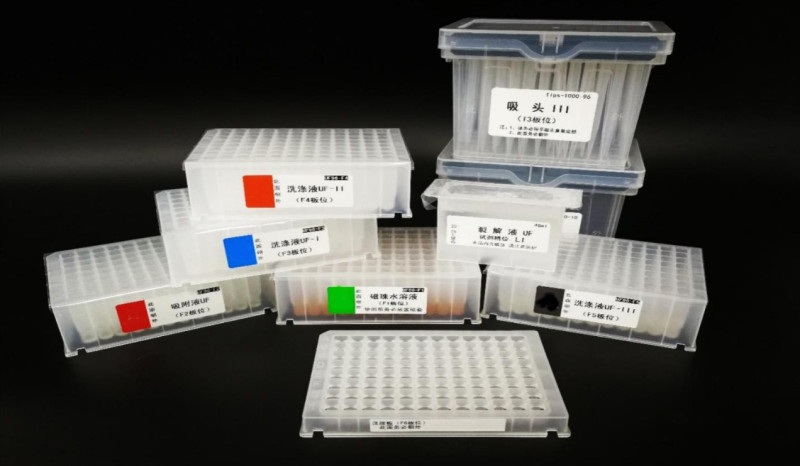
The landscape of forensic DNA analysis is undergoing a significant transformation, driven by the need to process more samples with greater sensitivity and speed. The Automated 96-Channel Trace DNA Kit represents a pivotal advancement in this field. It is engineered specifically for laboratories facing high-volume casework, where traditional manual methods can become a bottleneck. This kit is not merely a collection of reagents; it is a complete system designed from the ground up to integrate seamlessly with modern forensic laboratory automation, enabling a new standard of throughput and reliability in genetic analysis.
By adopting a 96-channel format, this solution directly addresses the challenges of backlog reduction and large-scale databasing projects. The fundamental design principle centers on maximizing laboratory efficiency without compromising the critical data quality required for courtroom-admissible results. From sexual assault kit processing to the analysis of minute touch DNA samples, this kit provides a standardized, robust pathway for generating STR profiles, forming the backbone of a modern, high-capacity forensic DNA operation.
Revolutionizing High-Volume Forensic DNA Casework
Forensic laboratories today are tasked with analyzing an ever-increasing number of samples, from reference swabs to complex evidentiary items. The manual preparation of amplification reactions for these samples is time-consuming and introduces opportunities for human error. The Automated 96-Channel Trace DNA Kit revolutionizes this process by enabling the simultaneous setup of 96 individual polymerase chain reactions. This parallel processing capability drastically reduces hands-on time, allowing scientists to focus on data interpretation and case review rather than repetitive pipetting tasks.
The impact on case turnaround time can be profound. A laboratory can process multiple batches of evidence samples in the time it previously took to prepare a single plate manually. This scalability is crucial for meeting the demands of timely criminal investigations and fulfilling the requirements of legislative mandates for processing specific evidence types. The consistent, automated formulation of each reaction master mix also ensures unparalleled reproducibility across runs and between different analysts, strengthening the laboratory's quality assurance framework.
Designed for Integration with Modern Forensic Laboratory Automation
True laboratory efficiency is achieved when individual components function as a cohesive system. This trace DNA kit is meticulously designed for compatibility with leading liquid handling robots and automated platforms. The chemistry is optimized for stability and performance in automated dispensing environments, ensuring that the sensitive enzymatic reactions are not adversely affected by the automation process itself. This allows laboratories to create a fully automated workflow, from sample extraction and quantification through to PCR setup.
Furthermore, the kit's design facilitates integration with Laboratory Information Management Systems (LIMS). Barcoded components and standardized protocols allow for seamless sample tracking and data management, creating an auditable chain of custody for the entire analytical process. This level of integration minimizes cross-contamination risks by limiting direct human interaction with samples and reagents, while also providing the structured data output necessary for efficient analysis using modern capillary electrophoresis systems and probabilistic genotyping software.
Key Features and Technological Advantages
The Automated 96-Channel Trace DNA Kit incorporates several key technological innovations that collectively deliver high-sensitivity forensic DNA analysis. At its core is an optimized master mix formulation that provides exceptional tolerance to common inhibitors found in forensic samples, such as humic acid or indigo dye from denim. This robustness is critical for obtaining results from challenging, real-world evidence that may be degraded or contaminated. The kit's primer set offers comprehensive coverage of core genetic markers, including all CODIS loci and expanded ESS loci, ensuring compatibility with national DNA databases and international standards.
Another significant advantage lies in the kit's streamlined workflow. The pre-formulated, ready-to-use components reduce the number of pipetting steps required to prepare a reaction plate. This not only saves time but also enhances precision and reduces the potential for volumetric errors. The inclusion of a high-quality internal lane standard is vital for achieving precise sizing accuracy during capillary electrophoresis, which is fundamental for reliable allele calling and mixture deconvolution in downstream data analysis.
Unmatched Sensitivity for Low-Template and Degraded DNA Samples
Forensic evidence often yields only picogram quantities of genetic material, known as low-template DNA. Analyzing such samples requires chemistry of exceptional sensitivity. The master mix within this kit features a specially engineered polymerase enzyme blend with high processivity and fidelity, capable of efficiently amplifying these minute amounts of DNA. Enhanced buffer components further stabilize the reaction, allowing for successful amplification even when the DNA template is partially degraded, a common occurrence in samples exposed to environmental stressors.
This high sensitivity must be managed carefully within a validated protocol. Laboratories utilizing this kit can establish appropriate stochastic thresholds—the point at allele detection becomes less reliable due to the random effects of amplifying very few DNA molecules. The consistent performance of the kit allows for clear and reliable determination of these thresholds, ensuring that the resulting STR profiles are interpreted correctly. This capability is indispensable for generating conclusive results from single cells or limited touch DNA deposits, turning what was once an unanalyzable sample into a potential investigative lead.
Streamlined 96-Channel Workflow for Maximum Laboratory Efficiency
Efficiency in a forensic DNA laboratory is measured not just by speed, but by the reliable generation of high-quality data. The 96-channel format is the industry standard for high-throughput processing, and this kit is engineered to exploit that format fully. The workflow consolidation begins with the master mix, which is provided in a formulation that allows for bulk preparation. An analyst can prepare enough reaction mixture for an entire plate in a single tube, which is then distributed across the 96 wells by an automated liquid handler, ensuring perfect homogeneity and consistency for every sample.
This approach dramatically reduces the number of individual pipetting actions compared to manual, tube-by-tube setup. The reduction in repetitive motion is a significant ergonomic benefit for laboratory staff. More importantly, it standardizes the process. Every sample on the plate experiences identical reaction conditions, which simplifies quality control and troubleshooting. This streamlined process directly translates into higher sample throughput, enabling a laboratory to increase its capacity and accelerate its overall casework pipeline without a proportional increase in labor or consumable costs.
Optimized Chemistry for Robust and Reproducible STR Profiles
The reliability of a forensic DNA result hinges on the consistency and robustness of the Short Tandem Repeat (STR) amplification process. The chemistry within this kit is the product of extensive research and development, focused on overcoming the specific challenges of forensic samples. The buffer system is fortified to counteract PCR inhibitors commonly encountered in casework, such as hematin from blood or tannins from soil. This inhibitor tolerance ensures that the amplification reaction proceeds efficiently, yielding balanced peak heights and clear, interpretable electrophoretograms.
Reproducibility is a cornerstone of forensic science. The kit's optimized formulation ensures that STR profiles are consistent from run to run and between different batches of reagents. This is critical for maintaining the integrity of a DNA database, where profiles generated years apart must be comparable. The careful balancing of primer concentrations within the multiplex assay prevents locus dropout and minimizes artifacts like stutter peaks, resulting in clean, high-quality data that analysts can interpret with confidence, whether for a single-source sample or a complex mixture.
Core Components of the Kit
Understanding the individual components of the Automated 96-Channel Trace DNA Kit provides insight into its overall performance. Each element plays a specific and vital role in the genetic analysis pipeline. The foundation is the master mix, a pre-blended solution containing the essential enzymes and optimized salts necessary for DNA amplification. This is combined with a comprehensive primer set, designed to target specific chromosomal locations, or loci, that are highly variable between individuals. To accurately measure the size of the resulting DNA fragments, an internal lane standard is included, which migrates alongside the sample fragments during analysis.
No forensic assay is complete without controls. The kit provides validated positive and negative controls that are run with every batch of samples. The positive control, containing a known DNA template, verifies that the entire amplification and detection process is functioning correctly. The negative control, which contains no DNA template, is essential for detecting contamination in reagents or during the setup process. Together, these core components form a closed, validated system that supports the generation of reliable, court-defensible DNA profiles.
Master Mix Formulation: Enhanced Polymerase and Buffer System
The master mix is the engine of the PCR process. In this kit, it features a hot-start polymerase, an enzyme that remains inactive until the reaction reaches a high temperature. This feature is crucial for forensic applications, as it prevents non-specific amplification or primer-dimer formation during the initial setup at room temperature, thereby increasing the assay's specificity and yield. The polymerase is selected for its high fidelity, meaning it copies the DNA template with very few errors, and its processivity, allowing it to efficiently amplify longer or damaged DNA fragments.
Surrounding the enzyme is a proprietary buffer system. This buffer does more than just maintain the correct pH; it is formulated with additives that enhance the stability of the polymerase, improve the efficiency of primer binding, and most importantly, neutralize a wide range of common PCR inhibitors. This robustness allows the kit to perform reliably on a vast array of sample types—from pristine reference swabs to compromised evidence recovered from challenging environments—ensuring that valuable DNA is not lost due to chemical interference during the critical amplification step.
Primer Set: Comprehensive CODIS and ESS Loci Coverage
The primer set is the targeting system of the kit. Each primer is a short, synthetic DNA sequence designed to bind specifically to a region flanking a targeted STR locus. This kit utilizes a multiplex primer set, meaning multiple pairs of primers for different loci are combined in a single reaction tube. The design covers all core loci required for upload to the FBI's Combined DNA Index System (CODIS), ensuring that generated profiles are compatible with the national database used to link crimes and identify offenders.
In addition to the CODIS core loci, the kit includes primers for expanded European Standard Set (ESS) loci and other highly informative markers. This expanded coverage increases the discriminatory power of the test, providing a random match probability that is astronomically low. The primers are also fluorescently labeled with different dyes, allowing the amplified products from multiple loci to be distinguished from one another during capillary electrophoresis. The careful design and balancing of these primer concentrations are what enable the simultaneous, clear amplification of over 20 genetic markers from a minute quantity of DNA.
Get a Quote
Contact our sales staff, tell us your needs, and we will provide you with the most suitable solution.
Contact Now