Why Choose a Combined DNA/RNA Extraction Protocol for Forensic Analysis?
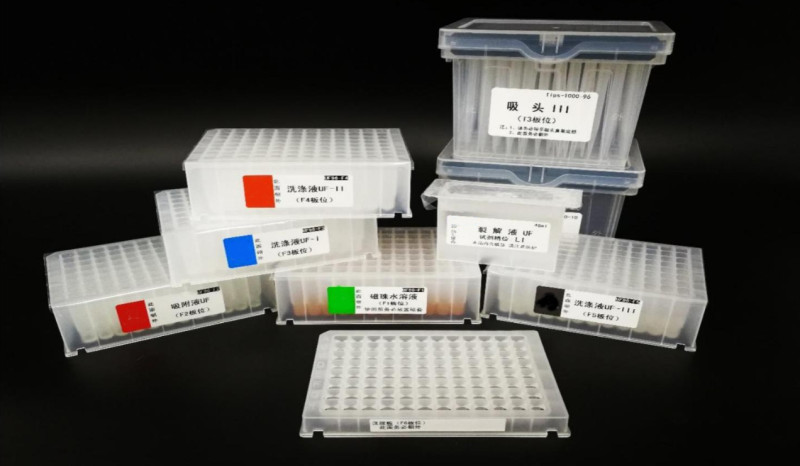
In a forensic DNA laboratory, the evidence sample is often the most critical and limited resource. Traditional methods that require separate isolations for genomic DNA and RNA molecules can consume this precious material, potentially losing valuable information. A combined extraction protocol addresses this fundamental challenge. By co-purifying both nucleic acid types from a single sample aliquot, laboratories can maximize the investigative data obtained. This approach is particularly transformative for degraded evidence or low-template samples, where every molecule counts. The ability to perform both STR analysis and RNA profiling from one extraction not only conserves the sample but also ensures that the genetic and transcriptional information are directly comparable, providing a more holistic view of the biological evidence.
The scientific rationale extends beyond conservation. DNA and RNA co-extraction protocols are designed with simultaneous stabilization in mind. RNA is notoriously labile and degrades rapidly, but modern forensic-grade lysis buffers immediately inactivate RNases upon contact with the sample. This preserves the molecular integrity of both nucleic acids from the very first step of the workflow. For laboratory managers, this translates to a streamlined process. Reducing the number of separate sample manipulations directly decreases hands-on time for technicians and, crucially, minimizes the risk of cross-contamination and procedural errors. This integrated method supports a more efficient and reliable forensic workflow, allowing experts to focus on analysis rather than preparation.
Overcoming Sample Limitations: Efficient Use of Precious & Degraded Evidence
Forensic casework frequently involves samples that are minute, old, or environmentally compromised. A touch DNA sample from a fingerprint or a decades-old cold case evidence item cannot afford the inefficiency of split processing. The co-extraction kit is engineered for these challenging scenarios. Its chemistry is optimized to recover nucleic acids even from sub-optimal starting material, ensuring that the maximum possible yield is obtained from a single processing step. This efficiency is vital for downstream success, as it provides sufficient quantity and quality of both DNA template and RNA transcript for advanced analytical techniques, turning previously unworkable samples into viable sources of intelligence.
Preserving Molecular Integrity: Simultaneous Stabilization of DNA and RNA
The moment a biological sample is lysed, its RNA begins to degrade due to ubiquitous RNase enzymes. A dedicated DNA/RNA co-extraction system solves this by employing a proprietary lysis buffer formulation that denatures these enzymes instantly upon sample addition. This immediate stabilization is the cornerstone of preserving RNA integrity, which is essential for applications like miRNA analysis for body fluid identification. Concurrently, the buffer conditions protect the double-stranded DNA from shear and degradation. This dual protection ensures that the extracted nucleic acids truly reflect the state of the original evidence, providing a reliable foundation for all subsequent PCR amplification and sequencing steps.
Key Features of Our Forensic-Grade Co-Extraction Kit
Our forensic DNA/RNA co-extraction kit is not a repurposed research tool; it is built from the ground up for the demands of the crime laboratory. The core chemistry is rigorously tested against a wide range of forensic sample matrices. Whether processing a bloodstain on fabric, saliva from a cigarette butt, or epithelial cells from a touch DNA swab, the protocol delivers consistent, high-quality results. This robustness is achieved through advanced inhibitor removal technology embedded within the spin-column membrane or magnetic bead surface. These components actively bind and remove substances like humic acids, hematin, and indigo dyes that are common in forensic evidence and can inhibit the crucial PCR amplification process, ensuring your downstream analysis succeeds.
Flexibility and compatibility are central to the kit's design. Laboratories can choose between a rapid spin-column protocol for batch processing or a magnetic bead-based method ideal for automation on liquid handling platforms. Both paths lead to nucleic acids of exceptional purity, with an A260/A280 ratio indicating minimal protein or solvent contamination. This high purity is non-negotiable for modern applications; the eluted DNA is immediately ready for sensitive STR typing kits, while the co-purified RNA is stable and compatible with reverse transcription for profiling or Next-Generation Sequencing (NGS) library preparation. This feature set provides a future-proof foundation for the evolving field of forensic genomics.
Optimized for Challenging Forensic Matrices: Blood, Saliva, Touch DNA, and Tissues
The kit's proprietary binding conditions and wash buffers are specifically calibrated for the complex composition of forensic evidence. For instance, it effectively handles the heme and immunoglobulin content in bloodstains, the bacterial load and mucins in saliva samples, and the low biomass nature of skin cell contact evidence. This optimization ensures maximum nucleic acid recovery across all sample types, providing reliable input for both routine DNA database submissions and more specialized RNA-based assays.
High Purity Output: Compatible with STR Typing, NGS, and RNA Profiling
The ultimate test of any nucleic acid extraction method is its performance in downstream applications. The eluate from this co-extraction kit is characterized by its high purity, free from common PCR inhibitors and contaminants. This makes it directly compatible with the stringent requirements of commercial STR amplification kits used with capillary electrophoresis systems. Furthermore, the quality of the DNA and RNA is sufficient for sophisticated NGS workflows, enabling forensic genomics applications like ancestry or phenotyping, while the RNA fraction supports the emerging field of forensic transcriptomics.
Integrated Workflow: From Co-Extraction to Comprehensive Analysis
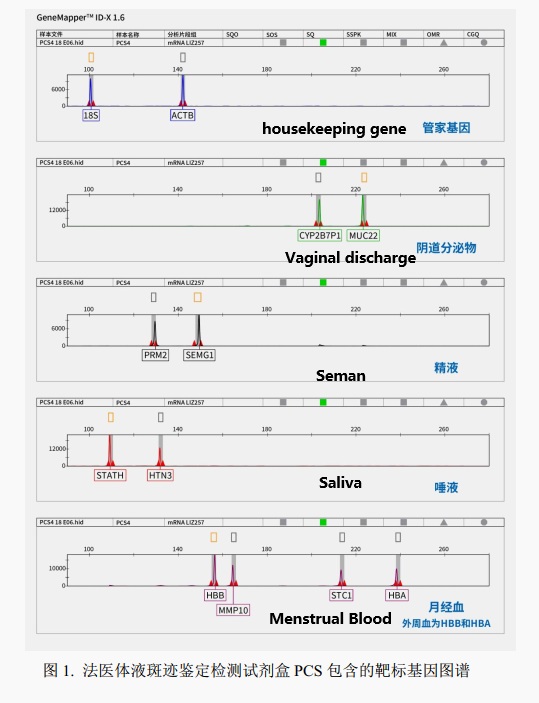
Adopting a DNA/RNA co-extraction kit is the first step in building a more connected and informative laboratory workflow. The output seamlessly integrates into the next stages of analysis. For traditional DNA profiling, the purified genomic DNA is an ideal template for multiplex PCR reactions using standard STR kits, leading to clear, interpretable electropherograms on your genetic analyzer. In parallel, the RNA portion opens a new dimension of evidence. Techniques like mRNA or microRNA profiling can be used for body fluid identification, helping to corroborate the source of a DNA profile, or for research into estimating the time-since-deposition of a biological stain.
This integrated approach is the gateway to Next-Generation Sequencing (NGS) in forensics. The high-molecular-weight DNA and intact RNA are perfect starting materials for NGS library preparation. This allows a laboratory to move beyond standard STRs to explore single nucleotide polymorphisms (SNPs) for biogeographical ancestry, externally visible characteristics, or kinship analysis in complex disaster victim identification (DVI) scenarios. By unifying the extraction front-end, the co-extraction kit simplifies the path to these powerful, multi-omic analytical techniques, consolidating the laboratory's capabilities.
Enabling Forensic Transcriptomics: RNA Analysis for Body Fluid Identification & Time-Since-Deposition Studies
The RNA recovered through co-extraction is stable and abundant enough for transcriptomic analysis. This field uses the expression levels of specific RNA biomarkers to identify the tissue or body fluid source of a stain—distinguishing, for example, menstrual blood from peripheral blood. Furthermore, research into RNA degradation patterns over time offers a scientific method to estimate when a biological sample was deposited at a scene. Our kit provides the high-integrity RNA required to explore these cutting-edge applications, adding a powerful layer of contextual information to the DNA profile.
Get a Quote
Contact our sales staff, tell us your needs, and we will provide you with the most suitable solution.
Contact Now