What is an Automated 96-Channel Mixed Stain Kit?
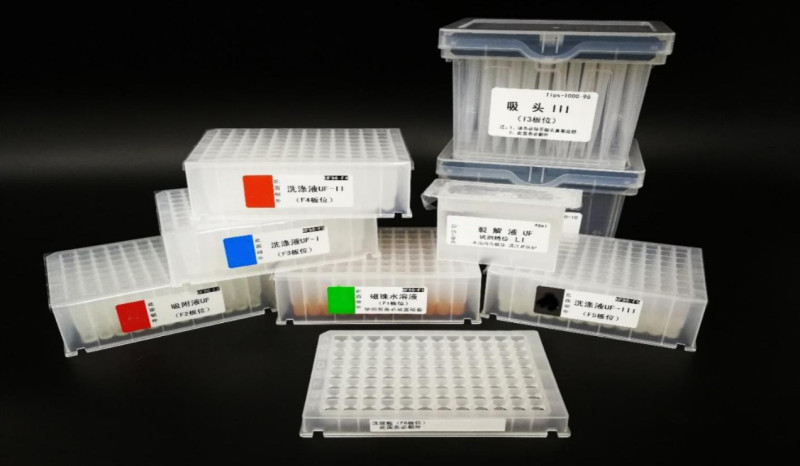
In forensic DNA analysis, a mixed stain sample—containing biological material from more than one individual—presents a significant analytical challenge. An Automated 96-Channel Mixed Stain Kit is a specialized, integrated reagent system designed to address this complexity. Its primary function is the efficient isolation and purification of DNA from these intricate samples, preparing them for downstream genetic profiling. By leveraging automation, this kit transforms a traditionally labor-intensive process into a streamlined, high-throughput operation.
The core chemistry within the kit typically involves a series of optimized buffers and magnetic bead-based technology. These components work in concert to lyse cells, bind DNA selectively, wash away contaminants like dyes, fabric fibers, or common PCR inhibitors, and finally elute high-quality DNA. This entire extraction protocol is formatted for compatibility with robotic liquid handling platforms, allowing a forensic technician to process a full plate of 96 samples with minimal hands-on time, thereby freeing up valuable human resources for data interpretation and case analysis.
Core Function: Streamlining DNA Extraction from Complex Samples
The fundamental challenge in mixed stain analysis is separating and purifying DNA from a milieu of potentially inhibitory substances and multiple contributors. The core function of this kit is to perform this critical step with maximal efficiency and reliability. The process begins with a chemical lysis step that breaks open cells and releases DNA into solution. Specialized buffer formulations are crucial here, as they must be robust enough to handle varied sample types—from seminal stains on fabric to touch DNA on metal surfaces—while preserving the integrity of the often limited and degraded DNA typical in forensic evidence.
Following lysis, the protocol employs a principle known as silica-magnetic bead binding. In this phase, DNA molecules selectively adhere to the surface of the beads in the presence of specific binding salts. A powerful magnet is then used to immobilize these bead-DNA complexes, allowing all liquid waste, including cellular debris and inhibitors, to be aspirated away. Subsequent wash steps with optimized wash buffers further purify the bound DNA, removing residual salts and contaminants that could interfere with the sensitive amplification reactions of PCR, which is the next stage in the DNA analysis workflow.
Key Components: Reagents, Buffers, and Magnetic Beads for Automated Platforms
The performance and reliability of any forensic DNA extraction kit hinge on the quality and consistency of its individual components. The lysis buffer is a key reagent, formulated not just to break down cellular membranes but also to inactivate nucleases that could degrade DNA, and to begin the process of neutralizing substances that inhibit enzymatic reactions later in the process. Protease enzymes are often included to digest proteins that might co-purify with DNA, leading to a cleaner final extract.
Another critical component is the binding buffer, which creates the precise chemical environment necessary for DNA to adsorb onto the silica-coated magnetic beads. The quality and uniformity of these magnetic particles are paramount; they must have consistent binding capacity and magnetic responsiveness to ensure reproducible yields across all 96 wells of a plate. Finally, the elution buffer is a low-salt solution that disrupts the bond between the DNA and the beads, releasing the purified nucleic acid into a small, defined volume ready for quantification and amplification. All these reagents are packaged and formatted for direct use on open-channel automated liquid handlers, eliminating manual pipetting errors and ensuring precise reagent delivery for every sample in a run.
Key Advantages for Your Forensic DNA Laboratory
Implementing an automated 96-channel kit for mixed stain analysis offers transformative benefits for a forensic DNA laboratory's operational efficiency and output quality. The most immediate impact is a dramatic increase in sample throughput. Where manual methods might process a handful of samples per analyst per day, this system enables the simultaneous processing of 96 samples in a single, unattended run. This scalability is essential for managing backlogs, handling large-volume cases, or processing database samples efficiently.
Beyond speed, automation introduces a level of precision and consistency that is difficult to achieve manually. Robotic systems follow the programmed protocol with exacting accuracy for every sample, minimizing the variability introduced by different technicians or fatigue. This standardized approach directly enhances the reliability of the results, which is a cornerstone of forensic science. Furthermore, by reducing the number of manual pipetting steps and tube openings, the closed-system nature of many automated workflows significantly lowers the risk of cross-contamination between samples, protecting the integrity of critical evidence.
Unmatched Efficiency: Process 96 Samples Simultaneously
The capability to process 96 samples in parallel represents a paradigm shift in forensic DNA laboratory workflow. This high-throughput capacity means that a batch of evidence from a single complex case, or multiple routine cases, can be prepared for analysis in roughly the same time it once took to prepare a few samples. The efficiency gain is not merely in hands-on time but also in instrument utilization and laboratory scheduling. A single automated run can replace multiple rounds of manual processing, allowing laboratory managers to better predict turnaround times and allocate personnel to other critical tasks such as profile analysis, report writing, or courtroom testimony preparation.
This parallel processing also ensures that all samples within a batch experience identical conditions. In manual processing, the first and last samples in a series may be subject to different incubation times or reagent exposure. In an automated 96-well format, every sample on the plate is subjected to the same protocol timeline and reagent volumes simultaneously. This batch uniformity is a significant advantage for downstream data analysis, as it reduces technical variables and increases confidence when comparing DNA yields and profiles across multiple samples from the same case.
Enhanced Consistency & Reduced Contamination Risk
Consistency in forensic DNA analysis is non-negotiable, as results must withstand rigorous scientific and legal scrutiny. Automated liquid handling systems, when paired with a optimized kit, eliminate the pipetting variability inherent in manual methods. Each dispense of lysis buffer, wash buffer, or elution buffer is controlled by the instrument's software and calibrated pumps, delivering microliter-accurate volumes to every well. This precision directly translates to more consistent DNA recovery and purity from sample to sample and from run to run, forming a solid foundation for reliable short tandem repeat (STR) profiling.
The design of automated workflows inherently minimizes contamination risks. Manual sample transfers often involve opening and closing tubes multiple times, increasing the chance of aerosol contamination or pipette tip carryover. Automated systems typically use disposable tip racks and can be programmed to perform all liquid transfers without exposing the sample plate to the open lab environment more than necessary. Many modern platforms also offer integrated deck heaters or incubators, keeping the entire process contained. This controlled environment is crucial when working with sensitive low-template DNA or potentially hazardous evidence, safeguarding both the results and the laboratory personnel.
Optimized for Challenging & Low-Template DNA Samples
Forensic evidence is rarely ideal. Samples can be minute (touch DNA), degraded from environmental exposure, or laden with inhibitors from substrates like soil, dye, or leather. A robust automated extraction kit is specifically formulated to overcome these challenges. The chemistry includes potent yet gentle lysis conditions that can penetrate difficult substrates without causing further DNA fragmentation. The magnetic bead purification process is highly effective at removing a broad spectrum of PCR inhibitors—such as humic acids from soil, indigo dyes from denim, or hematin from blood—that could otherwise halt the subsequent amplification step.
For low-template DNA samples, where the total amount of genetic material is very small, recovery efficiency is critical. The binding chemistry of the magnetic beads is optimized for high affinity to DNA molecules, even at low concentrations, maximizing the yield from limited evidence. Furthermore, the automated system allows for the entire sample digest to be processed without the losses that can occur during multiple manual tube-to-tube transfers. The final elution can be performed in a very small volume (often as low as 50 microliters), effectively concentrating the DNA and increasing the chance of obtaining a usable STR profile from a challenging sample.
Technical Specifications & Protocol Integration
Successful implementation of an automated extraction kit requires seamless integration with a laboratory's existing technological infrastructure. The kit's technical specifications provide the blueprint for this integration. Foremost is compatibility with specific automated liquid handling systems. These specifications detail deck layout requirements, labware types (deep-well plates, reservoir trays), and liquid class parameters that ensure the instrument handles the kit's reagents correctly, from viscous lysis buffers to ethanol-based wash solutions.
Beyond hardware, the provided protocol is a detailed, step-by-step software script or method file for the liquid handler. This method dictates every action: from initial sample plate loading and reagent dispensing, through magnetic separation cycles and wash steps, to the final elution into a output plate. A well-optimized protocol will include precise mixing parameters, incubation timers, and tip touch-off procedures to minimize residual volume and maximize reproducibility. Understanding these technical details is essential for laboratory managers to validate the entire process and ensure it meets their accreditation standards before implementing it on casework samples.
Integration also involves the physical labware. The kit protocol is designed for use with standard ANSI/SLAS microplate footprints. This includes specifying the correct type of magnetic separation module or stand that can accommodate a 96-well plate for the bead capture steps. Laboratories must ensure their instrument deck has the necessary hardware, such as a magnetic plate holder or an on-deck shaker, to execute all steps of the protocol. Many kit providers offer pre-configured method files or scripting support to facilitate a smooth setup and validation process on the laboratory's specific automation platform.
Detailed Workflow: From Sample Lysis to Purified Eluate
The automated workflow begins with the preparation of the sample plate. Forensic samples, often in the form of cuttings, swabs, or digestates, are placed into the wells of a deep-well microplate. The liquid handler then adds the proprietary lysis buffer, which may contain proteinase K, to each well. The plate is then transferred to an on-deck heater or an external incubator for a defined period to allow for complete digestion of the substrate and cellular breakdown. This step is critical for accessing the DNA, especially from hardened stains or epithelial cells.
Following incubation, the plate returns to the liquid handler deck. The binding buffer and magnetic beads are added, creating conditions for DNA adsorption. After a brief mixing and incubation, the magnet is engaged. The magnetic beads, now bound with DNA, are pulled to the side of each well, allowing the liquid handler to remove and discard the waste supernatant. A series of wash buffers are then added and removed in the same manner, purifying the bead-bound DNA. Finally, a heated elution buffer is added. The magnet is disengaged, and after incubation, the beads are recaptured. The robot then transfers the now DNA-containing eluate into a clean output plate, resulting in 96 purified DNA extracts ready for quantification and PCR amplification.
Kit Storage Conditions and Shelf-Life Stability
Maintaining the integrity of the reagents from the moment they arrive at the laboratory until the last sample in a kit is processed is vital for ensuring consistent performance. Most components of an automated mixed stain kit require storage at specific temperatures, typically between 2°C and 8°C. This cold chain storage preserves the activity of enzymatic components like proteinase K and maintains the stability of the chemical buffers. Some reagents, like certain wash buffers containing ethanol, may have different storage requirements to prevent evaporation or concentration changes.
The shelf-life of the kit, usually 12 to 18 months from the date of manufacture when stored correctly, is guaranteed through rigorous stability testing. This information is clearly marked on the kit packaging. Laboratories should implement proper inventory management, using a first-expiry-first-out (FEFO) system, to ensure kits are used within their validated stability period. It is also standard practice for laboratories to perform periodic in-house validation checks, even on kits within their shelf-life, to confirm that extraction efficiency and DNA purity meet expected benchmarks before use on evidentiary samples.
Applications in Modern Forensic Casework
The utility of a high-throughput, automated DNA extraction system extends across the entire spectrum of forensic biology casework. Its ability to handle complex mixtures and challenging samples with consistency makes it an indispensable tool for modern laboratories. In sexual assault cases, for instance, evidence often involves intimate samples containing biological material from both the victim and the alleged perpetrator. Efficiently separating and purifying DNA from these mixed stains is the critical first step towards generating interpretable STR profiles that can support an investigation.
Beyond violent crimes, this technology is equally vital for processing trace evidence, such as touch DNA from burglary scenes, or degraded samples from missing persons or cold cases. The standardized, high-capacity workflow also perfectly supports the operational needs of national DNA database laboratories, which must process thousands of reference samples from offenders or arrestees with unwavering accuracy and speed. By providing high-quality DNA extracts from a vast array of sample types, this kit forms the reliable foundation upon which all downstream forensic genetic analysis is built.
Solving Sexual Assault Cases with Mixed Stain Analysis
Sexual assault evidence kits often present some of the most complex forensic DNA samples. They are classic examples of mixed stains, potentially containing spermatozoa from a perpetrator and epithelial cells from a victim. The differential extraction process, which aims to separate sperm and non-sperm cell fractions, can be greatly enhanced and standardized through automation. An automated 96-channel kit can be programmed to perform the sequential lysis steps—first breaking open epithelial cells, then, after a separation step, using a stronger lysis buffer to break down resilient sperm cells.
This automated approach ensures that the delicate timing and specific reagent conditions required for an effective differential extraction are applied identically to every sample on the plate. The result is two purified DNA extracts from a single evidence item: one enriched for the victim's DNA and the other enriched for the perpetrator's DNA. This separation is crucial for obtaining a clear, unmixed STR profile from the suspect, which can be compared against database records or a known reference sample. The throughput of the system also allows a laboratory to process multiple evidence items from a single case or multiple cases concurrently, accelerating the path to investigative leads.
Processing Touch DNA and Degraded Evidence Samples
Touch DNA, comprising just a few skin cells left on an object, represents the lower limit of biological evidence. Successfully analyzing such low-template samples requires an extraction method with high efficiency and minimal DNA loss. The magnetic bead-based chemistry in automated kits is exceptionally effective at capturing these minute amounts of DNA. Furthermore, the closed, automated system prevents sample loss through adsorption to multiple tube walls, a risk in manual multi-tube protocols, ensuring the maximum amount of recovered DNA is carried forward to analysis.
Degraded DNA, often encountered in remains from cold cases, archaeological finds, or samples exposed to harsh environments, is fragmented. Traditional extraction methods might lose these small fragments. However, the binding chemistry of silica magnetic beads favors DNA molecules based on size in the presence of specific salts, allowing for the recovery of both long and short fragments. This is particularly advantageous for modern forensic DNA analysis, which can utilize smaller STR amplicons (mini-STRs) or single nucleotide polymorphism (SNP) panels specifically designed for degraded DNA. The automated kit reliably provides the purified, inhibitor-free DNA template necessary for these specialized amplification chemistries to succeed.
Supporting High-Volume Database and Paternity Testing
Forensic DNA databases are powerful tools for solving crimes, but their effectiveness depends on the rapid and accurate processing of thousands of reference samples, typically buccal swabs. The 96-channel format of this extraction kit is ideally suited for this high-volume, repetitive work. Laboratories can batch-process 96 donor swabs simultaneously, transforming them into purified DNA ready for STR profiling in a single, efficient run. The consistency of automation ensures that every database sample is processed under identical conditions, maintaining the high quality standards required for database inclusion and subsequent reliable searches.
In paternity and kinship testing, whether for civil cases or immigration purposes, the demand is for absolute accuracy and clear, unambiguous results. While these samples (buccal swabs or blood stains) are often less complex than crime scene evidence, the volume of cases can be high. Using an automated extraction system standardizes the pre-analytical phase, eliminating it as a source of variability. This guarantees that any genetic differences observed in the final STR profiles are truly biological in origin (i.e., indicating non-paternity) and not artifacts of inconsistent sample preparation. The efficiency also allows testing facilities to offer quicker turnaround times for their clients.
Why Choose Our Forensic DNA Extraction Kit?
Selecting a core reagent kit for your forensic DNA laboratory is a decision that impacts daily operations, result quality, and legal defensibility. Our Automated 96-Channel Mixed Stain Kit is developed with the forensic community's stringent needs at its core. It is not merely a collection of reagents, but a fully validated forensic solution. Each lot undergoes rigorous quality control testing to ensure performance meets the specifications required for sensitive STR analysis, providing laboratory directors and analysts with confidence in their results from the very first step of the workflow.
We understand that integration into an existing accredited laboratory is a critical process. Therefore, our offering extends beyond the physical kit. We provide comprehensive support, including detailed validation guides, instrument-specific protocol files, and access to our team of forensic application scientists. This support structure is designed to help your laboratory achieve a smooth implementation, successful internal validation, and ultimately, a more efficient and robust DNA analysis pipeline for all your casework and database needs.
Comprehensive Technical Support & Protocol Optimization
Implementing a new automated protocol involves both technical and operational adjustments. Our commitment to our customers includes unparalleled technical support. Our team includes scientists with direct experience in forensic laboratory operations and automation. They can assist with initial method installation on your liquid handler, troubleshoot any operational hiccups during the validation phase, and provide advice on optimizing deck layouts or wash steps to suit your laboratory's specific workflow or sample types.
This support is proactive and collaborative. We offer protocol optimization consultations to help you adapt the standard method for specialized applications, such as extracting DNA from heavily inhibited samples or integrating with unique upstream sample preparation steps. This level of partnership ensures that you are not just purchasing a kit, but gaining a resource to help maximize the return on your investment in laboratory automation and improve the overall efficacy of your forensic DNA analysis program.
Part of a Complete Forensic Laboratory Solution
Our Automated 96-Channel Mixed Stain Kit is designed to be a cornerstone component within a broader ecosystem of forensic products and services. We recognize that a DNA laboratory requires a seamless workflow from sample collection to final report. Therefore, our kit is optimized for compatibility with downstream technologies, including the major platforms for DNA quantification, PCR amplification for STR and SNP markers, and capillary electrophoresis for fragment analysis.
By choosing our kit, you are aligning with a provider that understands the interconnected nature of the forensic DNA workflow. We can provide guidance on creating an integrated pipeline, from automated extraction through to data analysis, ensuring compatibility and performance at each stage. This holistic approach simplifies procurement, reduces validation burdens across multiple vendors, and provides a single point of contact for technical inquiries, helping you build and maintain a state-of-the-art, efficient, and reliable forensic DNA laboratory.
Frequently Asked Questions (FAQs)
Laboratories considering a new automated extraction system often have specific, practical questions about its performance and integration. The following addresses some of the most common inquiries we receive from forensic DNA analysts and laboratory managers. These answers are based on our extensive validation data and field experience, providing realistic expectations for how the kit performs in real-world laboratory settings similar to yours.
What is the typical yield and DNA purity from this kit?
The yield of DNA is highly dependent on the starting sample type, quantity, and quality. For standard reference samples like buccal swabs, users can expect high and consistent yields sufficient for multiple downstream analyses. For challenging casework samples like touch DNA or degraded stains, the kit's high-efficiency binding chemistry is designed to maximize recovery from limited material. More importantly than yield alone is DNA purity, measured by absorbance ratios (A260/A280 and A260/A230). The kit's wash steps are rigorously optimized to remove common forensic inhibitors, typically resulting in eluates with excellent purity profiles (A260/A280 ~1.8) that are highly compatible with sensitive PCR amplification, minimizing the risk of inhibition-related amplification failures.
How does this kit handle PCR inhibitors common in forensic samples?
Forensic samples are notorious for containing substances that inhibit the polymerase enzyme used in PCR. Our kit formulation addresses this challenge at multiple stages. The initial lysis buffer contains components that help neutralize or solubilize many inhibitors. Most critically, the wash buffer regimen is specifically designed to remove a broad spectrum of these compounds. The magnetic bead purification process effectively washes away ionic inhibitors like calcium ions, small organic molecules like humic acids from soil, and larger compounds like indigo dyes from denim or hematin from blood. This thorough purification is a key reason why extracts from this kit demonstrate high amplification success rates even from difficult evidence recovered from challenging environments.
Can this kit be integrated with our existing laboratory automation?
Integration is a primary design consideration. The kit is developed for use with open-platform liquid handling robots from major manufacturers. We provide pre-tested method files or detailed scripting instructions for common instrument models. The protocol uses standard labware (ANSI/SLAS microplates and reservoirs) and common automation actions (liquid transfers, magnetic separation, orbital mixing). Our technical support team can work with you to adapt the protocol to your specific instrument configuration, whether you have a basic system or one with integrated heaters, chillers, or hotel decks. The goal is to provide a flexible solution that enhances your current automation investment, not replaces it.
Get a Quote
Contact our sales staff, tell us your needs, and we will provide you with the most suitable solution.
Contact Now