What is a Manual Magnetic Bead Trace DNA Kit?
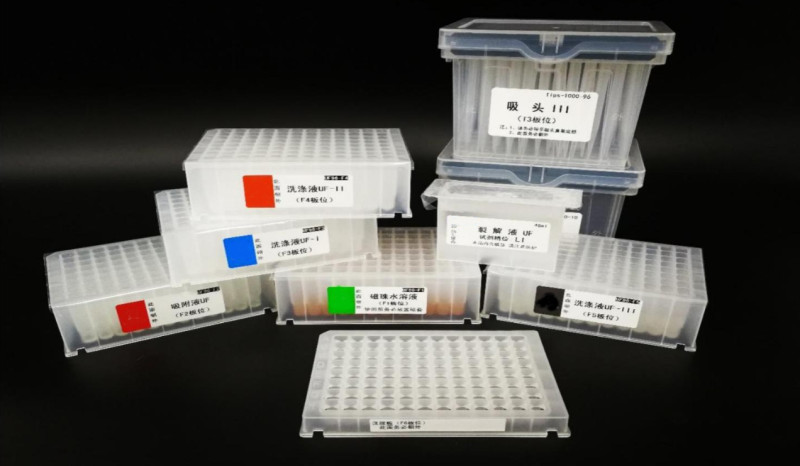
In forensic science, recovering genetic material from minute or degraded biological evidence is a constant challenge. A manual magnetic bead trace DNA kit is a specialized set of reagents and protocols designed to meet this challenge head-on. It provides forensic analysts with a powerful, hands-on method to isolate and purify DNA from samples where the starting material is exceptionally limited or compromised. This approach is fundamental for generating a clean, amplifiable DNA extract from the most demanding evidence types encountered in a modern forensic DNA laboratory.
Core Principle: Magnetic Bead DNA Isolation
The entire process hinges on the use of paramagnetic beads. These microscopic particles have a silica coating that selectively binds nucleic acids, like DNA, under specific chemical conditions. When a sample is lysed and the DNA is released, these beads are added. They bind the DNA while other cellular debris and common PCR inhibitors remain in solution. By applying a magnetic field, typically using a magnetic separator or stand, the beads—and the bound DNA—are pulled to the side of the tube. The unwanted liquid can then be simply poured or pipetted away. This magnetic separation technology allows for efficient washing and a final elution step that releases the purified DNA into a small, concentrated volume ideal for downstream genetic analysis.
Designed for Challenging Forensic Samples
Unlike standard extraction methods, a trace DNA kit is optimized for low-copy-number DNA. This means it is exceptionally sensitive and can capture genetic profiles from just a few cells. The chemistry is fine-tuned to handle inhibitors commonly found on forensic substrates, such as dyes from fabrics, soil compounds, or humic acids from decomposed remains. The manual format gives the analyst complete control over each step, allowing for adjustments in incubation times or wash stringency based on the visual cues from the sample, which is crucial when dealing with unpredictable evidence.
Key Features and Benefits of Our Trace DNA Kit
Selecting the right extraction chemistry is critical for casework success. Our manual magnetic bead trace DNA kit is engineered with specific features that directly address the pain points in forensic DNA processing. The benefits extend from the bench to the final report, ensuring that the genetic data presented is both reliable and court-defensible.
High Sensitivity for Low-Copy-Number and Degraded DNA
The kit's formulation maximizes the recovery of short DNA fragments, which are often all that remains in aged, environmentally exposed, or severely degraded samples. This high sensitivity is achieved through a optimized binding buffer that ensures even minute amounts of DNA adhere to the magnetic beads. This capability is essential for processing touch DNA evidence, where the genetic material may originate from just a handful of skin cells left on a surface. By maximizing yield from these challenging samples, the kit increases the likelihood of obtaining a full STR profile or sufficient data for next-generation sequencing.
Superior Inhibitor Removal for Complex Substrates
Forensic evidence is rarely pristine. A cigarette butt contains tars, a piece of clothing may have dye, and skeletal remains can be contaminated with soil. Our kit includes a series of stringent wash buffers designed to remove these PCR inhibitors while keeping the fragile DNA bound to the beads. This thorough purification step is vital because inhibitors can co-purify with the DNA and subsequently block or reduce the efficiency of the polymerase chain reaction, leading to failed or partial DNA profiles. Effective inhibitor removal ensures that the extracted DNA is of high quality and ready for amplification.
Flexible and Manual Protocol for Full Control
The manual nature of this kit is one of its greatest strengths for a forensic DNA laboratory. It does not require a capital investment in an automated extraction platform. More importantly, it grants the forensic scientist complete procedural control. An analyst can visually monitor the bead pellet during washes, decide to add an extra wash step for a particularly dirty sample, or adjust elution volumes to concentrate the final extract. This flexibility is invaluable for troubleshooting difficult samples and is a key reason many accredited labs maintain manual extraction methods alongside automated systems for their most critical evidence.
Optimized Workflow for Forensic DNA Extraction
A consistent and validated workflow is the backbone of any forensic DNA analysis. The procedure for our manual magnetic bead kit follows a logical, four-step sequence designed to maximize DNA recovery and purity. Each stage is critical for transforming a complex biological stain into a purified DNA solution suitable for genetic fingerprinting.
Step 1: Efficient Sample Lysis and Digestion
The process begins with the complete breakdown of the sample matrix. The sample, which could be a fabric cutting, a swab tip, or a bone powder aliquot, is incubated in a specialized lysis buffer. This buffer contains detergents to break open cell membranes and a proteinase K enzyme to digest proteins, including those that package DNA in the nucleus. This digestion step is crucial for releasing DNA from cells and breaking down histones, making the DNA fully accessible for the subsequent binding step. Efficient lysis is the foundation for high yield.
Step 2: Selective Binding of DNA to Paramagnetic Beads
Following lysis, the paramagnetic beads are added to the sample mixture along with a binding buffer. This buffer creates the ideal chemical environment—typically involving a high concentration of chaotropic salts—that promotes the DNA to bind tightly to the silica surface of the beads. During this incubation, the DNA adsorbs onto the beads while proteins, salts, and other impurities largely remain in solution. This selective binding is the first major purification event in the workflow.
Step 3: Stringent Washes for Purity and Inhibitor Removal
With the DNA now immobilized on the bead surface, a magnetic separator is used to pull the beads to the side of the tube. The supernatant, containing lysate debris and initial impurities, is carefully removed. The bead pellet is then resuspended in a series of wash buffers. These alcohol-based solutions are designed to remove residual salts, enzymes, and inhibitors without dislodging the DNA. Each wash step increases the purity of the final extract. The thoroughness of this wash protocol directly correlates with the success of downstream PCR amplification.
Step 4: High-Yield Elution in Low Volume
After the final wash, the beads are dried briefly to evaporate any residual alcohol. The pure DNA is then eluted by resuspending the bead pellet in a low-salt buffer or nuclease-free water. This elution buffer creates a conditions where the DNA's affinity for the silica beads is low, causing it to release into the solution. By using a small elution volume, often 50 microliters or less, the recovered DNA is concentrated. This high concentration is critical for analyzing low-level DNA samples, as it puts more target molecules into the first step of the PCR reaction.
Ideal Applications in the Forensic DNA Laboratory
The versatility of a manual magnetic bead trace DNA kit makes it an indispensable tool across a wide range of forensic casework and research applications. Its design specifically caters to samples that are problematic for standard methods, enabling laboratories to expand their capabilities and solve more complex investigations.
Processing Touch DNA Evidence and Micro-Traces
This is the quintessential application for a trace DNA kit. Touch DNA, or trace DNA evidence, refers to the invisible deposits of skin cells left on surfaces like weapon handles, window frames, or clothing. The kit's high sensitivity is perfectly suited to recover genetic material from these micro-traces, swabs from fingermarks, or the adhesive side of tapes. Its superior inhibitor removal also handles challenges like processing DNA from spent cartridge casings, which can be contaminated with gunshot residue and lubricants.
Extracting DNA from Skeletal Remains and Ancient Samples
For forensic anthropology and unidentified persons cases, DNA extraction from bone and teeth is often the last resort for identification. These samples are highly degraded and contaminated with environmental inhibitors. The manual kit's ability to recover short DNA fragments and remove humic acids and other soil contaminants is critical. The same principles apply to historical or ancient DNA research, where the genetic material is even more damaged and requires the utmost sensitivity and purity in extraction.
Preparing Samples for STR Analysis and NGS Workflows
The purified DNA output from this kit is compatible with all major downstream forensic DNA analysis platforms. For traditional capillary electrophoresis, the clean extract is ideal for short tandem repeat (STR) PCR amplification, leading to robust and balanced profiles. Furthermore, as forensic science adopts next-generation sequencing (NGS) for its ability to analyze more markers and obtain data from highly degraded DNA, the requirement for high-quality, inhibitor-free input DNA becomes even more stringent. This manual extraction method reliably produces DNA suitable for these advanced NGS library preparation protocols.
Compatible Consumables and Laboratory Equipment
Implementing a new extraction protocol requires consideration of the supporting tools. Our manual magnetic bead trace DNA kit is designed for seamless integration into most laboratory settings, requiring only standard equipment to perform effectively.
Recommended Magnetic Separators and Microcentrifuge Tubes
A reliable magnetic separator is essential for the workflow. Both single-tube magnetic stands and multi-tube racks for processing batches of samples are compatible. The key is that the magnet generates a strong enough field to form a tight bead pellet quickly. Regarding consumables, we recommend using low-retention microcentrifuge tubes. These tubes have a special polymer coating that minimizes the loss of beads and precious DNA sample by preventing them from sticking to the tube walls, thereby maximizing recovery yield at every step.
Integration with Your Existing Lab Setup and Protocols
The kit does not demand specialized instrumentation. Beyond a magnetic separator, the protocol requires standard lab equipment: a thermomixer or heat block for incubation steps, a microcentrifuge for brief spins to collect droplets, and calibrated pipettes. The workflow easily fits into a laboratory's existing evidence processing chain, from the cutting room to the genetic analyzer. Its manual format also allows it to be used as a complementary method alongside an automated extraction system, providing a flexible option for samples that require special attention.
Technical Support and Validation Resources
Adopting a new extraction kit for forensic casework is a significant decision that requires thorough validation. We provide comprehensive resources to support your laboratory through this process, ensuring you can implement the kit with confidence and in compliance with international quality standards.
Upon procurement, your laboratory gains access to a detailed, step-by-step protocol that forms the basis of your internal validation. Furthermore, we provide standardized operating procedure (SOP) templates that can be customized to fit your laboratory's specific documentation format. These resources include precise instructions, reagent preparation guides, and troubleshooting sections to assist your analysts in achieving consistent results from the very first use.
Frequently Asked Questions (FAQs): Manual Trace DNA Kits
Common questions arise when forensic scientists evaluate new extraction technologies. Here are answers to some of the most frequent inquiries regarding the performance and use of manual magnetic bead trace DNA kits in a operational laboratory setting.
What is the typical yield and success rate with touch DNA?
Yield is highly variable and depends entirely on the substrate, the donor, and how the evidence was handled and stored. There is no single "typical" yield for touch DNA, as the starting amount can range from less than 100 picograms to several nanograms. The success rate in obtaining a usable STR profile is therefore also variable. The primary advantage of a trace DNA kit is that it maximizes the recovery of whatever DNA is present. Success is improved by proper evidence collection, using the kit's full protocol for inhibitor removal, and eluting in a low volume to concentrate the extract for PCR.
How does this kit compare to automated extraction systems?
Manual and automated magnetic bead systems often use similar chemistry. The key differences are in throughput, consistency, and control. Automated systems excel at processing large batches of similar samples with minimal hands-on time and high inter-extraction consistency. A manual kit offers greater flexibility and lower upfront cost. It allows an analyst to customize the protocol for difficult samples—for example, by extending digestion times or adding wash steps—which can be crucial for low-level or contaminated evidence. Many forensic labs use both, employing automation for high-volume, straightforward samples and manual methods for complex, critical evidence.
What storage conditions are required for the reagents?
To ensure maximum shelf life and consistent performance, all kit reagents should be stored as directed upon arrival. Typically, the proteinase K and magnetic beads require storage at -20°C to -80°C to maintain enzymatic activity and binding efficiency. The lysis, binding, wash, and elution buffers are usually stable at room temperature or +4°C. It is critical to avoid repeated freeze-thaw cycles for the frozen components. Always refer to the specific kit manual for precise storage instructions and expiration dates, and ensure your laboratory's storage equipment is properly monitored and validated.
Get a Quote
Contact our sales staff, tell us your needs, and we will provide you with the most suitable solution.
Contact Now