What is an Autosomal STR Direct Trace DNA Kit?
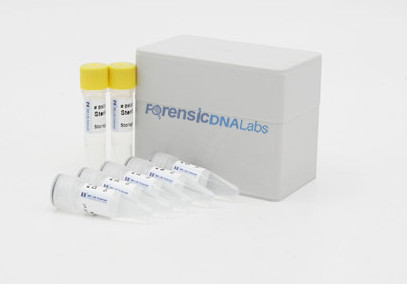
In forensic science, obtaining a DNA profile from minute biological evidence is a constant challenge. An Autosomal STR Direct Trace DNA Kit is a specialized biochemical toolkit designed specifically for this task. It allows scientists to generate a genetic fingerprint directly from a sample, such as skin cells left on a touched object, without first going through a separate DNA extraction and purification step. This direct approach is a significant advancement for handling evidence where the amount of biological material is extremely limited.
The core of this technology lies in its targeted amplification of Autosomal Short Tandem Repeats, or STRs. These are specific regions on our non-sex chromosomes that contain repeating sequences of DNA. The number of repeats varies greatly between individuals, making them excellent markers for human identification. The kit contains precisely designed chemical components, including primers and enzymes, that seek out and copy these variable STR regions from a complex sample mixture, even when the starting DNA is of low quantity or quality.
Defining Direct Amplification for Trace DNA Samples
Direct amplification represents a paradigm shift in forensic DNA analysis. Traditional methods require a multi-step process: the sample is first treated to break open cells and isolate the DNA, then the amount of DNA is measured, and finally, the Polymerase Chain Reaction (PCR) is performed to copy the genetic markers. The direct amplification protocol consolidates this workflow. The forensic sample, often collected on a swab or a fragment of evidence, is introduced directly into the PCR reaction. The master mix within the kit is robust enough to overcome common inhibitors found in forensic substrates and efficiently copy the DNA present.
This methodology is particularly powerful for low-template DNA analysis, a term describing samples containing fewer than 100 picograms of genetic material. By removing the extraction and quantification steps, the laboratory not only saves critical time but also minimizes the risk of sample loss during handling. Every molecule of DNA is precious in trace evidence analysis, and direct amplification is engineered to preserve and utilize as much of it as possible for successful genotyping.
Core Technology: Targeting Autosomal Short Tandem Repeats (STRs)
The reliability of a DNA profile hinges on the markers being analyzed. Autosomal STRs are the international standard for forensic human identification. A kit like this contains a comprehensive primer set that targets a panel of these STR loci. This panel typically includes the core CODIS loci, which are the genetic markers used by the Combined DNA Index System in many countries to link crimes and identify perpetrators. Many modern kits also include additional, expanded STR loci to increase the power of discrimination and provide more genetic information from a challenging sample.
When the PCR process is initiated, these primers bind to the DNA flanking each STR region. A specialized, high-fidelity DNA polymerase then extends the primers, creating millions of copies of each target locus. The resulting amplified fragments are separated by size using capillary electrophoresis, revealing a pattern of peaks that constitutes an individual's unique DNA profile. The sensitivity of the polymerase and the precision of the primer design are what enable this technology to work from degraded samples or single-source cells.
Key Features and Benefits of Our Direct Trace DNA Kit
The primary advantage of utilizing a dedicated direct trace DNA kit is its unmatched sensitivity for forensic casework. Laboratories routinely encounter evidence that has been exposed to environmental stressors, leading to DNA degradation. The optimized chemistry in these kits is formulated to be tolerant of such damage, often yielding a complete or partial profile where traditional methods might fail. This robustness directly translates to enhanced success rates in generating actionable intelligence from the most challenging items of evidence.
Beyond sensitivity, the streamlined workflow offers substantial operational benefits. By eliminating the DNA extraction and quantification stages, laboratories can significantly reduce hands-on time, lower consumable costs, and accelerate the time-to-result for urgent cases. This efficiency is crucial for high-throughput DNA laboratories managing backlogs or for time-sensitive investigations. Furthermore, the process simplification reduces the number of sample transfer steps, thereby lowering the potential for contamination—a paramount concern in forensic genetics.
Unmatched Sensitivity for Low-Template and Degraded DNA
Forensic evidence is rarely pristine. A cigarette butt recovered from rain, a piece of fabric from a decades-old missing persons case, or a bone fragment all present unique challenges due to low DNA yield or chemical degradation. The master mix in a high-performance direct amplification kit contains enhancers and a specially formulated polymerase blend that can bypass common lesions in damaged DNA, allowing the PCR process to initiate and continue more reliably. This focus on low-copy number DNA analysis is what makes the kit indispensable for pushing the boundaries of what is possible in a forensic DNA laboratory.
Streamlined Workflow: Eliminate Extraction and Quantification
Implementing a direct amplification protocol transforms the laboratory workflow. Technicians can move directly from sample collection to setting up the PCR plate. The swab or a small cutting from the evidence is often placed directly into the reaction well with the ready-to-use master mix. This consolidation of steps not only speeds up the process but also standardizes it, reducing variability between analysts. The kit's formulation is designed to be consistent, providing reproducible results that are critical for maintaining accreditation standards and ensuring data is court-admissible.
Ideal Applications in Forensic DNA Analysis
The application range for a direct autosomal STR kit is extensive within a forensic laboratory. Its most prominent use is in the analysis of touch DNA evidence. When an individual handles an object, they leave behind invisible skin cells. Collecting these cells with a swab and applying the direct amplification protocol is an efficient method to generate a profile from door handles, weapons, or stolen goods. This approach has revolutionized the processing of property crime evidence, where biological material is often minimal.
Furthermore, this technology is vital for historical or compromised samples. In missing persons investigations and Disaster Victim Identification (DVI) protocols, remains may be skeletal or heavily degraded. The ability to get a profile from a single tooth, a hair shaft without a root, or aged bone fragments can provide closure for families. The kit's sensitivity also supports the analysis of single hairs recovered from a crime scene, which were previously considered low-priority evidence due to the difficulty of analysis.
Processing Touch DNA Evidence from Crime Scenes
Touch DNA, or trace DNA, refers to the few cells transferred via skin contact. Successfully profiling this type of evidence requires extreme sensitivity. The direct amplification workflow is ideally suited because it minimizes sample loss. Crime scene investigators collect the sample on a specialized swab, which is then typically added directly to the PCR reaction. This direct-from-swab methodology maximizes the chance of amplifying any available DNA molecules, turning what was once considered nearly impossible evidence into a viable source for investigative leads.
Analyzing Single Hairs, Bone Fragments, and Aged Samples
Hard tissues and old evidence present a dual challenge: low DNA content and high levels of degradation. A hair shaft, for instance, contains very little nuclear DNA. Bone requires a demineralization step to access the DNA within the osteocytes. The robust chemistry of a direct trace kit, often used following a minimal clean-up or digestion step rather than a full extraction, can effectively copy the fragmented DNA strands that remain. For aged samples, where the DNA may be broken into small pieces, the kit's ability to amplify shorter fragment lengths can mean the difference between a failed analysis and a successful identification.
Technical Specifications and Kit Components
A professional-grade direct trace DNA kit is more than just a vial of enzymes; it is a complete, optimized system. At its heart is the master mix, a pre-mixed solution containing a thermostable DNA polymerase, nucleotides (dNTPs), salts, and buffer components specifically balanced for direct amplification from forensic substrates. This formulation includes compounds that help neutralize inhibitors commonly co-extracted with DNA from materials like denim, soil, or leather, which can otherwise halt the PCR reaction.
The kit also includes the critical primer set. These are short, single-stranded DNA sequences that define which STR loci will be amplified. A modern kit will target the standard CODIS loci for database compatibility, plus additional loci to increase discriminatory power and provide redundancy for degraded samples. To accurately size the amplified fragments, an internal size standard is included, which runs alongside the sample DNA during capillary electrophoresis. Allelic ladders, which contain common variants for each locus, are also provided as a reference to call the correct genotype with high confidence.
Comprehensive Primer Set for CODIS and Expanded STR Loci
The selection of genetic markers is a critical specification. The primer set must reliably and simultaneously amplify all target loci in a single, multiplexed reaction. Compatibility with the CODIS database is non-negotiable for law enforcement applications, allowing generated profiles to be searched against national databases. The inclusion of expanded STR loci beyond the CODIS core provides several advantages: it increases the statistical weight of a match, aids in complex kinship analysis for missing persons cases, and offers alternative, potentially shorter amplicons that are more likely to amplify from highly degraded DNA templates.
Optimized Master Mix for Direct PCR Amplification
The performance of the entire assay depends on the master mix. This component is rigorously optimized for sensitivity and inhibitor tolerance. It uses a high-performance polymerase that can initiate synthesis from a low number of DNA templates and continue extension even if the DNA is damaged. The buffer system is formulated to maintain stable pH and provide the necessary ionic strength for the reaction, even when a sample swab containing unknown chemicals is introduced. This level of optimization is what validates the kit for use on a wide range of evidence types without pre-purification.
Optimized Protocol for Forensic DNA Laboratories
Implementing a new kit requires a clear and validated protocol. The process begins with proper sample collection. For direct amplification, this often involves moistening a swab with a slight dampening agent, swabbing the evidence item, and then either placing the swab tip directly into a well of a PCR plate or applying a cutting of the evidence itself. The pre-aliquoted master mix is then added. It is crucial to include appropriate negative controls at this stage—reactions containing all kit components but no sample DNA—to monitor for contamination throughout the laboratory process.
The thermal cycling parameters are pre-defined in the protocol but may be optimized for specific instrumentation. Cycling involves repeated heating and cooling to denature the DNA, allow primers to bind (anneal), and extend the new DNA strands. The protocol will specify the number of cycles, which is often increased for low-template samples to enhance sensitivity, though this is balanced against the risk of amplifying artifacts. Following amplification, the products are prepared for capillary electrophoresis, where they are separated by size to produce the final electropherogram for analysis.
Best Practices for Contamination Prevention and Negative Controls
Maintaining the integrity of forensic DNA results is paramount. The direct workflow, while simpler, still demands stringent contamination prevention measures. Laboratories must employ strict physical separation of pre- and post-PCR areas, use dedicated equipment and protective clothing, and regularly decontaminate workspaces with solutions like bleach or UV light. The consistent use of negative controls in every batch of samples processed is non-negotiable. These controls act as an early warning system, indicating if any of the reagents or laboratory environment has been contaminated with extraneous DNA, which would compromise the entire batch's results.
Data Analysis and Interpretation Guidelines
Once the capillary electrophoresis run is complete, the data analysis phase begins. Software is used to size the DNA fragments by comparing them to the internal lane standard. The peaks are then compared to the allelic ladders to assign a genotype (e.g., 14, 15) for each STR locus. For high-quality, single-source samples, this is straightforward. However, with low-template or mixed samples, interpretation becomes more complex. Analysts must be trained to recognize stochastic effects, such as allele dropout (where one of two alleles fails to amplify) or peak height imbalance, which are more common when working at the limits of detection. Established laboratory protocols and probabilistic genotyping software may be employed to objectively interpret these complex profiles.
Why Choose Our Forensic DNA Kit?
Selecting a reagent kit for a forensic DNA laboratory is a decision that impacts the quality of justice. Our kit is not merely a product; it is a solution developed in collaboration with forensic science experts who understand the real-world challenges of casework. Its development followed a rigorous design control process, and its validation studies encompass a wide range of evidence types and environmental conditions. This ensures that when a laboratory adopts this kit, they are implementing a tool with a proven track record of performance.
Furthermore, we understand that a kit is part of a larger ecosystem. Our product is designed for reliable performance in settings that adhere to international quality standards like ISO/IEC 17025. We provide comprehensive technical support and validation assistance to help laboratories integrate the kit seamlessly into their accredited workflows. This includes guidance on protocol adaptation, assistance with internal validation studies required for accreditation, and troubleshooting support. We position our product as a component of a complete forensic DNA laboratory solution, from instrumentation and consumables to long-term support services.
Developed and Validated by Forensic Science Experts
The credibility of a forensic product stems from its origins. Our development team includes scientists with direct experience in operational forensic DNA laboratories. This ensures the kit's design addresses practical needs, such as inhibitor tolerance, ease of use, and compatibility with standard laboratory equipment. The validation data package is extensive, covering sensitivity studies, mixture analyses, reproducibility tests, and performance on simulated case-type samples. This depth of validation provides laboratories with the confidence and documentation needed to defend their methods in court under the Daubert or Frye standards.
Reliable Performance in Accredited Laboratory Settings (ISO 17025)
Forensic laboratories operate under a framework of quality assurance. Accreditation to standards such as ISO/IEC 17025 requires that all methods be validated, controlled, and reproducible. Our kit is manufactured under a strict Quality Management System to ensure batch-to-batch consistency, a critical factor for long-term casework. The provided protocols and validation data are structured to help laboratories meet their accreditation requirements, providing clear documentation on the kit's performance characteristics, limitations, and optimal use conditions.
Frequently Asked Questions (FAQs) About Direct Trace DNA Kits
Many forensic laboratory managers and technicians have questions about transitioning to or implementing a direct amplification workflow. A common inquiry revolves around the fundamental difference from traditional methods. Traditional DNA analysis is a multi-stage process involving extraction, quantification, amplification, and analysis. Direct PCR, as the name implies, bypasses the first two steps, moving the sample directly into the amplification stage. This is possible due to the optimized chemistry that can tolerate the presence of some inhibitors and efficiently use the available DNA.
Another frequent question concerns the types of evidence best suited for this approach. While highly effective for touch DNA on non-porous surfaces and many porous materials, it may not be the first choice for samples with known, potent PCR inhibitors (e.g., certain dyes, soil rich in humic acid) without prior testing. Laboratories often perform internal validation studies to determine the optimal sample types and collection methods for their specific casework. Integration with existing Laboratory Information Management Systems (LIMS) is also a key consideration; most modern kits are designed to fit into standard laboratory workflows, and data output formats are compatible with common forensic analysis software.
How does direct PCR differ from traditional DNA analysis methods?
The difference is primarily one of workflow simplification and sample conservation. In a traditional forensic DNA workflow, the sample undergoes a multi-hour extraction process to purify DNA from cellular debris and inhibitors, followed by a quantification step to measure how much human DNA is present. This quantification informs how much of the extract to use in the subsequent PCR. In direct PCR, the swab or sample cutting is added directly to the PCR reaction. The specialized master mix handles any minor inhibitors present, and the reaction proceeds without knowing the exact DNA quantity. This saves time, reduces sample handling, and minimizes the loss of precious low-template DNA that can occur during extraction and quantification.
What is the typical sample input and success rate for low-copy DNA?
Sample input is not measured in nanograms of purified DNA, as with traditional methods, but rather by the size of the swab or evidence cutting. A typical input is the tip of a standard forensic swab or a 1-2 mm square cutting from a stained fabric. Success rates are highly dependent on the nature of the evidence—the donor's shedder status, the substrate material, and environmental exposure. On optimal samples, such as touch DNA from a non-porous surface, success rates for obtaining a usable partial or full profile can be very high. For severely degraded or inhibited samples, the success rate will be lower, but often higher than what could be achieved with a traditional method due to the reduced sample loss. Each laboratory determines its own success rate thresholds through internal validation studies.
Related Products and Complete Workflow Solutions
While the Autosomal STR Direct Trace DNA Kit is a powerful standalone tool, it exists within a broader portfolio of forensic solutions. For evidence that requires it, traditional forensic DNA extraction kits are available, offering robust methods for purifying DNA from a vast array of challenging samples, including tissues, bloodstains, and semen. For laboratories looking for maximum speed, Rapid DNA Systems provide fully automated profile generation in under two hours, suitable for booking stations or urgent investigative leads.
Supporting these core technologies is a full range of forensic-grade consumables and plasticware. This includes sterile swabs for collection, low-retention microcentrifuge tubes, and PCR plates specifically designed to minimize DNA adsorption. For laboratories building or expanding their capabilities, comprehensive support services are available. These range from laboratory design consulting—ensuring proper workflow separation and contamination control—to full method validation support, helping laboratories establish accredited, efficient, and reliable DNA analysis pipelines from sample receipt to data interpretation.
Forensic DNA Extraction Kits for Conventional Processing
Direct amplification is not a universal replacement for all forensic samples. Cases involving high levels of PCR inhibitors, complex mixtures, or samples where differential extraction is needed to separate male and female DNA contributions (as in sexual assault cases) still benefit from a dedicated forensic DNA extraction process. Our related extraction kits utilize magnetic bead or silica-based technology to provide high-yield, high-purity DNA from these complex samples. The purified DNA can then be quantified and amplified using standard or sensitive amplification kits, providing the laboratory with a complete set of tools for any type of evidence.
Full Laboratory Design and Validation Support Services
Implementing a new technology or establishing a new forensic DNA laboratory is a significant undertaking. Beyond supplying reagents and instruments, we offer expert consulting services. Our team can assist with laboratory layout planning to ensure unidirectional workflow and prevent contamination. We also provide extensive validation support, offering templates, experimental design advice, and data analysis help to ensure your laboratory meets all accreditation requirements for ISO/IEC 17025 or the FBI's Quality Assurance Standards. This end-to-end support ensures that our products deliver their maximum potential within your operational environment.
Get a Quote
Contact our sales staff, tell us your needs, and we will provide you with the most suitable solution.
Contact Now