Overview of the Y-STR Casework Trace DNA Kit
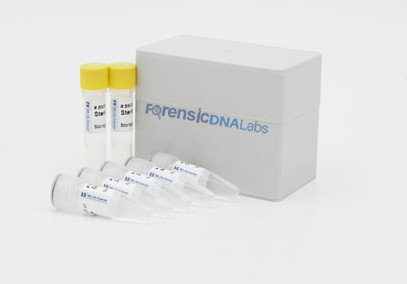
In the specialized field of forensic genetics, obtaining a clear DNA profile from minute biological evidence is a constant challenge. The Y-STR Casework Trace DNA Kit is engineered to meet this challenge head-on, providing forensic scientists with a powerful tool for male lineage analysis. This kit focuses specifically on Short Tandem Repeats (STRs) located on the Y chromosome, which is passed down virtually unchanged from father to son. This characteristic makes Y-STR analysis invaluable for investigations involving male contributors, especially when evidence contains mixtures of male and female DNA or when the DNA sample is severely limited.
The development of such a trace DNA kit represents a significant advancement in forensic DNA analysis capabilities. It allows laboratories to extract crucial investigative leads from evidence that might otherwise yield inconclusive results with standard autosomal STR testing. By targeting the male-specific chromosome, analysts can simplify complex genetic mixtures, providing clearer, more interpretable data for casework and database comparisons.
What Is the Y-STR Casework Trace DNA Kit?
The Y-STR Casework Trace DNA Kit is a complete, ready-to-use reagent system for the PCR amplification of multiple Y-chromosomal STR markers. It contains all necessary master mixes, primers, and controls required to process forensic samples through to generating a genetic profile. The core of the kit's design is its exceptional sensitivity, which is optimized to work with low quantities of DNA, often referred to as low-copy-number or degraded DNA samples. This is critical for forensic evidence that has been exposed to environmental stressors like heat, humidity, or sunlight, which can break down DNA molecules.
Unlike kits that target autosomal chromosomes inherited from both parents, this kit's focus on the Y chromosome provides a different layer of genetic information. This is not a replacement for standard STR profiling but a complementary technique. Its application is particularly powerful in sexual assault cases, missing person investigations, and historical or familial searching where establishing a paternal lineage is a key investigative step.
Key Applications in Forensic DNA Analysis
The primary application of this kit is in the analysis of forensic evidence where the biological material is scarce or compromised. This includes trace evidence such as touch DNA from handled objects, minute bloodstains, or saliva residues on items like cigarette butts and beverage containers. In sexual assault casework, it can be instrumental in separating the male perpetrator's profile from a high background of female victim's DNA, a common scenario that can obscure results with other methods.
Another vital application is in kinship analysis and paternity testing within a male lineage. For example, in missing person cases or mass disaster victim identification, comparing Y-STR profiles can help establish relationships between male relatives when reference samples from direct offspring are unavailable. Furthermore, the generated Y-STR profiles can be uploaded to dedicated databases to search for potential familial matches, aiding in solving cold cases and identifying unknown remains.
Key Features and Benefits of the Kit
The Y-STR Casework Trace DNA Kit is distinguished by a set of features designed to address the real-world pressures of a forensic laboratory. Its formulation prioritizes reliability and clarity of results above all, ensuring that the data produced can withstand the scrutiny of both internal quality control and external legal proceedings. The benefits extend from the bench, where analysts appreciate a consistent workflow, to the courtroom, where clear, unambiguous genetic evidence is paramount.
Investing in a specialized kit like this translates to operational benefits for the lab. It can reduce the number of inconclusive reports, increase the success rate from sub-optimal samples, and provide a definitive path for analyzing male DNA in mixed samples. This directly supports a laboratory's mission to deliver timely and accurate forensic science services.
High Sensitivity for Low-Template and Degraded DNA Samples
One of the most critical features of this kit is its enhanced sensitivity. It incorporates robust PCR chemistry and optimized primer designs that are more tolerant of DNA damage. This allows for the successful amplification of genetic markers even when the DNA template is fragmented or present in only a few cells. The kit includes dedicated protocols and recommended cycle numbers for amplifying these challenging low-template DNA samples, providing analysts with a validated framework to follow.
This high sensitivity is achieved without unduly increasing the risk of detecting contamination from laboratory personnel. The kit's design includes measures to minimize background noise and incorporates specific controls that help analysts distinguish between a true, minute evidentiary signal and potential artifacts or contamination, which is a fundamental aspect of reliable forensic DNA analysis.
Optimized for Male-Specific Y-Chromosome STR Profiling
The kit's optimization for the Y chromosome is a deliberate design choice that offers a strategic advantage. By targeting Y-STR markers, the amplification process ignores the often overwhelming amount of female DNA that may be present in a sample. This selective focus simplifies the resulting genetic data, producing a clean, male-only profile that is far easier to interpret and compare against reference samples or database entries.
The marker panel included in the kit is carefully selected to provide a high level of discrimination power among unrelated males. These markers are internationally recognized and are compatible with global Y-STR databases, ensuring that profiles generated can be used for broader investigative searches. This connectivity is crucial for modern forensic investigations that often rely on genetic genealogy and international cooperation.
Streamlined Workflow for Forensic Casework and Paternity Testing
From sample to result, the kit is designed to integrate seamlessly into existing laboratory workflows. It comes with clear, detailed protocols for PCR setup, thermal cycling conditions, and subsequent analysis on capillary electrophoresis instruments. This standardization reduces the potential for procedural errors and ensures consistency between different analysts and batches, which is a key requirement for maintaining accreditation under standards like ISO/IEC 17025.
For paternity testing within a male line, the kit provides a straightforward method. Comparing the Y-STR profiles of a male child and an alleged paternal relative will show an exact match if they share a direct paternal lineage. This application is valuable not only in traditional paternity cases but also in complex familial relationship testing for immigration or inheritance disputes, offering a clear and definitive answer based on genetic inheritance patterns.
Technical Specifications and Components
Every Y-STR Casework Trace DNA Kit is supplied as a complete unit, containing precisely formulated reagents to ensure lot-to-lot consistency. The technical specifications are designed to meet the rigorous demands of forensic validation, providing laboratories with the confidence that their analytical processes are built on a reliable foundation. Understanding these specifications is key for proper kit implementation, storage, and integration with a lab's instrumentation.
Kit Contents and Reagent Formulations
The core of the kit is the PCR master mix, which contains a thermostable DNA polymerase, nucleotides (dNTPs), salts, and a proprietary buffer system optimized for amplifying degraded DNA. Separate vials contain the primer mix, which includes fluorescently labeled primers for each Y-STR marker in the multiplex. The kit also provides essential positive and negative controls. The positive control, typically a male DNA standard of known concentration and profile, verifies that the entire amplification and detection process worked correctly. The negative control checks for the presence of contamination in the reagents or during the setup process.
Each component's formulation is the result of extensive research and development, focusing on reaction efficiency and specificity. The master mix often includes additives that enhance the amplification of damaged DNA and inhibit substances that might be co-extracted from forensic samples, known as PCR inhibitors, which can otherwise halt the reaction.
Compatibility with Major Capillary Electrophoresis Systems
To ensure broad utility, the fluorescent dye labels on the primers are chosen for compatibility with the most common genetic analyzers used in forensic labs, such as those from leading manufacturers. The kit's documentation specifies the appropriate instrument-specific spectral calibration filters and sizing standards to use, ensuring accurate fragment analysis and allele calling. This compatibility is a crucial consideration for laboratories that must maintain continuity in their data analysis software and procedures.
This design philosophy allows a laboratory to adopt the Y-STR kit without needing to invest in new, proprietary instrumentation. Analysts can run the amplified products on their existing capillary electrophoresis platforms alongside samples processed with other STR kits, streamlining the workflow and making efficient use of instrument time.
Storage Conditions and Shelf-Life Stability
Maintaining reagent integrity is paramount for reliable results. The kit components require storage at specified temperatures, typically -20°C for long-term stability. The master mix and primers are shipped on dry ice to maintain this cold chain. The kit's shelf-life is clearly stated, often 12 months or more from the date of manufacture when stored correctly, providing labs with ample planning time for their casework and validation schedules.
Proper storage and handling also involve thawing and aliquoting protocols to minimize freeze-thaw cycles, which can degrade reagent performance. The kit's instructions provide best practices for reagent preparation to ensure optimal sensitivity and consistency across every use, protecting the laboratory's investment and ensuring the quality of its forensic outputs.
How the Y-STR Kit Enhances Forensic Laboratory Efficiency
Implementing a specialized tool like the Y-STR Casework Trace DNA Kit has a direct and positive impact on a laboratory's operational efficiency. It addresses specific analytical bottlenecks, reduces resource expenditure on samples that may not yield results with standard methods, and provides clearer investigative direction. This enhancement is measured not just in faster turnaround times, but in the increased value and utility of the genetic information produced.
Reducing Contamination Risks with Dedicated Male DNA Analysis
Because the kit exclusively amplifies Y-chromosome DNA, it inherently reduces the analytical "noise" from female DNA contributors, whether from victims, laboratory staff, or environmental sources. This specificity simplifies the interpretation phase, as analysts are not required to deconvolute complex mixtures of male and female alleles. This clarity directly translates to a lower risk of misinterpretation and more confident reporting.
Furthermore, the focused nature of the test means that common laboratory contamination from female analysts, which is a constant concern in forensic DNA labs, is rendered irrelevant to the result. This allows laboratories to process sensitive casework with an added layer of analytical security, knowing that the resulting profile is specifically attributable to a male source.
Accelerating Turnaround Times for Complex Forensic Samples
For samples containing mixtures, the traditional path might involve time-consuming and sometimes inconclusive data re-analysis or additional testing. The Y-STR kit offers a direct route. By applying it to a mixed sample, a laboratory can often obtain a single-source male profile in a single test, bypassing the need for complex mixture interpretation software or follow-up tests. This accelerates the time from evidence receipt to generating a reportable profile.
This efficiency is crucial for high-priority cases or laboratories with significant backlogs. It allows analysts to dedicate their expertise and instrument time more effectively, focusing on generating actionable leads rather than struggling with ambiguous data from challenging trace evidence.
Supporting Database Searches and Kinship Analysis
The profiles generated are not just for direct comparison against a single suspect. They are formatted for upload to national and international Y-STR databases. A single upload can search against thousands of existing profiles, potentially providing investigative leads by identifying a familial lineage even when the exact individual is not in the database. This powerful capability transforms a piece of biological evidence into a dynamic investigative tool.
In kinship analysis, such as identifying remains from mass disasters or historical investigations, Y-STR testing provides a lineage-specific link. Comparing the Y-STR profile of unknown remains to a male relative from a putative family can provide strong evidence of relatedness, helping to bring closure to families and advancing investigations that may have few other avenues.
Integration with Forensic DNA Laboratory Workflows
Successful forensic analysis depends on a seamless chain of processes. The Y-STR Casework Trace DNA Kit is designed not as a standalone product, but as a component that fits into the broader continuum of forensic biology. Its integration points span from the initial evidence examination all the way to the final report, with each step supported by tailored protocols and best practice guidance.
Sample Preparation and DNA Extraction Protocols
The journey begins with appropriate sample collection and DNA extraction. While the kit itself is for amplification and detection, its success is predicated on obtaining the highest quality DNA extract possible from often limited evidence. Our support materials include recommendations for extraction chemistries and kits that are particularly effective for recovering male DNA from swabs, fabrics, or other substrates, especially those that may contain PCR inhibitors.
For low-template samples, the extraction protocol is critical. Techniques that maximize DNA recovery while minimizing co-purification of inhibitors are emphasized. The goal is to deliver a clean, concentrated DNA extract into the Y-STR PCR amplification reaction, setting the stage for a successful profile generation.
PCR Amplification and STR Typing Best Practices
The core of the kit's protocol is the PCR amplification step. Detailed instructions cover reaction assembly, including precise volumes for the master mix, primer set, DNA template, and water. Recommended thermal cycling parameters—denaturation, annealing, and extension temperatures and times—are provided to ensure optimal primer binding and product yield. For the most challenging samples, guidelines on adjusting cycle numbers are included to balance sensitivity with the risk of amplifying artifacts.
Following amplification, the products are prepared for capillary electrophoresis. This involves diluting the PCR product and mixing it with a formamide-based solution and an internal size standard. The kit's documentation aligns this step with common instrument platforms, ensuring the fluorescent signals from the Y-STR amplicons are accurately detected and sized against the standard.
Data Interpretation and Reporting Guidelines
Once the genetic analyzer produces an electrophoretogram, the data must be interpreted. The kit supports this phase with expected allele size ranges for each marker and guidance on identifying true alleles versus instrumental artifacts like stutter peaks. For Y-STR profiling, the interpretation is generally simpler than for autosomal mixtures, as each marker should show one allele (or two in rare cases of duplication).
Finally, the laboratory must report its findings. Support includes frameworks for reporting Y-STR results, whether as a simple list of alleles for database entry or within a formal report for legal proceedings. This ensures the laboratory's output is not only scientifically sound but also presented in a clear, standardized format that is useful for investigators and the justice system.
Support and Services for Forensic DNA Labs
Providing a high-quality kit is just the beginning of our partnership. Forensic DNA Labs is committed to ensuring our clients achieve success with every product. We offer a comprehensive support structure designed to assist laboratories at every stage, from initial validation and training to ongoing technical consultation and reliable supply chain management. This holistic approach is what distinguishes a mere supplier from a true solutions provider in the forensic science community.
Technical Assistance and Validation Support
Our team of experienced forensic scientists is available to provide technical assistance on kit usage, troubleshooting, and data interpretation. We understand that implementing a new assay requires a rigorous validation process to meet accreditation standards like ISO/IEC 17025. To support this, we provide detailed validation protocols, including suggestions for testing sensitivity, specificity, reproducibility, and mixture studies. We can also review your laboratory's validation plan and data to offer expert feedback.
On-Site Training and Workshops for Forensic Analysts
To ensure proficiency and confidence, we offer on-site training sessions conducted by our application specialists. These workshops cover hands-on kit use, from PCR setup to data analysis, tailored to your laboratory's specific instrumentation and casework types. This direct knowledge transfer helps standardize techniques across your team and accelerates the integration of the Y-STR kit into your operational workflow.
Customized Validation Plans for Accreditation (ISO 17025)
For laboratories seeking or maintaining accreditation, we provide support in developing customized validation plans. These plans outline the experiments necessary to demonstrate that the kit performs as expected in your unique laboratory environment and with your specific evidence types. This service is invaluable for ensuring a smooth audit process and demonstrating technical competency to accrediting bodies.
Comprehensive Customer Service and Supply Chain Reliability
Beyond science, we provide dependable customer service for order placement, tracking, and inventory management. We understand the critical nature of forensic work and maintain a reliable supply chain to prevent disruptions in your casework. Our logistics are designed to ensure you receive the reagents you need, with the required shelf-life remaining, when you need them. Consistent product availability is a cornerstone of our commitment to the forensic community.
FAQs About the Y-STR Casework Trace DNA Kit
What Types of Forensic Evidence Are Suitable for This Kit?
The kit is specifically designed for evidence where a male DNA profile is of interest and the sample may be limited or degraded. This encompasses a wide range of trace evidence, including but not limited to: touch DNA from weapons, tools, or clothing; minute bloodstains; saliva on envelopes, stamps, or beverage containers; and evidence from sexual assault kits, particularly where a male profile needs to be separated from a female background. It is also suitable for reference samples like buccal swabs from known individuals.
How Does This Kit Compare to Autosomal STR Kits?
Autosomal STR kits target chromosomes inherited from both parents and provide a unique genetic fingerprint for an individual (except identical twins). They are the gold standard for direct matching. The Y-STR kit is complementary. It provides lineage information, not individual-specific identification, as all males in a direct paternal line share the same Y-STR profile. Its advantage lies in simplicity for mixed samples and its power in familial searching along the male line. A comprehensive approach often uses both types of analysis to gather the most complete genetic intelligence from evidence.
What Are the Storage and Handling Requirements?
For long-term stability, all kit components must be stored at -20°C upon receipt. It is crucial to avoid repeated freeze-thaw cycles. We recommend aliquoting reagents upon first thaw if the entire volume will not be used in a single session. During use, reagents should be kept on ice or a cold block. The positive control DNA should be treated as a potential contamination source and handled with care in a dedicated pre-PCR area. Always refer to the specific package insert for the most detailed and up-to-date storage and handling instructions.
Why Choose Forensic DNA Labs for Your DNA Analysis Kits?
Selecting a supplier for critical forensic reagents is a decision that impacts the quality, reliability, and timeliness of your laboratory's output. Forensic DNA Labs is built on a foundation of scientific excellence, operational integrity, and a deep understanding of the forensic community's needs. We don't just sell products; we provide the tools, knowledge, and support that empower laboratories to deliver justice.
Commitment to Quality and Forensic Standards
Every product, including the Y-STR Casework Trace DNA Kit, is manufactured under stringent quality control protocols. Our commitment extends to ensuring our kits help you meet and exceed the rigorous standards of forensic science, including those required for ISO 17025 accreditation. We invest in continuous research and development to keep our solutions at the forefront of technological advancement, ensuring you have access to the most effective tools for modern forensic DNA analysis.
End-to-End Solutions for DNA Laboratory Setup
We recognize that a kit is one part of a larger ecosystem. Forensic DNA Labs offers end-to-end solutions, from consulting on laboratory design and workflow optimization to supplying a full range of equipment, consumables, and reagents. Whether you are establishing a new forensic DNA laboratory or upgrading an existing facility, our experts can guide you in creating an efficient, compliant, and productive operation that simplifies your procurement process.
Trusted by Forensic Professionals Worldwide
Our reputation is built on the trust of forensic professionals in government, law enforcement, and private laboratories around the globe. This trust is earned through consistent product performance, responsive support, and a partnership approach to solving complex forensic challenges. When you choose Forensic DNA Labs, you are aligning with a provider whose sole focus is advancing the science of forensics to support your critical mission.
Get a Quote
Contact our sales staff, tell us your needs, and we will provide you with the most suitable solution.
Contact Now