What Are Autosomal STR and Mini-STR DNA Kits?
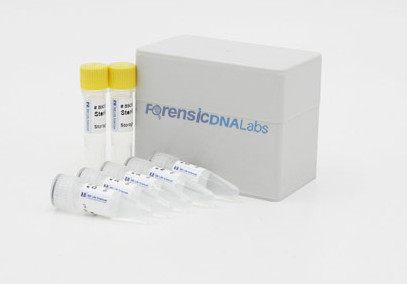
Forensic DNA analysis relies on examining specific regions of our genetic code. The most powerful and commonly used method involves analyzing Short Tandem Repeats (STRs). These are short sequences of DNA, typically 2 to 6 base pairs long, that repeat consecutively. The number of repeats at a specific chromosomal location, or locus, varies greatly between individuals, making STRs excellent genetic markers for human identification.
When we refer to Autosomal STR markers, we are talking about those located on the non-sex chromosomes. Every person inherits one copy of each autosomal chromosome from each parent, providing a rich source of genetic information. A forensic DNA kit is essentially a carefully formulated set of reagents designed to simultaneously target and amplify a panel of these specific STR loci through a process called PCR amplification. The resulting DNA profile is a unique genetic fingerprint used for comparison.
Standard STR assays require longer, intact DNA fragments to work effectively. This is where Mini-STR technology becomes crucial. These kits are engineered to target shorter DNA sequences within the same STR regions. By designing PCR primers closer to the core repeat region, Mini-STR kits can successfully generate profiles from samples where the DNA is heavily fragmented or degraded, such as in old skeletal remains, evidence exposed to harsh environments, or touch DNA samples with very low quantities of genetic material.
Key Applications in Forensic Casework
The primary application of Autosomal STR analysis is in criminal investigations. Biological evidence collected from crime scenes—such as blood, semen, or saliva—can be processed to generate a DNA profile. This profile is then compared against profiles from suspects or entered into a criminal DNA database like CODIS. A match can provide powerful associative evidence, linking a person to a scene or a weapon, or exonerating the innocent. The high discrimination power of modern multiplex STR kits makes them indispensable for solving violent crimes including homicides and sexual assaults.
Beyond criminal casework, these DNA profiling kits are vital for humanitarian efforts. In mass disaster incidents or missing persons investigations, identifying human remains is a profound challenge. Autosomal STR markers are used to compare DNA from recovered remains with reference samples from family members. Similarly, these kits are the standard for paternity testing and more complex kinship analyses, determining biological relationships with extremely high statistical certainty. For historical or cold cases where evidence has degraded over time, the enhanced sensitivity of Mini-STR kits often provides the only viable path to obtaining a usable DNA profile, potentially bringing long-awaited resolutions.
Choosing the Right Kit: Autosomal STR vs. Mini-STR
Selecting the appropriate forensic STR kit is a critical decision that hinges primarily on the expected quality of the DNA sample. For routine casework involving fresh bloodstains, buccal swabs, or other samples with high-quality, high-quantity DNA, a comprehensive Autosomal STR kit is the optimal choice. These kits typically amplify a larger number of loci, providing a greater power of discrimination and a more robust statistical weight to the match.
The condition of the biological evidence must be carefully assessed. Samples exposed to heat, humidity, sunlight, or microbial activity often contain degraded DNA, where the long strands have been broken into smaller fragments. In such instances, a Mini-STR kit is specifically designed to overcome this challenge. Its primers target shorter amplicons, increasing the likelihood that a complete DNA profile can be obtained from compromised evidence. Furthermore, laboratories must ensure that the chosen kit's fluorescent dye chemistry and size standards are fully compatible with their specific genetic analyzer and capillary electrophoresis platform to ensure accurate data collection and analysis.
Features of Our High-Performance Forensic DNA Kits
Our portfolio of DNA amplification kits is engineered to meet the rigorous demands of the modern forensic laboratory. A key feature is enhanced sensitivity, allowing for reliable profiling from low-template DNA samples, such as those collected from touched objects. This is achieved through optimized master mix formulations that maximize PCR efficiency while minimizing background noise and the risk of allele dropout.
Consistency is non-negotiable in forensic science. Our kits deliver robust and reproducible PCR amplification profiles across a wide range of input DNA quantities and qualities. Each kit undergoes extensive developmental validation studies, following SWGDAM and ISO/IEC 17025 guidelines, to demonstrate its reliability, specificity, and sensitivity for forensic use. We design our kits with the entire workflow in mind, ensuring they integrate seamlessly with common DNA extraction methods and downstream quantification assays, streamlining your laboratory's process from sample to report.
Core Technology: Short Tandem Repeat (STR) Analysis
The science behind every modern forensic DNA profile is Short Tandem Repeat (STR) analysis. This technique focuses on measuring the length variations at multiple specific loci scattered throughout the human genome. During the PCR amplification process, these target regions are copied millions of times. The final step, capillary electrophoresis, separates the amplified DNA fragments by size with single-base-pair resolution. The output, an electropherogram, displays peaks corresponding to the different alleles present at each locus. The combination of alleles across all tested loci creates a digital DNA profile that is highly specific to an individual, forming the cornerstone of forensic genetic identity testing.
The Critical Role of Autosomal STR Markers in Human Identification
Autosomal STR markers are the workhorses of forensic DNA typing because they are highly polymorphic—meaning they exist in many different forms (alleles) within a population. Each person has two alleles at each autosomal locus, one inherited from each parent. By analyzing a standardized panel of 20 or more of these loci, forensic scientists can calculate astronomically low random match probabilities, often in the order of one in hundreds of billions or more. This immense power of discrimination is what allows a DNA profile from a crime scene to be attributed to a single individual with virtual certainty, making autosomal STRs the global standard for human identification in both forensic and kinship testing contexts.
Mini-STR Kits: Optimized for Degraded and Challenging DNA Samples
Traditional STR assays can fail when the DNA template is broken into pieces smaller than the distance between the standard PCR primer binding sites. Mini-STR kits solve this problem through intelligent primer redesign. By moving the primer binding sites closer to the core repeat region, the length of the resulting amplicon is significantly reduced. This "miniaturization" means that even if the DNA strand is fragmented, there is a higher probability that the shorter target region remains intact and can be amplified. This technology is particularly valuable for analyzing aged bones, teeth, formalin-fixed tissues, and forensic evidence recovered from challenging environments, dramatically improving success rates where conventional methods would likely fail.
Get a Quote
Contact our sales staff, tell us your needs, and we will provide you with the most suitable solution.
Contact Now