What Are Forensic DNA Typing Kits?
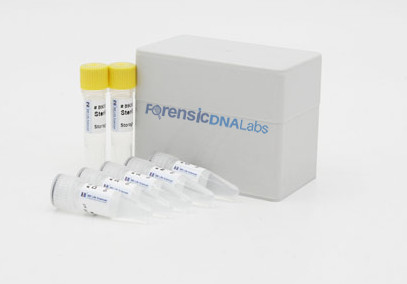
Forensic DNA typing kits are specialized sets of reagents and materials designed to analyze specific regions of a person's genetic code. These kits are fundamental tools in a modern forensic DNA laboratory, enabling scientists to create a DNA profile from biological evidence. The process focuses on analyzing Short Tandem Repeats, or STRs, which are unique patterns in our DNA that vary greatly between individuals. By examining a standard set of these STR markers, forensic analysts can generate a genetic fingerprint that is extremely powerful for identification purposes.
The Role of STR Markers in DNA Profiling
STR markers are the cornerstone of contemporary forensic DNA analysis. These are short sequences of DNA, repeated in tandem, where the number of repeats differs from person to person. The power of STR analysis lies in examining multiple, independent markers simultaneously. When a DNA profile is generated, the combination of results from each STR locus creates a statistical pattern that is virtually unique to an individual, except for identical twins. This multiplex analysis is what gives modern DNA typing its remarkable discrimination power, making it invaluable for linking evidence to a suspect or excluding innocent individuals.
Key Components of a DNA Typing Kit
A comprehensive forensic DNA typing kit contains several critical components that work together seamlessly. The core includes premixed PCR primers that are designed to target and amplify the specific STR loci. A master mix containing a thermostable DNA polymerase, nucleotides, and optimized buffers is provided to ensure efficient and specific amplification during the polymerase chain reaction (PCR) process. Additionally, internal size standards are included, which are essential for accurately measuring the length of the amplified DNA fragments during capillary electrophoresis, the subsequent analysis step. The careful formulation and quality control of these components are what guarantee reproducible and reliable results.
Benefits of Using Our STR Typing Kits
Selecting the right STR typing kit is crucial for the integrity of a forensic laboratory's output. Our kits are engineered to deliver consistent, high-quality data that forensic scientists can trust. We understand that every case hinges on the reliability of the DNA evidence, and our products are developed with this responsibility in mind. From superior lot-to-lot consistency to comprehensive technical documentation, we provide the tools necessary for laboratories to maintain the highest standards of forensic practice.
Enhanced Accuracy in Forensic DNA Analysis
Accuracy in DNA analysis is non-negotiable. Our kits incorporate advanced primer designs and buffer formulations that minimize artifacts like stutter peaks and non-specific amplification, which can complicate profile interpretation. This leads to cleaner, more definitive electropherograms—the graphical readout of the DNA analysis. Cleaner data directly translates to greater confidence in interpreting complex samples, such as those containing DNA from multiple individuals, thereby reducing the potential for analytical error and strengthening the evidentiary value of the results.
Streamlined Workflow for DNA Sample Processing
Efficiency in the laboratory is key to managing caseloads effectively. Our STR kits are designed for integration into a streamlined workflow. Features such as room-temperature setup, reduced PCR cycling times, and compatibility with high-throughput robotic liquid handling systems all contribute to a more efficient process. By simplifying the steps from DNA extraction to final analysis, laboratories can process more samples with greater consistency, allowing analysts to focus on the critical task of data interpretation rather than cumbersome manual procedures.
Compliance with International Forensic Standards
Forensic laboratories operate under strict guidelines to ensure the admissibility of evidence in court. Our DNA typing kits are developed and validated to meet or exceed the requirements of major international standards, such as those from the Scientific Working Group on DNA Analysis Methods (SWGDAM) and quality assurance standards like ISO 17025. Using kits that are compliant with these frameworks supports a laboratory's accreditation efforts and provides a solid foundation for the defensibility of its analytical results in legal proceedings.
Applications of DNA Typing Kits in Forensic Science
The versatility of modern STR analysis kits allows them to be applied across a wide spectrum of forensic investigations. The same core technology that helps solve violent crimes is also instrumental in humanitarian efforts and civil matters. This broad utility underscores the importance of having robust, reliable kits that perform consistently across different sample types and challenging conditions, from pristine reference samples to compromised evidence collected from a crime scene.
Criminal Casework and Evidence Analysis
In criminal investigations, DNA typing kits are used to analyze a vast array of biological evidence, including bloodstains, semen, saliva, and touched objects. The generated DNA profile can be compared against profiles from known suspects or uploaded to national DNA databases like CODIS (Combined DNA Index System) to search for potential matches. This application is critical for linking perpetrators to crime scenes, exonerating the wrongly accused, and solving cold cases where biological evidence has been preserved.
Missing Persons and Disaster Victim Identification
Following mass disasters or in long-term missing persons cases, DNA analysis is often the only definitive method for identification. STR typing kits are used to create DNA profiles from recovered remains. These profiles are then compared to reference samples from family members (kinship analysis) or to antemortem samples from the missing individual. The sensitivity and reliability of the kits are paramount in these situations, as samples may be degraded due to environmental exposure, requiring robust performance under suboptimal conditions.
Paternity Testing and Kinship Analysis
Beyond criminal forensics, STR kits are routinely used in civil applications such as paternity testing and immigration-related kinship cases. The analysis determines the biological relationship between individuals by comparing their DNA profiles at multiple genetic loci. The high statistical power provided by analyzing numerous STR markers allows laboratories to calculate a probability of paternity or relatedness with an extremely high degree of certainty, providing clear answers in personal and legal matters.
Choosing the Right DNA Typing Kit for Your Lab
Selecting an STR kit is not a one-size-fits-all decision. A forensic laboratory must consider its specific caseload, instrumentation, and long-term goals. The ideal kit should align with the laboratory's operational workflow while providing the analytical performance needed for its most challenging samples. Factors such as the types of cases processed, the volume of samples, and the existing laboratory instrumentation all play a critical role in this decision-making process.
Factors to Consider: Sensitivity, Multiplex Capability, and Throughput
Three key performance metrics guide the selection process. Sensitivity refers to a kit's ability to generate a full profile from very small amounts of DNA, which is essential for analyzing low-template or touch DNA evidence. Multiplex capability indicates the number of STR markers and other genetic loci (such as a sex-determining marker) that are co-amplified in a single reaction; a higher multiplex count increases the discrimination power of the test. Throughput considers how efficiently the kit works with the laboratory's setup, including compatibility with automation platforms to process many samples simultaneously without compromising data quality.
Comparison of Different STR Kit Formulations
The forensic market offers kits with different marker sets and formulations. Some kits are optimized for specific population databases or include additional markers recommended by international bodies. Others may offer enhanced performance for degraded DNA through shorter amplicon sizes. Laboratories must evaluate these formulations against their primary applications. For instance, a lab specializing in missing persons identification might prioritize a kit with a specific set of markers that align with international database requirements, while a high-volume crime lab might focus on a kit known for its robustness and fast cycling times.
Integration with Existing DNA Extraction and Amplification Systems
A new typing kit must fit seamlessly into the laboratory's established workflow. This includes compatibility with the laboratory's chosen methods for DNA extraction and purification, as inhibitors co-purified with DNA can affect PCR amplification. Furthermore, the kit's PCR cycling parameters must be compatible with the laboratory's thermal cyclers. Finally, the chemistry of the amplified DNA fragments must be optimized for detection on the laboratory's specific genetic analyzer or capillary electrophoresis platform to ensure accurate sizing and data collection.
Technical Support and Validation Services
Implementing a new DNA typing kit is a significant undertaking for any forensic laboratory. Beyond providing high-quality products, we are committed to supporting our customers through every step of the process. Our comprehensive support services are designed to ensure a smooth transition, successful validation, and long-term operational success, empowering laboratories to generate reliable data from day one.
On-Site Training for Forensic DNA Analysis Protocols
Proper training is essential for consistent and accurate results. We offer detailed on-site or virtual training sessions conducted by experienced forensic scientists. These sessions cover the entire protocol, from kit preparation and PCR setup to data analysis and interpretation guidelines on the laboratory's own instrumentation. This hands-on approach helps analysts gain confidence in using the new system, understand optimal practices, and learn how to troubleshoot common issues, thereby maximizing the laboratory's investment.
Kit Validation and Quality Control Assistance
Before implementing any new kit for casework, a forensic laboratory must perform an internal validation study to demonstrate its reliability under local conditions. We provide extensive validation support, including detailed guidance on experimental design, such as testing sensitivity, reproducibility, mixture analysis, and non-probative sample types. We also supply necessary materials and data analysis tools to assist laboratories in compiling the robust validation package required for accreditation and courtroom admissibility.
Troubleshooting and Optimization for STR Typing
Even in well-established protocols, occasional challenges can arise. Our dedicated technical support team, staffed by experts in forensic DNA analysis, is available to assist with troubleshooting. Whether the issue involves suboptimal peak heights, elevated baseline noise, or unexpected artifacts, we work collaboratively with the laboratory to diagnose the root cause—which could be related to sample quality, instrumentation, or reagent handling—and recommend practical solutions to optimize performance and restore data quality.
Frequently Asked Questions About STR Typing Kits
Forensic professionals often have specific questions regarding the performance and application of STR kits in real-world scenarios. Addressing these common concerns helps laboratories make informed decisions and apply the technology effectively. Below are answers to some of the most frequently encountered questions about the capabilities and handling of modern forensic DNA typing kits.
How Do STR Kits Improve DNA Mixture Interpretation?
Modern STR kits aid mixture interpretation through several design features. The use of highly specific primers reduces non-specific amplification, resulting in cleaner profiles with fewer extraneous peaks. Furthermore, kits that include robust amplification chemistry provide balanced peak heights across all loci, which is critical for distinguishing between major and minor contributors in a mixture. Some advanced kits also incorporate additional genetic markers that can help resolve complex mixtures by providing supplementary information. Cleaner, more balanced data allows sophisticated probabilistic genotyping software to more accurately deconvolute the mixture and estimate the likelihood of contributor profiles.
What Is the Shelf Life and Storage Requirements for These Kits?
The shelf life and storage conditions are critical for maintaining kit performance. Typically, our STR typing kits have a shelf life of 12 to 18 months from the date of manufacture when stored at the recommended temperature, often -20°C for the core reagents. It is crucial to avoid repeated freeze-thaw cycles, which can degrade components. The kits are shipped with detailed storage instructions and stability data. Proper inventory management, using older lots first, and adhering strictly to the storage protocol are essential practices to ensure the reagents perform as specified throughout their entire shelf life, guaranteeing the reliability of every analysis.
Can These Kits Be Used for Degraded or Low-Template DNA Samples?
Yes, many contemporary STR kits are specifically engineered to handle challenging samples. For degraded DNA, where the long strands are broken into smaller pieces, kits with "mini-STR" markers are available. These markers target shorter DNA fragments, increasing the chance of successful amplification. For low-template DNA samples, the kits employ optimized polymerase and buffer systems designed to maximize sensitivity and reduce PCR inhibition. However, working with such samples requires stringent laboratory protocols to prevent contamination and careful data interpretation guidelines, as stochastic effects like allele dropout and increased stutter can occur. Laboratories should validate their chosen kit's performance with low-level and degraded DNA samples as part of their implementation process.
Get a Quote
Contact our sales staff, tell us your needs, and we will provide you with the most suitable solution.
Contact Now