What Are DNA Size Standards and Internal Lane Standards?
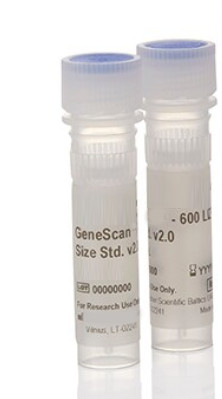
In the precise world of forensic DNA analysis, scientists need a reliable ruler to measure the length of DNA fragments. This is where DNA size standards come into play. These standards are mixtures of DNA fragments of known, precise lengths, labeled with fluorescent dyes. When run alongside unknown forensic samples during capillary electrophoresis, they create a reference scale. This allows the laboratory's genetic analyzer software to accurately determine the size, in base pairs, of each fragment in the evidence sample, which is fundamental for creating a DNA profile.
Closely related to the size standard is the internal lane standard. While a size standard is typically added to each sample individually, an internal lane standard is often pre-mixed into the analysis reagents. Its primary role is to correct for run-to-run variations in the electrophoresis process, such as slight differences in injection time or voltage. By providing a constant internal reference in every capillary, the internal lane standard ensures that fragment sizing is consistent and comparable across different analytical runs, instruments, and even days, which is critical for maintaining data integrity in a high-throughput forensic laboratory.
The Role of DNA Size Standards in Fragment Analysis
The accuracy of fragment analysis hinges on precise sizing. During Short Tandem Repeat analysis, the DNA is cut at specific points, producing fragments whose lengths correspond to the number of repeats at a given genetic locus. The DNA size standard, with its known fragment lengths, enables the software to interpolate and assign a precise size to each of these STR peaks. Without this calibrated reference, determining whether a peak represents, for example, a 9-repeat or a 10-repeat allele would be impossible, directly impacting the reliability of the final DNA profile used for identification or comparison.
How Internal Lane Standards Enhance Electrophoresis Consistency
Capillary electrophoresis is a sensitive technique where minor fluctuations can affect results. An internal lane standard mitigates these effects by being present in every sample. The analysis software uses the known migration time of the internal lane standard's peaks to normalize the data. This process corrects for instrumental drift and minor environmental changes, ensuring that a DNA fragment sized at 150 base pairs in one run is accurately identified as 150 base pairs in all subsequent runs. This level of consistency is non-negotiable for forensic laboratories, as it underpins the reproducibility required for courtroom-admissible evidence.
Key Features of Our Forensic DNA Size Standards
Our DNA size standards are engineered for the demanding environment of the forensic DNA laboratory. We prioritize formulations that deliver exceptional precision and batch-to-batch reproducibility. This means that when you run a standard today and six months from now, the sizing data will be consistent, providing a stable foundation for all your STR profiling work. This reliability is built into every vial, from the selection of ultra-pure DNA fragments to the stringent quality control checks that each lot undergoes before release.
Understanding that forensic labs utilize various instrumentation platforms, our size standards are designed for broad compatibility. They are optimized to perform seamlessly with major capillary electrophoresis systems from leading manufacturers. Furthermore, our stable formulations are tested for long-term performance, ensuring that they maintain their specified sizing accuracy and fluorescent signal intensity even after prolonged storage under recommended conditions, supporting efficient laboratory inventory management.
High Precision and Reproducibility for STR Profiling
The cornerstone of any forensic DNA size standard is its ability to generate precise and reproducible data across countless samples. Our standards are characterized by tight fragment size distributions and consistent peak heights, which translate into lower sizing error margins for your STR alleles. This high degree of precision is crucial not only for routine single-source samples but becomes even more critical when analyzing complex DNA mixtures or low-template samples, where accurate sizing can be the key to resolving contributor profiles.
Compatibility with Major Capillary Electrophoresis Platforms
Laboratory efficiency depends on reagents that work reliably with existing equipment. Our DNA sizing solutions are rigorously validated on the most common genetic analyzers used in forensic science. This ensures straightforward integration into your established capillary electrophoresis protocols without the need for extensive re-validation or protocol adjustments. This compatibility extends to the fluorescent dye chemistries used, ensuring optimal detection and minimal spectral overlap on your specific instrument's optical system.
Applications in Forensic DNA Laboratory Workflows
The primary application of DNA size standards is in the accurate sizing of fragments generated during Short Tandem Repeat analysis, the global standard for forensic human identification. By providing an absolute scale, they enable the conversion of raw electrophoresis data into a digital DNA profile consisting of allele calls. This profile is then used for database searching or comparison with evidence from a crime scene. Beyond core STR work, these standards are also vital for quality control in other genotyping applications and next-generation sequencing workflows to monitor instrument performance and assay accuracy.
In challenging casework, such as the analysis of DNA mixtures from multiple individuals or samples with very low quantities of DNA, the role of a precise size standard is magnified. Accurate fragment sizing helps the analysis software and the forensic examiner deconvolve overlapping peaks and assign alleles to the correct contributor with greater confidence. This application directly supports the laboratory's mission to obtain interpretable results from sub-optimal or complex biological evidence.
Accurate Sizing for Short Tandem Repeat (STR) Analysis
Every STR kit amplifies a set of core genetic loci. The DNA size standard is the critical tool that allows the laboratory's software to determine the exact length of the amplified product for each locus. This precise sizing is what allows an allele to be designated as, for instance, "TH01 allele 9.3". The integrity of the entire CODIS database and the millions of profiles within it relies on the consistent and accurate sizing provided by trusted DNA size standards across all participating laboratories.
Supporting Mixture Analysis and Low-Template DNA Samples
When analyzing DNA from multiple contributors, electrophoregrams can show complex peak patterns. A high-precision size standard provides the anchor needed for sophisticated analysis software to accurately align and size every peak, even those with low signal or those that are closely spaced. This reduces sizing uncertainty, which is a key variable in probabilistic genotyping systems used to interpret mixtures. For low-template DNA work, where stochastic effects can cause sizing artifacts, a robust and consistent internal lane standard is essential for validating that observed peak shifts are biological in origin and not due to instrumental variance.
Choosing the Right Internal Lane Standard for Your Lab
Selecting an internal lane standard involves matching its specifications to your laboratory's specific workflows and instrumentation. Key factors to evaluate include the fluorescent dye color, which must be distinct from the dyes used in your STR amplification kits to avoid spectral interference, and the size range of the DNA fragments, which should bracket the expected sizes of your analytes. Furthermore, panel compatibility is essential; the standard must be validated for use with the specific set of STR loci you are examining to ensure it does not interfere with the detection of any alleles.
Integration with your existing PCR amplification kits is a practical consideration. Many laboratories opt for pre-mixed internal lane standards that are designed to be added directly to the sample loading cocktail, streamlining the preparation process and reducing pipetting steps. This approach enhances workflow efficiency, minimizes potential for preparation error, and ensures a consistent amount of standard is present in every sample, which is vital for achieving the normalization benefits across all data runs.
Factors to Consider: Dye Colors, Size Ranges, and Panel Compatibility
The choice of dye color for an internal lane standard is dictated by the filter set and laser configuration of your genetic analyzer and the dye set of your primary STR kit. It must occupy a spectral channel that is otherwise unused by your sample's amplicons. The size range should encompass all potential alleles in your forensic DNA analysis kit, with fragments evenly spaced to provide a good calibration curve across the entire relevant range. Finally, verifying panel compatibility through validation ensures that none of the internal lane standard's peaks migrate at a size identical to a known allele in your kit, which could cause scoring errors.
Benefits of Using Pre-Mixed Standards for Workflow Efficiency
Adopting a pre-mixed internal lane standard formulation can significantly streamline the post-PCR sample preparation process. By eliminating a separate pipetting step, labs reduce hands-on time, conserve precious sample, and decrease the risk of volumetric errors or contamination. This efficiency gain is particularly valuable in high-throughput forensic DNA laboratories processing hundreds of samples weekly. The guaranteed consistency of a pre-mixed product also simplifies data analysis, as the software can apply a uniform normalization factor, leading to more robust and easily comparable results across batches.
Technical Support and Best Practices for Use
Optimal performance of DNA size standards depends on proper protocol integration. We provide detailed guidelines for optimizing injection parameters and run conditions on various capillary electrophoresis systems to ensure sharp peaks and accurate sizing. Proper storage at recommended temperatures is paramount to maintain the stability of the fluorescent dyes and the integrity of the DNA fragments. Consistent handling practices, such as thorough vortexing and centrifugation before use, are simple yet critical steps to ensure a homogeneous mixture and reliable performance in every injection.
Even with high-quality products, laboratories may encounter occasional challenges. Common issues in fragment sizing can include poor peak morphology, elevated baseline noise, or inconsistent migration times. Our technical support resources offer troubleshooting pathways to diagnose these problems, which may relate to instrument maintenance, polymer quality, sample preparation, or the electrophoresis run parameters. Adhering to established best practices for storage, handling, and instrument calibration is the most effective strategy for preventing sizing discrepancies and ensuring data quality.
Protocol Optimization for Capillary Electrophoresis Systems
Maximizing the data quality from your size standard involves fine-tuning your instrument's method. Parameters such as injection voltage and time, run temperature, and polymer type can influence peak shape and resolution. We offer application notes and support to help you adjust these settings to achieve optimal separation and detection for our products on your specific platform. This optimization ensures that the size standard provides the clearest possible reference points, which in turn yields the most accurate sizing for your forensic samples.
Storage, Handling, and Stability Guidelines
To preserve the performance specifications of DNA size standards, strict adherence to storage conditions is required. Most liquid formulations are stable for extended periods when stored at -20°C, protected from light. It is important to avoid repeated freeze-thaw cycles, which can degrade the DNA fragments. When preparing for a run, allowing the standard to thaw completely and then mixing it thoroughly are essential steps to ensure an even distribution of all fragment sizes. Following these handling guidelines guarantees that the standard performs as validated throughout its entire shelf life.
Why Choose Forensic DNA Labs for Your Size Standard Needs?
Forensic DNA Labs is built on a foundation of deep expertise in forensic DNA analysis. Our products are not just reagents; they are part of a comprehensive laboratory solution designed by professionals who understand the critical nature of forensic casework. We are committed to a reliable supply chain, ensuring that you have consistent access to the high-quality size standards your laboratory depends on to meet its operational and casework deadlines without interruption.
Our partnership extends beyond the initial sale. We provide comprehensive support from the validation phase, assisting your lab in integrating our standards into your quality management system, through to ongoing implementation. Our technical team is accessible to help troubleshoot applications and optimize workflows. This end-to-end support model is designed to give forensic laboratory professionals and managers confidence in their processes and the products that underpin them.
Expertise in Forensic DNA Analysis and Laboratory Solutions
Our team comprises scientists with direct experience in forensic laboratory operations. This firsthand knowledge informs the development of our DNA size standards and internal lane standards, ensuring they address the real-world challenges of accuracy, reproducibility, and compatibility. We view our role as a solutions provider, offering not only products but also the application knowledge necessary to implement them effectively within the stringent quality frameworks of a modern forensic DNA laboratory.
Comprehensive Support from Validation to Implementation
Implementing a new reagent in a forensic lab requires a formal validation study. We support this process by providing detailed product specifications, validation guides, and access to technical data. Once validated, our support continues to help you achieve seamless day-to-day implementation, ensuring that our products contribute to a smooth, efficient, and reliable DNA analysis workflow that meets all accreditation standards.
FAQs About DNA Size Standards and Internal Lane Standards
What is the difference between a size standard and an internal lane standard?
A DNA size standard is used primarily to create a calibration curve for determining the base-pair size of unknown DNA fragments in a sample. An internal lane standard serves as a normalization control within each capillary to correct for minor variations in electrophoresis conditions from run to run. While their functions are complementary, the internal lane standard is focused on ensuring consistency, whereas the size standard is focused on providing absolute size measurement.
How do size standards impact the accuracy of DNA mixture interpretation?
Accurate fragment sizing is a fundamental input for DNA mixture interpretation software. Precise sizing from a high-quality standard reduces the uncertainty in allele calls, which allows probabilistic genotyping systems to more accurately calculate likelihood ratios and deconvolve contributor profiles. Inaccurate sizing can lead to allele drop-in or drop-out in the software's modeling, potentially compromising the interpretation of complex evidence.
Can I use the same size standard for different forensic DNA analysis kits?
Often, yes, provided the size standard's fluorescent dye is compatible with the instrument's detection settings and its fragment range covers the allele sizes of all kits in use. However, it is essential to perform a validation study for each specific kit and size standard combination to confirm there is no spectral overlap or size interference that could affect data quality. Some kits may have specific recommendations or co-validated standards for optimal performance.
Explore Our Forensic DNA Laboratory Solutions
DNA size standards are one component of a fully integrated forensic DNA analysis system. We invite you to browse our comprehensive range of supporting reagents, including PCR amplification kits, extraction chemistries, and other consumables designed to work together seamlessly. For laboratories establishing new capabilities or upgrading existing ones, our consulting services can provide valuable guidance on custom laboratory setup, workflow design, and equipment selection.
Our goal is to simplify the procurement and implementation process for forensic laboratories. To discuss your specific needs, receive a personalized quote for our products, or schedule a technical consultation with our experts, please contact us. We are here to provide the solutions and support that help your laboratory achieve reliable, efficient, and defensible results.
Get a Quote
Contact our sales staff, tell us your needs, and we will provide you with the most suitable solution.
Contact Now