What is a Genetic Analyzer Running Buffer?
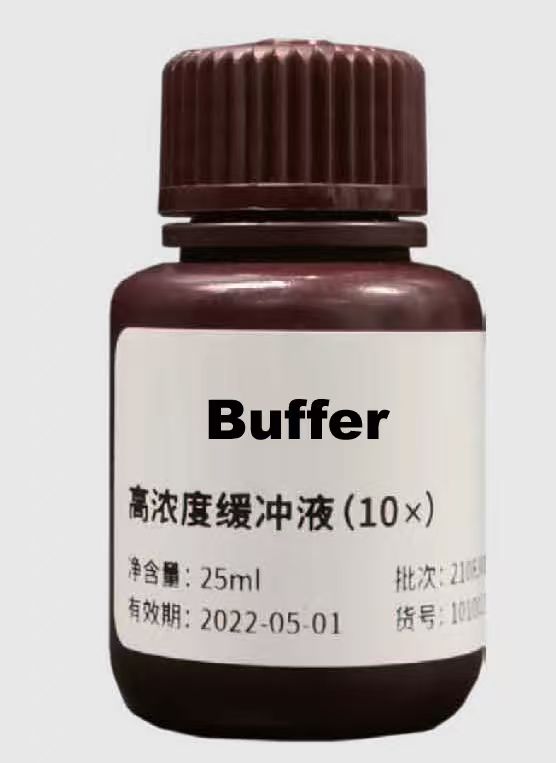
In the world of forensic DNA analysis, a genetic analyzer is the instrument that reads the unique genetic code. The process it uses is called capillary electrophoresis. For this technique to work with precision, a specialized liquid medium is required to carry the DNA fragments through a tiny glass tube, or capillary. This medium is the running buffer. Think of it as the meticulously prepared track for a molecular race, where DNA fragments are separated by size. Its formulation is not arbitrary; it is a carefully balanced solution that creates the ideal environment for the electrical current to move the DNA and for clear data to be captured by the instrument's detector.
The composition of a running buffer is critical. Its key components include specific salts that provide the necessary ionic strength to conduct electricity efficiently. Furthermore, its pH level is tightly controlled. This precise pH environment is essential for maintaining the consistent negative charge on the DNA molecules, ensuring they migrate in a predictable and uniform manner. Any deviation in the ionic strength or pH can lead to poor fragment separation, distorted peaks, and ultimately, unreliable data that could compromise a forensic investigation.
The Critical Role of Running Buffer in Capillary Electrophoresis
Capillary electrophoresis is the cornerstone technology for modern DNA sequencing and fragment analysis in forensic labs. The performance of this entire system hinges on the properties of the running buffer. It serves multiple simultaneous functions: it is the conductive medium that allows the applied high voltage to create an electric field, it provides the chemical environment that keeps the DNA samples stable during their journey, and it helps to dissipate heat generated during the run. Without a high-quality buffer, the electric field would be inconsistent, leading to variable migration times and making accurate size calling of DNA fragments impossible.
Moreover, the buffer interacts directly with the inner wall of the capillary. A stable, well-formulated running buffer helps preserve the coating inside the capillary, which is applied to minimize the adhesion of DNA. This interaction is crucial for maintaining optimal electroosmotic flow and ensuring the longevity of the expensive capillary array. Inconsistent or impure buffers can degrade this coating over time, leading to increased maintenance costs and potential downtime for the genetic analyzer.
Key Components and Formulation for Optimal Performance
The formulation of a forensic-grade running buffer is a science in itself. Beyond the fundamental salts and pH buffers, advanced formulations include additives designed to enhance performance. These may include viscosity modifiers that stabilize the flow within the capillary, and compounds that suppress the natural fluorescence of the capillary polymer, thereby reducing background noise. This lower background fluorescence is vital in forensic applications where sample amounts can be minimal, as it significantly improves the signal-to-noise ratio, allowing the instrument's software to clearly distinguish true DNA peaks from instrumental artifacts.
Manufacturers also optimize the buffer's formulation for compatibility with different polymer matrices, which are the sieving gels through which the DNA fragments travel. The buffer and polymer must work in concert. A mismatch can cause issues like polymer instability or poor resolution. Therefore, a high-quality running buffer is engineered not as a standalone product, but as an integral part of a complete capillary electrophoresis chemistry system, ensuring that every component from the sample to the detector works in harmony to produce definitive results.
Key Features of High-Quality Running Buffer for Forensic DNA Analysis
For a forensic DNA laboratory, the quality of data is non-negotiable. The running buffer used in genetic analyzers must meet exceptionally high standards to support the rigorous demands of casework and database management. The first and most critical feature is exceptional purity. Any particulate contaminants or chemical impurities can cause blockages in the delicate capillaries or create spurious signals during detection. Reproducibility is the bedrock of forensic science; thus, every bottle of buffer must perform identically to the last, ensuring that a DNA profile generated today can be reliably compared to one generated six months ago.
Another paramount feature is the optimized ionic strength. This property directly controls the electrical conductivity within the capillary. An ideal ionic strength ensures a strong, stable electric field for efficient DNA migration while minimizing excessive current that can generate heat. Excessive heat, or Joule heating, can distort the separation, causing band broadening and loss of resolution between closely sized DNA fragments, which is catastrophic for analyzing complex mixtures or subtle alleles in STR profiling.
Low Fluorescence Background to Enhance Signal-to-Noise Ratio
Forensic samples are often characterized by low template DNA, degraded DNA, or mixtures from multiple contributors. In these challenging scenarios, maximizing the clarity of the detected signal is imperative. A key feature of premium running buffers is their inherently low fluorescence. The optical detection system in a genetic analyzer uses lasers to excite fluorescent dyes attached to the DNA fragments. If the buffer itself fluoresces, it creates a high background "noise" level. A buffer with ultra-low background fluorescence allows the true signal from the minute DNA samples to shine through clearly, dramatically improving the confidence of allele calls and the overall sensitivity of the analysis.
Formulated for Compatibility with Major Genetic Analyzer Platforms
Forensic laboratories operate various models of genetic analyzers from different manufacturers. A high-quality running buffer solution is designed with cross-platform compatibility in mind. Whether a lab uses instruments from established industry leaders or other specialized platforms, the buffer chemistry should be validated to work seamlessly. This involves tailoring the formulation to match the specific requirements of the instrument's fluidics system, capillary dimensions, and recommended operational protocols. Using a buffer specifically validated for your platform minimizes the risk of instrument errors, protects your capital investment, and simplifies laboratory workflows by ensuring reliable performance run after run.
Applications in Forensic DNA Laboratory Workflows
The genetic analyzer running buffer is a silent workhorse in several core forensic DNA applications. Its primary role is in Short Tandem Repeat (STR) analysis, the global standard for human identification. During an STR run, the buffer facilitates the precise separation of DNA fragments that differ by only a few base pairs. The clarity of this separation, directly influenced by the buffer's quality, determines the accuracy of the resulting DNA profile used to match evidence to a suspect or to an entry in a national DNA database. Any smearing or poor resolution can lead to ambiguous profiles and potentially missed matches.
Beyond routine STR work, this same buffer chemistry is essential for mitochondrial DNA (mtDNA) sequencing. mtDNA analysis is often employed for highly degraded samples, such as ancient bones or hair shafts without roots, where nuclear DNA is absent. The sequencing process relies on the same capillary electrophoresis principle. Here, the running buffer must support the separation of sequencing reaction products, allowing for the accurate reading of the mtDNA hypervariable regions. The need for low background and high resolution is even more critical in these applications to interpret the sequence data from minimal starting material confidently.
Integral to Forensic Casework and DNA Database Management
Every day, forensic laboratories process evidence from active investigations and also work to populate and maintain expansive DNA databases. The running buffer is integral to both streams. In casework, from violent crimes to unidentified human remains, the reliability of the buffer underpins the integrity of the evidence presented in court. For database management, which involves processing thousands of reference samples from offenders or arrestees, consistency and throughput are key. A robust, high-performance buffer enables laboratories to run instruments for extended periods with minimal intervention, supporting high-throughput workflows while maintaining the data quality required for cold hits and kinship analyses.
Choosing the Right Running Buffer for Your Forensic Lab
Selecting the optimal running buffer is a strategic decision that impacts daily operations and long-term outcomes. The first step is to strictly match the buffer specifications to your specific genetic analyzer model. Manufacturers provide detailed guidelines on the required chemical composition, conductivity, and filtration requirements. Using a buffer that deviates from these specifications can void instrument warranties and lead to suboptimal performance. It is advisable to choose buffers that are explicitly validated and recommended for use with your platform to ensure full compatibility and support.
Evaluating buffer performance goes beyond the product datasheet. Key operational metrics to assess include resolution, particularly in the size range critical for your assays (e.g., the allelic ladder range for STRs), and overall run time. A buffer that offers faster run times without sacrificing resolution can significantly increase laboratory throughput. Most importantly, the ultimate metric is the quality of the raw data produced: the peak morphology, the evenness of peak heights, and the baseline noise. Conducting a parallel validation study comparing a new buffer to your current standard under controlled conditions is a best practice for any forensic lab considering a switch.
Considerations for High-Throughput Forensic DNA Laboratories
Labs engaged in high-volume processing, such as those supporting national DNA databases or large-scale kinship projects, have unique needs. For these environments, buffer stability over long run cycles is paramount. A buffer that maintains consistent ionic strength and pH over 24- or 48-hour continuous runs prevents data drift. Furthermore, packaging becomes a significant consideration. Bulk packaging options, like multi-liter bottles or convenient pouch formats, can reduce waste, lower the cost per run, and minimize the frequency of buffer changes, thereby increasing operational efficiency and reducing the potential for contamination during handling.
Best Practices for Using and Storing Running Buffer
To preserve the integrity of your running buffer and ensure the reliability of your genetic analyzer data, proper handling is essential. Always use dedicated, clean labware for buffer preparation and transfer. It is crucial to filter the buffer through the recommended pore-size membrane filter immediately before placing it into the instrument's buffer reservoirs. This step removes any particulates that may have been introduced during handling or that formed during storage, which are a common cause of capillary clogging and pressure errors. Wear appropriate personal protective equipment to prevent contamination from skin cells or other biological sources.
Correct storage is equally important for maintaining buffer stability and extending its shelf life. Most running buffers should be stored tightly sealed at room temperature, away from direct light, and in a clean, low-dust environment. Exposure to extreme temperatures or to open air can lead to evaporation, concentration changes, and microbial growth, all of which degrade performance. Always label bottles with the date opened and adhere to the manufacturer's stated shelf-life recommendations. Using expired or improperly stored buffer is a common but avoidable source of poor electrophoresis results.
Troubleshooting Common Capillary Electrophoresis Issues Related to Buffer
Many recurring problems in capillary electrophoresis can be traced back to the running buffer. If you observe a gradual increase in current or a steady rise in pressure readings over successive runs, it may indicate a buildup of ions or contaminants in the buffer, signaling it is time for a complete change. Poor resolution, manifested as broad or misshapen peaks, can often be remedied by replacing old buffer with a fresh, properly filtered batch. An unexplained increase in baseline noise or fluorescent spikes in the data electropherogram can also point to particulate contamination or degradation of the buffer. Instituting a strict, documented protocol for buffer preparation, change-out schedules, and instrument maintenance is the most effective strategy to prevent these issues and ensure consistent, high-quality forensic DNA analysis.
Get a Quote
Contact our sales staff, tell us your needs, and we will provide you with the most suitable solution.
Contact Now