What is an NGS Forensic Sequencing System?
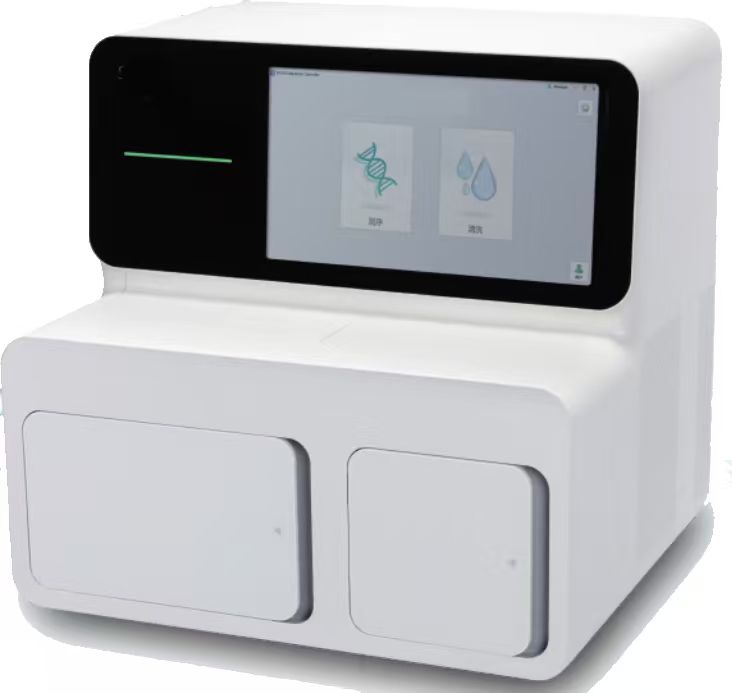
In the realm of forensic science, a Next-Generation Sequencing (NGS) system represents a transformative leap in genetic analysis technology. Unlike older methods that read genetic information in a more limited fashion, NGS platforms allow for the simultaneous, high-speed sequencing of millions of DNA fragments. This process provides a vastly more detailed genetic blueprint. Within a forensic context, this technology is specifically configured and validated to meet the rigorous standards of the justice system, focusing on markers crucial for human identification.
The core architecture of a forensic NGS workflow is built upon several integrated stages. It begins with specialized library preparation, where forensic DNA samples are processed into a format readable by the sequencing instrument. The heart of the system is the sequencer itself, which generates massive amounts of raw genetic data. This data then flows into dedicated bioinformatics software, where complex algorithms interpret the sequences, calling the specific genetic markers that are the hallmark of a modern forensic DNA analysis.
Defining Next-Generation Sequencing (NGS) in Forensic Science
Next-Generation Sequencing in forensic science is the application of massively parallel sequencing technologies to forensic DNA samples. The fundamental principle involves fragmenting a DNA sample, attaching adapters, and then sequencing all fragments concurrently. This method provides a sequence-based answer, rather than just a length-based measurement, for each genetic marker examined. This shift to a sequencing foundation unlocks a new dimension of data, revealing variations within genetic regions that were previously invisible, thereby increasing the discriminatory power of the analysis exponentially.
Core Components of a Forensic NGS Workflow: From Library Prep to Data Analysis
A robust forensic NGS setup is more than just a sequencing instrument; it is an ecosystem of compatible components. The process is initiated with forensic assay kits, which contain all the necessary reagents for preparing DNA libraries tailored for human identification. Following library preparation, the samples are loaded onto the sequencing platform. The resulting data, often terabytes in volume, must be managed by a powerful computational infrastructure. Specialized forensic bioinformatics solutions are then employed to translate raw sequence data into actionable genotype profiles, ensuring the results are court-ready and compliant with accreditation standards.
Key Advantages of NGS for Forensic DNA Laboratories
The adoption of Next-Generation Sequencing technology offers forensic laboratories a suite of compelling benefits that address long-standing challenges. The most significant is the unparalleled level of multiplexing, allowing dozens to hundreds of genetic markers to be analyzed from a single, minute sample in one run. This high-throughput capability maximizes the information yield from precious and often limited crime scene evidence. Furthermore, the sequence-level detail provides enhanced resolution, which is critical for interpreting complex DNA mixtures where contributions from multiple individuals are intertwined.
Beyond mixture deconvolution, NGS grants access to an expanded genetic marker toolkit. Laboratories are no longer confined to standard STRs; they can seamlessly incorporate Single Nucleotide Polymorphisms (SNPs) for ancestry or phenotypic prediction, and sequence entire mitochondrial DNA genomes with greater efficiency. This expansion future-proofs the laboratory, establishing a sequencing-based foundation that can adapt to new markers and applications as the field evolves, ensuring long-term relevance and investigative power.
Unparalleled Multiplexing Capability and High-Throughput Analysis
The multiplexing power of an NGS forensic system is a game-changer for laboratory efficiency. Traditional methods might analyze a handful of markers per reaction. In contrast, a modern forensic NGS panel can co-amplify and sequence over 200 markers simultaneously from a single DNA aliquot. This massively parallel analysis translates directly into high-throughput processing, enabling a laboratory to process more cases, more samples per case, or obtain more data from degraded samples without consuming additional extract, thereby streamlining the entire workflow from evidence to report.
Enhanced Resolution for Complex Mixtures and Challenging Samples
Complex DNA mixtures present one of the most difficult scenarios in forensic analysis. Capillary electrophoresis can struggle to resolve overlapping peaks from contributors with similar allele sizes. NGS technology addresses this by moving from length-based to sequence-based discrimination. It can reveal single-base differences within what appears to be a single peak, effectively separating contributor alleles. This enhanced sequence resolution is equally vital for analyzing challenging samples, such as those that are highly degraded or contain PCR inhibitors, as smaller amplicon targets can be designed and reliably sequenced.
Access to Expanded Genetic Markers: SNPs, STRs, and mtDNA
A primary advantage of a sequencing-based approach is the unification of marker types on a single platform. While Short Tandem Repeats (STRs) remain the gold standard for direct matching, Single Nucleotide Polymorphisms (SNPs) offer advantages for kinship analysis, ancestry inference, and phenotypic trait prediction. NGS allows for the concurrent analysis of both STRs and SNPs in one assay. Similarly, whole mitochondrial genome sequencing, valuable for maternal lineage testing in missing persons or cold cases, becomes a more routine and comprehensive application within the same technological framework.
Essential Components of Your Forensic NGS Setup
Building a functional NGS capability requires careful consideration of both physical and digital components. The centerpiece is the sequencing instrument, with choices ranging from compact benchtop machines to large-scale production systems. The selection must align with the laboratory's case volume and required turnaround times. Equally critical are the forensic assay kits, which are optimized for human DNA and contain the primers and enzymes necessary to target the specific combination of STRs, SNPs, and other markers relevant to forensic identification.
However, the hardware and chemistry are only part of the equation. The data generated demands a robust informatics backbone. This includes dedicated forensic bioinformatics software validated to interpret complex sequence data, calculate statistics, and generate reports. Underpinning all of this is the laboratory infrastructure: high-performance computing clusters for data analysis, secure and scalable data storage solutions for vast sequence files, and a validated IT environment that meets the stringent requirements of forensic quality standards like ISO/IEC 17025.
NGS Sequencing Instruments: Platforms for Forensic Applications
Selecting the right sequencing platform is a foundational decision. Forensic laboratories must evaluate instruments based on key parameters such as read length, output, run time, and ease of integration into an existing evidence processing chain. Some platforms are renowned for their long reads, beneficial for spanning complex genomic regions, while others excel at high output for population-scale studies. The ideal forensic sequencer balances throughput with data quality and is supported by a range of validated forensic assay kits to ensure reliable, reproducible results for casework.
Dedicated Bioinformatics Software for Forensic Sequence Data Interpretation
The raw output from an NGS instrument is a vast collection of sequence reads. Transforming this into a clear, interpretable DNA profile requires sophisticated bioinformatics software designed for forensic applications. This software performs critical tasks: aligning sequences to a reference, calling alleles at each marker, filtering artifacts, and assessing quality metrics. For mixture interpretation, advanced probabilistic genotyping tools may be integrated. The software's user interface, validation status, and ability to export data for laboratory information management systems are crucial factors for operational efficiency and accreditation.
Implementing an NGS System in Your DNA Lab: A Step-by-Step Guide
Successful implementation of an NGS forensic sequencing system begins with a thorough needs assessment. Laboratory directors must define clear goals: Is the primary driver processing high volumes of reference samples, solving complex mixtures, or developing new capabilities like phenotypic prediction? These goals directly inform platform selection, guiding the choice between different instrument throughputs and compatible assay panels. This initial planning phase ensures the investment aligns with the laboratory's strategic mission and operational demands.
Once a system is selected, the critical phase of validation begins. This process involves conducting extensive experiments to demonstrate that the entire NGS workflow—from extraction to data analysis—is reliable, reproducible, and robust under forensic conditions. The validation package must satisfy accreditation requirements, such as those under ISO/IEC 17025. Concurrently, arranging comprehensive training for analysts and technical staff is essential. A strong partnership with the technology provider for ongoing technical support ensures the laboratory can overcome initial hurdles and maintain system performance long-term.
Validation and Accreditation: Meeting Forensic Quality Standards (ISO 17025)
Forensic validation is a non-negotiable step in implementing any new technology. For an NGS system, this involves a series of controlled experiments to establish performance metrics like sensitivity, specificity, reproducibility, and mixture deconvolution capabilities. Laboratories must document the entire standard operating procedure and provide evidence that the system performs consistently within established thresholds. This rigorous documentation is audited to achieve or maintain accreditation under international standards, which is paramount for ensuring the legal defensibility of the DNA profiles generated by the new sequencing workflow.
Training and Technical Support for Your Forensic Team
The human element is as vital as the technology itself. Transitioning to an NGS workflow requires analysts to develop new competencies in library preparation, instrument operation, and data interpretation. Initial training from the system provider is crucial for building confidence and ensuring proper technique. However, ongoing technical support is equally important for troubleshooting unexpected issues, optimizing protocols, and staying updated on software enhancements. A provider with deep forensic application expertise becomes a valuable partner, helping the laboratory maximize the value of its sequencing investment over many years.
Forensic Applications of Next-Generation Sequencing
The applications of NGS in forensic science are broad and expanding. In traditional human identification, it provides stronger statistical power and can resolve missing persons cases where reference samples are from distant relatives. Its most celebrated use may be in deconvoluting complex DNA mixtures from challenging crime scene evidence, such as touch DNA or samples from multiple contributors, providing investigators with clearer leads. Furthermore, the technology enables the reliable sequencing of mitochondrial DNA for lineage tracing, which is particularly useful for degraded samples where nuclear DNA is absent.
Beyond identification, the sequence data itself holds predictive information. Forensic NGS panels can include markers that inform biogeographic ancestry, offering investigators insights into the possible ancestral background of a donor. Similarly, markers associated with externally visible characteristics, like eye, hair, and skin color, can provide investigative leads in cases where no suspect database hit exists. These applications transform DNA from a purely matching tool into a source of intelligence that can help focus an investigation.
Deconvoluting Complex DNA Mixtures from Crime Scene Evidence
Crime scene evidence rarely contains DNA from a single individual. NGS technology revolutionizes mixture analysis by providing sequence-level data for each allele. This allows analysts to distinguish between contributors who share alleles of the same length but have different underlying sequences. Sophisticated bioinformatics tools can then use this detailed information to statistically model the most likely number of contributors and their genotype combinations. This capability turns previously uninterpretable mixtures into valuable investigative information, potentially identifying minor contributors that older technologies would have missed.
Phenotypic and Biogeographic Ancestry Prediction from Sequence Data
The comprehensive data from a forensic NGS run can be mined for more than just identity. By targeting specific sets of Single Nucleotide Polymorphisms (SNPs), trained systems can generate predictions about an individual's probable biogeographic ancestry, categorizing likely continental or sub-population origins. Additionally, SNPs associated with phenotypic traits allow for the prediction of visible characteristics. While these are probabilistic predictions rather than definitive traits, they provide powerful investigative leads to guide law enforcement when a direct database match is not available, helping to narrow a suspect pool.
Choosing the Right NGS Forensic Sequencing Partner
Selecting a provider for your NGS forensic system is a strategic decision with long-term implications. The foremost consideration must be the system's proven reliability and the extent of its forensic validation. Look for platforms and assay kits that have been extensively tested and documented in peer-reviewed literature for forensic applications. The reproducibility of results across runs and between laboratories is a cornerstone of forensic science and must be a demonstrable strength of the chosen technology.
Beyond the initial sale, evaluate the provider's commitment to ongoing support. This includes access to knowledgeable application scientists who understand forensic workflows, responsive customer service for technical issues, and regular updates to bioinformatics software. Furthermore, consider scalability; a solution should be able to grow with your laboratory's needs. Finally, a clear understanding of the total cost of ownership—encompassing the instrument, recurring consumables, necessary IT infrastructure, and software licenses—is essential for accurate long-term budgeting and operational planning.
Evaluating System Reliability, Reproducibility, and Forensic Validation
For forensic laboratories, the reliability and reproducibility of a technology are paramount. A suitable NGS partner should provide extensive validation data generated under forensic conditions, demonstrating consistent performance metrics like high call rates, low error rates, and robust performance with low-input and degraded samples. The system should produce identical profiles for the same sample across multiple runs and different instruments. This level of demonstrated reproducibility is critical for building confidence in the technology and ensuring its results will withstand legal scrutiny in court proceedings.
Total Cost of Ownership: Instrument, Consumables, and Data Analysis
The financial commitment to NGS extends far beyond the purchase price of the sequencer. Laboratories must carefully model the total cost of ownership. This includes the recurring cost of assay kits and flow cells for each run, which directly impacts the cost-per-sample. Equally significant are the costs associated with data analysis: the required computing hardware, data storage solutions for massive sequence files, and any recurring licenses for specialized forensic bioinformatics software. A transparent partner will help laboratories understand this complete financial picture to ensure sustainable and cost-effective operation.
FAQs: NGS Forensic Sequencing Systems
How does NGS differ from traditional capillary electrophoresis (CE) for STR analysis?
Traditional Capillary Electrophoresis (CE) separates DNA fragments by size, providing a length-based measurement for STR alleles. Next-Generation Sequencing, however, determines the actual nucleotide sequence of each allele. This means NGS can identify different DNA sequences that are the same length, a distinction CE cannot make. This sequence-level detail increases discrimination power, improves mixture deconvolution, and allows for the analysis of sequence polymorphisms within the STR region itself, adding a new layer of genetic information to the standard forensic profile.
What are the primary data analysis challenges with forensic NGS, and how are they addressed?
The primary challenges are the sheer volume of data generated and the complexity of interpreting sequence variations. Terabytes of data require robust IT infrastructure and efficient storage. The interpretation challenge involves distinguishing true genetic variants from sequencing errors or PCR artifacts. This is addressed by using validated forensic bioinformatics software that applies quality filters, uses sophisticated algorithms for allele calling, and often incorporates probabilistic frameworks for mixture interpretation. Ongoing training for analysts in data review and software use is also crucial to overcome these challenges.
What are the typical validation timelines for implementing a new NGS workflow?
Validation timelines can vary significantly based on the laboratory's scope, resources, and accreditation requirements. A focused validation for a single, well-characterized assay on a new instrument may take several months of intensive work. A more comprehensive validation covering multiple sample types, mixture studies, and the integration of new bioinformatics tools can extend to a year or more. The process involves meticulous experimental design, data collection, analysis, documentation, and review. Planning for this extended timeline is critical for a smooth and compliant implementation of the NGS system into operational casework.
Get a Quote
Contact our sales staff, tell us your needs, and we will provide you with the most suitable solution.
Contact Now