The Role of Separation Polymers in Capillary Electrophoresis
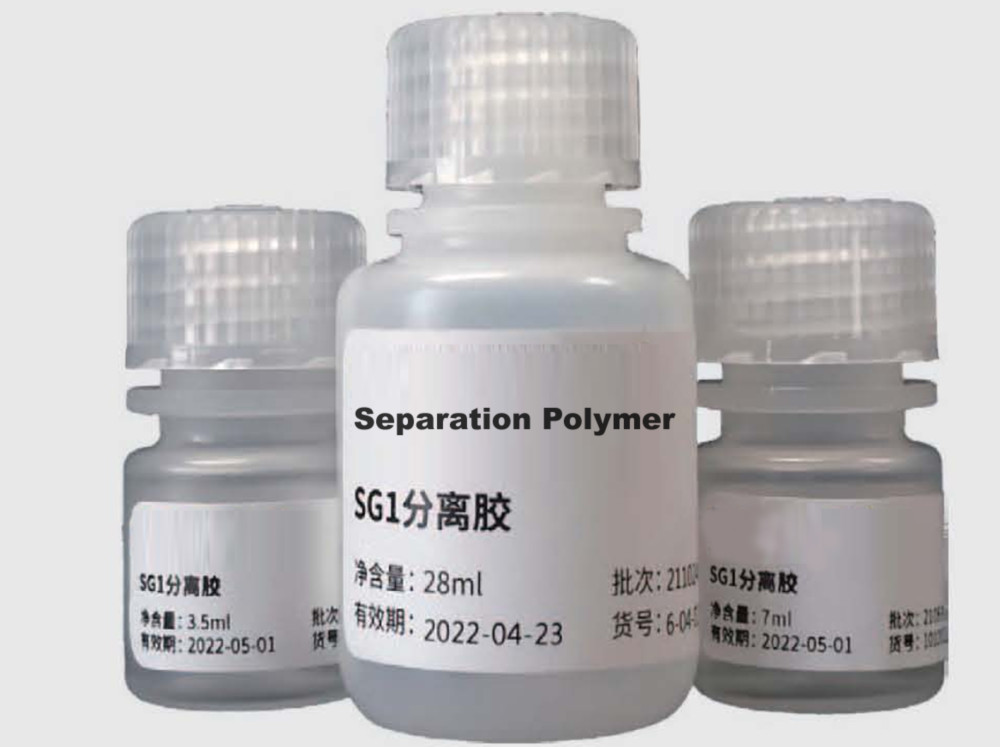
In the final, critical step of forensic DNA analysis, capillary electrophoresis acts as a molecular sizing machine. This process requires a specialized medium to separate DNA fragments based on their size as they migrate through a thin capillary under an electric field. The performance of this entire system hinges on the quality and properties of the separation polymer. These polymers are not simple liquids; they are meticulously formulated matrices that create a sieving environment within the capillary. The choice of polymer directly influences the resolution of DNA peaks, the accuracy of size calling, and the overall reliability of the genetic profile generated for database entry or courtroom evidence.
The fundamental mechanism relies on the polymer's ability to retard the movement of DNA fragments proportionally to their length. As shorter fragments navigate the polymer mesh more easily than longer ones, they reach the detector first, creating a precise electropherogram. Key characteristics such as the polymer's dynamic viscosity and its stability under the heat generated during a run are paramount. A stable, high-quality polymer ensures consistent migration times from run to run and from capillary to capillary, which is the bedrock of reproducible forensic STR analysis. Any deviation in polymer performance can introduce uncertainty, making the selection of a trusted supplier like Forensic DNA Labs a crucial decision for laboratory integrity.
How POP Polymers Enable High-Resolution DNA Fragment Analysis
POP polymers represent a specific class of separation matrices engineered for genetic analyzers. Their formulation is designed to provide an optimal balance between separation efficiency and operational practicality. The polymer network must be dense enough to resolve DNA fragments that differ by only a single nucleotide, especially critical for analyzing complex mixtures or degraded samples. This high resolution is what allows analysts to distinguish between alleles at a genetic locus with confidence, forming the clear, sharp peaks necessary for unambiguous interpretation.
The chemistry behind POP polymers ensures they remain homogeneous and free from bubbles during the rigorous filling of capillary arrays. This homogeneity is essential for achieving uniform electrical resistance and heat dissipation across all capillaries in an array. When every capillary experiences identical conditions, the data from a 96- or 384-well plate become directly comparable, enabling high-throughput processing of casework samples without compromising on the quality of individual profiles. This level of consistency transforms raw data into dependable genetic information.
Key Factors: Viscosity, Stability, and Run Consistency
When evaluating separation polymers, forensic scientists focus on several operational factors that translate directly to laboratory efficiency and data quality. The dynamic viscosity of the polymer determines how it flows into the delicate capillaries during the array filling process. A polymer with the correct viscosity fills completely and evenly, preventing the introduction of air bubbles that can cause catastrophic run failures or data drop-out in specific capillaries. This property is carefully controlled during manufacturing to ensure seamless integration with automated genetic analyzer platforms.
Thermal stability is another non-negotiable attribute. During a capillary electrophoresis run, significant heat is generated by the electrical current. A polymer that degrades or changes its sieving properties under this thermal stress will produce drifting baselines, broadened peaks, and inconsistent fragment sizing. POP polymers are formulated for exceptional thermal stability, maintaining their performance over the duration of long runs and throughout their stated shelf life. This stability underpins run-to-run consistency, allowing laboratories to validate their protocols and trust that results from a sample analyzed today will be identical to those from the same sample analyzed six months from now.
POP-4 Polymer: Optimized for Standard Forensic STR Kits
POP-4 polymer is the established workhorse for routine forensic short tandem repeat (STR) analysis. Its polymer matrix is specifically tuned to the size range of amplicons produced by major commercial STR amplification kits, which typically target fragments between 100 and 450 base pairs. This optimization provides exceptional resolution across the core CODIS loci and other commonly used forensic markers. Laboratories engaged in daily casework processing, from reference samples to evidence items, rely on the predictable and robust performance of POP-4 to generate the high-quality data required for database matches and investigative leads.
The reliability of POP-4 extends to high-throughput environments. Its formulation supports rapid electrophoresis run times without sacrificing resolution, enabling laboratories to maximize the productivity of their genetic analyzer instruments. This efficiency is critical for managing backlogs and delivering timely results. Furthermore, the consistency of POP-4 contributes to extended capillary life. By minimizing polymer-related buildup or damage within the capillary, laboratories can reduce instrument downtime and lower the long-term cost per sample, making it a cornerstone of a cost-effective forensic DNA operation.
Ideal Resolution for Common Loci and Amplicon Sizes
The efficacy of POP-4 is most evident in the clean separation of alleles from standard STR multiplexes. These kits often pack over 20 genetic loci into a single reaction, resulting in a dense electropherogram where peaks for different loci can be very close in size. The sieving properties of POP-4 are calibrated to spread these peaks apart clearly within the common forensic size range. This prevents peak overlap, or "pull-up," which can lead to misinterpretation. For example, distinguishing a true 18-repeat allele at one locus from a 19-repeat allele at an adjacent locus is a routine task that POP-4 handles with precision, ensuring the genetic profile is accurate and complete.
Ensuring Reproducible Results in High-Throughput Casework
Reproducibility is the gold standard in forensic science. POP-4 polymer is manufactured under stringent quality controls to guarantee batch-to-batch consistency. This means a new vial of polymer performs identically to the previous one, allowing a laboratory's validated protocols to remain unchanged. This reproducibility is vital for maintaining accreditation under standards such as those from the ANSI National Accreditation Board. It ensures that a DNA profile uploaded to a national database like CODIS is based on data that is directly comparable to profiles generated by other laboratories using the same technology, upholding the integrity of the entire forensic DNA network.
POP-7 Polymer: Advanced Performance for Complex Analyses
For laboratories that push beyond standard STR analysis, POP-7 polymer offers enhanced capabilities. Its polymer matrix is designed to separate a broader range of DNA fragment sizes with high resolution. This makes it the polymer of choice for applications involving longer amplicons, such as mitochondrial DNA sequencing, analysis of non-standard STR markers, or specialized panels that include larger loci. The extended separation range of POP-7 provides the flexibility needed for research, missing persons investigations, and complex paternity cases where additional genetic information is required.
One of the most demanding challenges in forensic DNA is the deconvolution of mixtures—samples containing DNA from two or more individuals. POP-7's superior resolution, particularly in the higher molecular weight range, can be instrumental in teasing apart overlapping allele peaks. By providing clearer spacing between peaks, it gives the analyst more confident data for interpreting mixture ratios and identifying minor contributors. This advanced performance turns challenging samples into interpretable evidence, expanding the scope of what a forensic DNA laboratory can reliably address.
Superior Resolution for Larger Fragments and Sequencing Applications
While POP-4 excels in the standard STR range, POP-7 maintains excellent resolution for DNA fragments well beyond 500 base pairs. This is essential for sequencing applications, such as Sanger sequencing of mitochondrial DNA control regions or specific nuclear genes. In these applications, the precise order of nucleotides must be determined, and any compression or broadening of peaks by the separation matrix can lead to ambiguous base calls. POP-7's formulation minimizes these artifacts, delivering clean, well-defined sequencing traces that are easier for software and analysts to interpret accurately, forming a reliable basis for comparative analysis.
Enabling Mixture Deconvolution and Challenging Sample Typing
Low-template DNA, degraded samples, and complex mixtures test the limits of any analytical system. POP-7 polymer can be a key component in an optimized workflow for these difficult samples. Its enhanced resolution helps separate stochastic effects, like peak height imbalance, from true allele signals, providing a clearer picture of the DNA present. When used with appropriate amplification and analysis protocols, POP-7 can improve the success rate of obtaining usable profiles from compromised evidence, ensuring that valuable genetic information is not lost due to technical limitations of the separation chemistry.
Choosing Between POP-4 and POP-7 for Your Laboratory Workflow
The decision to use POP-4 or POP-7 is fundamentally driven by the primary applications of your laboratory. For a lab dedicated to processing reference samples and crime scene evidence for CODIS entry using standard STR kits, POP-4 is typically the most efficient and cost-effective choice. Its performance is perfectly matched to the task, ensuring reliable results with optimized run times. Switching to POP-7 for this routine work would not yield significant benefits and could increase per-run costs.
Conversely, a laboratory with a diverse caseload that includes missing persons, mass disaster victim identification, archaeological DNA analysis, or a significant volume of mitochondrial sequencing will find POP-7 indispensable. Its broader separation range makes it a versatile tool. Some laboratories maintain both polymers, dedicating specific genetic analyzer instruments or capillary arrays to different polymer types based on the scheduled work. This application-based selection ensures that each sample is analyzed with the most appropriate technology, maximizing data quality across all case types.
Compatibility with Major Genetic Analyzer Platforms
Both POP-4 and POP-7 polymers are formulated for compatibility with mainstream capillary electrophoresis systems, such as the Applied Biosystems 3500 and 3500xL Genetic Analyzers. These instruments have software and pre-set modules configured for these specific polymers. Using the recommended polymer ensures that instrument parameters like injection time, voltage, and run temperature are optimized, leading to the best possible data output. Forensic DNA Labs provides polymers that meet or exceed the specifications required for these platforms, ensuring seamless integration into your existing laboratory information management system and standard operating procedures.
Best Practices for Handling and Storage of Separation Polymers
To preserve the performance and extend the shelf life of POP polymers, proper handling is essential. These materials are sensitive to environmental factors. The primary rule is to avoid contamination. Always use sterile, dedicated pipettes or automated dispensers when handling polymer. Even minute introductions of dust, enzymes, or other chemicals can degrade the polymer matrix, leading to poor resolution or capillary clogging. Before filling a capillary array, gently mix the polymer by inverting the vial; do not vortex, as this can introduce air bubbles and affect the viscosity.
Storage conditions are clearly defined on the product label and must be adhered to rigorously. Typically, unopened POP polymer vials should be stored at 4°C. Once opened, the polymer may have specific storage guidelines, often involving storage at 4°C in a dark environment to protect it from light degradation. It is crucial to note the expiration date and use the oldest stock first in a strict first-in, first-out inventory system. Using expired polymer is a common source of poor run performance and can compromise data quality, potentially invalidating an entire batch of casework.
Protocol for Capillary Array Filling and System Preparation
A successful capillary electrophoresis run begins with a perfectly filled array. Follow the instrument manufacturer's guidelines for the priming station or automated fill procedure. Ensure all lines and the polymer delivery block are clean and free of old polymer residue. When installing a new vial, wipe the septum with an alcohol swab before piercing it with the draw needle. Monitor the fill process for any signs of bubbling or uneven flow. After filling, a proper pump conditioning step is vital to pack the polymer uniformly into the capillaries and remove any residual air. Skipping or shortening this step is a false economy that often results in pressure errors or failed capillaries during the run.
Integrating POP Polymers into Your Forensic DNA Lab Solution
At Forensic DNA Labs, we understand that a separation polymer is one component of a complex, interdependent system. We offer more than just vials of polymer; we provide integrated solutions. This includes compatible electrophoresis buffers, size standards, and capillary arrays that are all quality-controlled to work together flawlessly. By sourcing these core consumables as a synchronized kit from a single provider, laboratories simplify their supply chain, reduce validation overhead, and minimize the risk of incompatibility issues that can arise from mixing products from different vendors.
Our commitment extends to ongoing technical support. Our experts, with deep experience in forensic DNA analysis, can assist with instrument optimization, such as fine-tuning run parameters for specific sample types or polymer lots. We also provide troubleshooting guidance for common issues like loss of resolution, increasing pressure, or baseline noise. This support ensures that your investment in high-quality POP polymers translates directly into operational success and reliable data for your casework, making Forensic DNA Labs a true partner in your laboratory's mission.
FAQs: POP-4 and POP-7 Separation Polymers
Can I use POP-4 and POP-7 interchangeably?
No, POP-4 and POP-7 are not directly interchangeable. They are formulated with different polymer concentrations and chemistries to optimize performance for specific size ranges and applications. Using POP-7 for a standard STR assay designed for POP-4 may alter migration times and resolution, potentially invalidating your size-calling bins and internal validation. Always use the polymer specified by your validated protocol and the genetic analyzer's application module.
What is the typical run time and capillary life expectancy with these polymers?
Run times are dependent on the instrument platform and the specific module settings. For a standard forensic STR run on a 3500 series Genetic Analyzer with POP-4, a typical run time is approximately 30-40 minutes. Capillary life expectancy is influenced by many factors, including sample cleanliness, polymer quality, and maintenance routines. With high-quality POP polymers and proper instrument care, laboratories can often achieve several hundred runs per capillary array. Regular performance checks using quality control samples are the best way to monitor capillary health.
How do I troubleshoot poor resolution or pressure errors?
Poor resolution often stems from degraded or old polymer, improperly prepared polymer/buffer, or a failing capillary. First, ensure you are using fresh, properly stored reagents. Check that the capillary array is correctly filled and conditioned. Pressure errors usually indicate a partial blockage. This can be caused by precipitated polymer, a particle in the line, or a damaged capillary. Follow the instrument's recommended cleaning and unblocking procedures. If problems persist after basic troubleshooting, consult the detailed guidance from your instrument manufacturer and contact Forensic DNA Labs technical support for polymer-specific advice.
Get a Quote
Contact our sales staff, tell us your needs, and we will provide you with the most suitable solution.
Contact Now