What is Highly-Deionized Formamide?
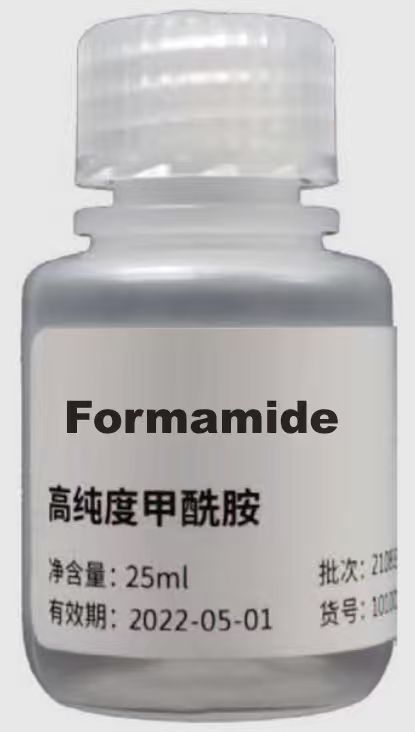
In the context of a forensic DNA laboratory, formamide is a chemical solvent of paramount importance. Its primary function is to act as a denaturant, a substance that unravels the double-stranded structure of DNA molecules. This process is essential for preparing samples for analysis on sophisticated instruments like genetic analyzers. The term "highly-deionized" refers to an intensive purification process that removes ionic impurities. These impurities, if present, can severely interfere with the sensitive process of capillary electrophoresis, which is the core technology for separating and detecting DNA fragments in modern forensic analysis.
The deionization process is not merely a suggestion but a critical requirement for reliable results. During DNA sequencing or Short Tandem Repeat (STR) analysis, electrical currents are used to pull DNA fragments through a narrow capillary. The presence of ionic contaminants can disrupt this electric field, leading to inconsistent migration of DNA fragments. This inconsistency can manifest as poor peak resolution, increased baseline noise, and ultimately, ambiguous or incorrect data interpretation. Therefore, the quality of the formamide directly correlates with the accuracy of the entire genetic analysis workflow.
Defining Formamide in the Forensic Laboratory
Within the controlled environment of a forensic DNA lab, formamide is far more than a simple chemical. It is a foundational component of the sample preparation protocol for techniques like Sanger sequencing and multiplex STR analysis. When mixed with a DNA sample and a fluorescently-labeled size standard, formamide works to ensure that the DNA is in a single-stranded, linear state. This state is necessary for the DNA fragments to be sieved accurately by size as they migrate through the polymer-filled capillary during electrophoresis. The consistent performance of this denaturation step is a non-negotiable prerequisite for generating the clear, interpretable data profiles that forensic scientists rely upon for identification.
The Critical Role of Deionization in DNA Sequencing and Fragment Analysis
The deionization step elevates standard formamide to a reagent suitable for high-sensitivity forensic applications. This purification targets salts and metal ions that are common contaminants. In the precise world of capillary electrophoresis, these ions compete with the DNA fragments, causing erratic migration and broadening of peaks in the resulting electropherogram. A highly-deionized formulation minimizes this electrical interference, ensuring that the movement of DNA is governed primarily by fragment size. This leads to superior peak shape, enhanced signal-to-noise ratios, and more confident allele calling, which is the process of determining the genetic code at specific marker locations. For labs processing challenging samples with low DNA quantities or complex mixtures, starting with ultra-pure formamide is a key strategy for maximizing data quality.
Key Specifications and Purity Grades for Forensic Use
Selecting the correct formamide involves understanding stringent purity specifications. For forensic DNA analysis, not all laboratory-grade chemicals are suitable. The required purity level often exceeds standard reagent grades to meet the demands of sensitive molecular biology techniques. Key parameters listed on a certificate of analysis, such as conductivity and UV absorbance, provide quantifiable metrics of purity. Low conductivity indicates minimal ionic content, while specific absorbance readings at 260nm and 280nm wavelengths confirm the absence of contaminants that could interfere with optical detection systems in genetic analyzers.
Consistency in these specifications from batch to batch is crucial for maintaining standardized laboratory protocols. A sudden change in the pH or ionic strength of the formamide can alter DNA denaturation efficiency and electrophoretic migration times, potentially invalidating a run of precious samples. Therefore, forensic labs must source their formamide from suppliers who guarantee not only high initial purity but also rigorous quality control testing for every lot produced. This ensures that the reagent performs identically each time it is integrated into a critical workflow, such as preparing samples for a database entry or a casework analysis.
Understanding Purity Levels: ACS Reagent Grade vs. Molecular Biology Grade
While ACS Reagent Grade denotes a high level of purity suitable for many general chemical applications, forensic DNA labs typically require Molecular Biology Grade or a specifically defined "DNA Sequencing Grade" formamide. The distinction lies in the testing for enzymatic inhibitors and nucleases. Molecular Biology Grade reagents are tested to ensure they do not contain substances that could degrade DNA or inhibit the enzymes used in various amplification steps that may precede electrophoresis. This grade is processed and packaged to minimize nuclease contamination, safeguarding the integrity of the often minute and irreplaceable DNA samples being analyzed.
Essential Parameters: Conductivity, pH, and Absorbance for Optimal CE Performance
For optimal performance in capillary electrophoresis (CE) systems, specific analytical parameters are monitored. Conductivity, measured in microsiemens per centimeter (µS/cm), should be extremely low, often below 100 µS/cm for high-quality products, indicating effective removal of ions. The pH must be tightly controlled, as an acidic or basic environment can lead to DNA degradation during the heat denaturation step. Furthermore, absorbance readings are critical; high absorbance at 260 nm could suggest nucleic acid contamination, while absorbance at 280 nm might indicate protein contamination. Both scenarios are unacceptable for forensic analysis, as they can create interfering fluorescent signals or "dye blobs" that obscure true DNA peaks on the electropherogram, complicating data analysis.
Primary Applications in Forensic DNA Labs
The central application of highly-deionized formamide is within the capillary electrophoresis workflow. It serves as the medium for preparing DNA samples immediately before injection into the genetic analyzer. In this role, it performs the vital task of denaturing double-stranded PCR amplicons into single strands. This allows the fluorescent dyes attached to the DNA fragments to be properly oriented for laser detection and ensures the DNA interacts predictably with the separation polymer inside the capillary. The uniformity of this process across all samples in a batch is fundamental for achieving comparable and reliable data.
Beyond simple denaturation, formamide is a key component in proprietary mixtures used with specific instrumentation. For instance, it is a primary ingredient in commercially available solutions like Hi-Di™ Formamide, which is optimized for use with certain genetic analyzers. It is also integral to the matrix of separation polymers such as the GS STR Pop-7™ polymer. In these formulated products, the ultra-pure formamide provides a consistent chemical environment that ensures the polymer's viscosity and separation properties remain stable from run to run, which is essential for maintaining calibrated sizing accuracy across thousands of forensic samples.
Denaturing Agent for Capillary Electrophoresis (CE) Systems
As a denaturing agent for CE systems, the formamide is typically mixed with the amplified DNA sample and an internal lane standard. This mixture is then heat-denatured to fully separate the DNA strands before being rapidly cooled on ice to maintain them in a single-stranded state. The quality of the formamide directly impacts the completeness of this denaturation. Incomplete denaturation can result in double-stranded DNA entering the capillary, which migrates differently and can cause split peaks or shoulder peaks in the profile, making allele designation difficult and potentially leading to misinterpretation of evidence.
Component of Hi-Di™ Formamide and GS STR Pop-7™ Polymer for Genetic Analyzers
In optimized systems for forensic STR analysis, the formamide is not used alone. It is part of a carefully engineered chemistry. Pre-mixed solutions containing highly-deionized formamide, necessary salts, and a proprietary agent like EDTA are designed to work seamlessly with specific instrument platforms and polymer chemistries. These formulations, such as those used with polymers like Pop-7™, are validated to provide the correct viscosity, ionic strength, and denaturing power. This validation ensures that DNA fragments from different STR kits separate with high resolution and that the fluorescent signals are strong and unambiguous, which is the cornerstone of producing a reliable DNA profile for human identification.
Use in Sample Preparation for Sanger Sequencing and STR Analysis
For both Sanger sequencing, often used for mitochondrial DNA analysis or sequencing single nucleotide polymorphisms, and standard STR analysis for autosomal DNA, the final sample preparation step is remarkably similar. The purified DNA product is combined with highly-deionized formamide. This combination prepares the sample for the electrophoretic separation that follows. In sequencing, it ensures clean sequence reads by preventing re-annealing of strands. In STR analysis, it standardizes the sample state for injection, allowing the internal size standard to function correctly for precise fragment sizing. In both applications, the purity of the formamide is a silent but critical partner in generating court-admissible data.
Get a Quote
Contact our sales staff, tell us your needs, and we will provide you with the most suitable solution.
Contact Now