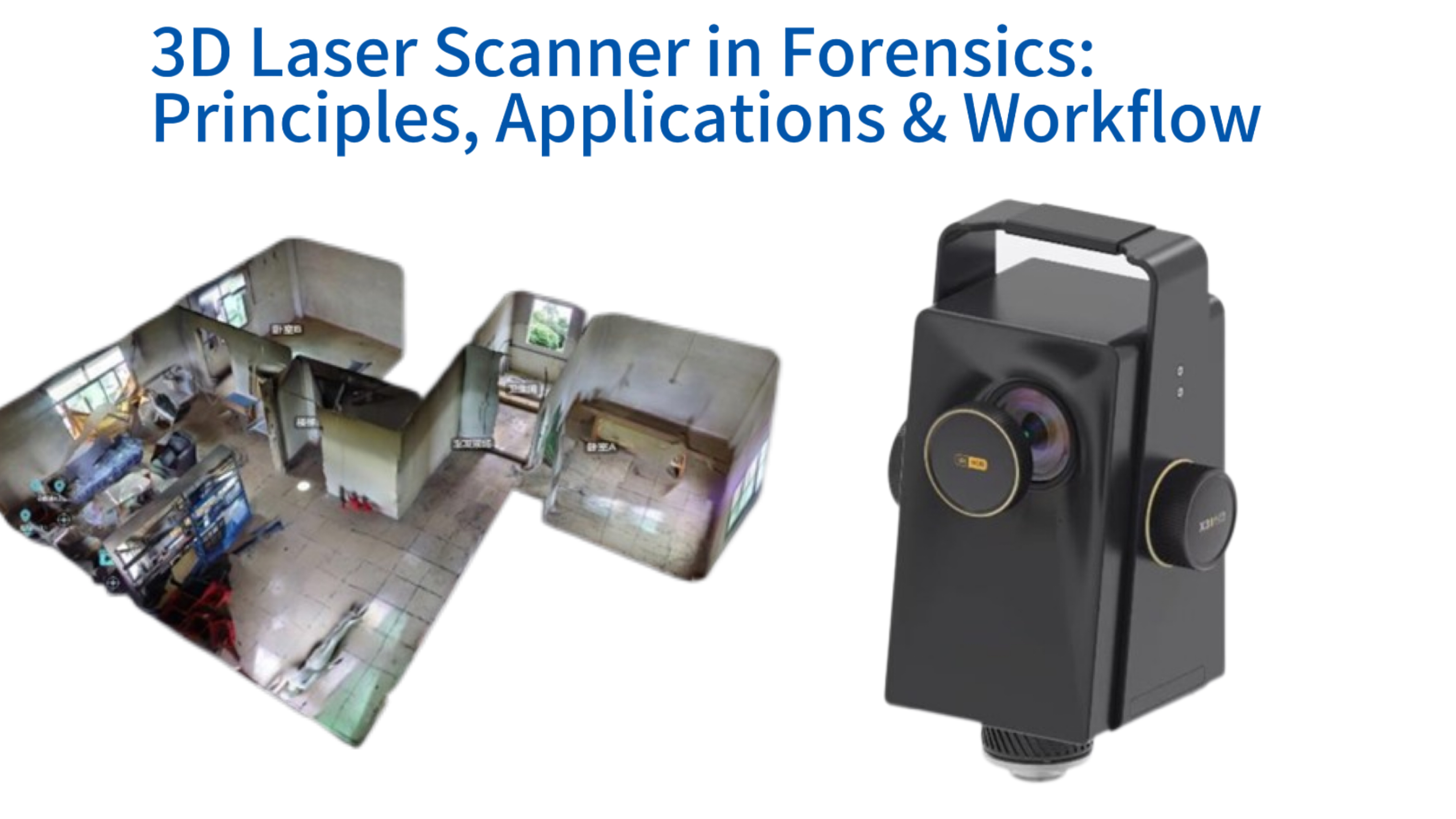
3D Laser Scanner Forensic Workflow
The adoption of three-dimensional laser scanning technology has fundamentally transformed how crime scenes are documented, analyzed, and presented in court. Unlike traditional photography or manual tape measurement, a 3D laser reconstruction scanner captures millions of precise spatial data points per second, creating a digital twin of any environment with millimeter accuracy. This comprehensive guide explains the underlying physics of time-of-flight and phase-shift measurement, explores the major forensic applications from bloodstain pattern analysis to traffic accident reconstruction, and provides practical advice for integrating this powerful tool into your laboratory workflow. Readers will learn how point cloud data supports courtroom testimony, what technical specifications truly matter for forensic work, and how to evaluate different scanner types based on case volume, budget, and operational environment. By the end of this article, forensic professionals will have a clear roadmap for selecting, implementing, and maximizing the return on investment from a forensic-grade 3D laser scanning system.
Understanding the Core Technology Behind 3D Laser Scanning
ToF vs Phase-Shift Scanner Comparison
At the heart of every 3D laser reconstruction scanner lies a precise optical measurement principle that converts light travel time into spatial coordinates. Most forensic instruments operate using either time-of-flight or phase-shift technology. Time-of-flight scanners emit a short laser pulse and measure the exact time it takes for that pulse to reflect off a surface and return to the sensor. Knowing the speed of light, the device calculates distance with typical accuracy of ±2 millimeters at ranges up to one hundred meters. Phase-shift scanners use a continuous wave laser whose intensity is modulated at a known frequency. By comparing the phase of the emitted signal to the returned signal, the instrument determines distance with even higher precision, often reaching sub-millimeter accuracy over shorter ranges up to fifty meters. A peer-reviewed evaluation published in the Journal of Forensic Sciences demonstrated that modern phase-shift systems achieve repeatability within 0.5 millimeters under controlled conditions, making them suitable for detailed tool mark or impression documentation.
The scanner head rotates during operation, capturing data across a full 360-degree horizontal field and a vertical field typically ranging from 300 to 320 degrees. Each complete scan yields between one million and ten million individual points. The resulting collection called a point cloud contains X, Y, and Z coordinates for every measured surface location. Advanced instruments also capture RGB color information using an integrated high-dynamic-range camera, assigning a true-color value to each point. This colorized point cloud combines geometric precision with photographic realism, creating an evidence record that is both measurable and visually intuitive. A forensic team can revisit this digital scene months or years later to take new measurements, test alternative hypotheses, or generate exhibits for trial. For laboratories that also process biological evidence, combining 3D scene data with forensic DNA swabs collected from specific locations creates a powerful spatial link between genetic evidence and its original context.
Time-of-Flight and Phase-Shift Measurement Principles
Time-of-flight scanners measure distance by timing the round trip of a laser pulse. A picosecond-resolution timer starts counting when the pulse leaves the emitter and stops when the reflected pulse is detected. Dividing the total time by two and multiplying by the speed of light yields the distance. These systems excel at long-range scanning up to several hundred meters, making them ideal for large outdoor scenes such as highway accident reconstructions or open-area shooting incidents. The primary trade-off is slightly lower point density compared to phase-shift systems, typically capturing tens of thousands of points per second. Phase-shift scanners emit a continuously modulated laser beam. The modulation frequency creates a repeating waveform, and the instrument measures the phase difference between the emitted and returned waveforms. Because phase repeats every full cycle, multiple modulation frequencies are used to resolve distance ambiguity. These systems capture hundreds of thousands to over two million points per second, generating extremely dense point clouds rich in fine detail. For indoor crime scenes where blood spatter on walls or bullet holes in drywall must be resolved, phase-shift technology is often preferred. Many forensic laboratories now use hybrid systems that combine both principles, automatically switching between modes depending on the scan range and required detail level.
The choice between these technologies directly impacts evidence quality and operational efficiency. A state police agency processing major collisions on highways may prioritize long range and speed, favoring time-of-flight. A metropolitan crime scene unit handling homicides in apartments and houses will benefit from the high density of phase-shift scanning. Independent validation studies have shown that properly calibrated systems from either category produce measurement errors well below one centimeter at typical crime scene distances, easily meeting the Daubert standard for admissibility. Operators must understand that environmental factors such as reflective surfaces, direct sunlight, or fog can affect both technologies. Dark, absorptive materials like black asphalt or blood-soaked carpet may reduce signal return strength, requiring longer scan times or multiple scan positions. Modern forensic scanners include real-time quality feedback, alerting the operator when point density or signal-to-noise ratio falls below acceptable thresholds. This feature allows on-site adjustment before the scene is released, ensuring that the digital record meets forensic standards. For laboratories working with degraded or trace evidence, integrating scene data with degraded DNA analysis workflows can help correlate spatial context with biological sample quality.
The Anatomy of a Point Cloud: Density, Accuracy, and Registration
Point Cloud Performance Specifications
| Application | Point Density | Accuracy |
|---|---|---|
| General Scene | 100–500 pts/cm² | ±2–8mm |
| Bloodstain Analysis | ≥2000 pts/cm² | ±0.5mm |
| Bullet Trajectory | 500–1000 pts/cm² | ±1mm |
A point cloud is more than a collection of dots; it is a structured dataset where each point carries spatial coordinates and often additional attributes like intensity or color. Point density measured in points per square centimeter determines how fine a detail can be resolved. For general scene documentation, a density of 100 to 500 points per square centimeter is sufficient to capture room layout, furniture positions, and major evidence locations. For bloodstain pattern analysis, densities exceeding 2,000 points per square centimeter are required to resolve individual spatter stains as small as one millimeter in diameter. Accuracy refers to how closely a measured point matches its true real-world position. Forensic-grade scanners specify accuracy as a function of range, for example ±2 millimeters at 10 meters and ±8 millimeters at 50 meters. Precision, often called repeatability, describes how consistently the scanner measures the same point across multiple scans. A high-precision instrument may have repeatability of 0.5 millimeters even if absolute accuracy is slightly lower. For court-admissible evidence, both accuracy and precision must be documented through regular calibration using traceable reference targets.
Registration is the process of aligning multiple scans taken from different positions into a single, unified coordinate system. Because a single scanner position cannot capture surfaces behind obstacles, forensic teams typically place the scanner at three to ten positions around a scene. Each scan generates a local point cloud in its own coordinate system. Registration software identifies common features or artificial targets placed in the scene, calculates the transformation matrices that align the scans, and merges them into one seamless model. Target-based registration uses spherical or checkerboard targets placed deliberately in the scene. This method typically achieves alignment errors under two millimeters. Targetless registration relies on overlapping geometry such as wall corners or floor junctions, which is faster but slightly less accurate. Professional forensic workflows often combine both approaches, using targets for primary alignment and targetless refinement for final merging. Once registered, the complete scene model can be exported to specialized forensic software for bloodstain trajectory analysis, bullet path reconstruction, or 3D animation for courtroom presentation. Laboratories that also perform DNA analysis can link their forensic DNA laboratory information management system to 3D models, associating each swab location with precise spatial coordinates.
Hardware Components: Laser Rangefinder, Rotating Head, and HDR Camera
A forensic 3D laser scanner integrates several precision hardware components into a rugged, field-deployable package. The laser rangefinder is the core measurement engine, containing the laser diode, photodetector, and timing electronics. In time-of-flight systems, the rangefinder includes a high-speed counter capable of resolving picosecond differences. Phase-shift systems incorporate modulation electronics that generate clean sinusoidal waveforms at multiple frequencies. The rotating head houses the rangefinder and a set of mirrors or a prism that directs the laser beam through a full 360-degree horizontal sweep. A vertical stepping motor increments the mirror angle after each horizontal pass, creating a spiral or raster scan pattern. The rotation speed determines scan time; a full dome scan with 10 million points typically takes two to six minutes. Many forensic scanners offer variable resolution settings, allowing operators to trade speed for density. A preliminary low-resolution scan can be completed in under one minute to verify scene coverage, followed by high-resolution scans of specific areas of interest.
The integrated high-dynamic-range camera is often overlooked but critically important for forensic documentation. HDR cameras capture multiple exposures at each position, combining them into a single image with accurate color rendition across both shadow and highlight areas. This ensures that dark blood stains on dark carpet or small fibers on a white floor are visible in the final colorized point cloud. The camera's optics must be precisely co-calibrated with the laser rangefinder so that color information maps exactly onto the geometric data. Calibration drift over time or after rough handling can cause color misalignment, reducing the evidentiary value of the model. Regular calibration using certified targets, typically every six to twelve months depending on usage, maintains alignment within one pixel. Some advanced scanners also include thermal cameras or multispectral sensors for specialized applications such as detecting latent fingerprints or identifying different ink types on documents. For crime scenes where alternate light sources have been used to locate biological evidence, combining ALS imagery with 3D scan data creates an exceptionally rich evidence record.
From Raw Data to Actionable Model: The Role of Imaging Software
The raw point cloud produced by a scanner is a binary file containing millions of coordinates but no inherent structure or interpretation. Specialized forensic imaging software transforms this raw data into actionable evidence. The first processing step is noise filtering, removing stray points caused by moving objects, reflective artifacts, or atmospheric interference. Modern software uses statistical outlier removal algorithms that identify points deviating significantly from local surface norms. Following noise reduction, the software registers individual scans as described above. After registration, the software can generate a mesh model by connecting adjacent points into triangular facets, creating a solid surface representation. Meshing is essential for calculating surface areas, volumes, or for 3D printing physical replicas of the scene. The software also enables measurements of any kind: distances between evidence items, angles of impact for blood spatter, areas of irregular surfaces, or volumes of blood pools. Measurements are derived directly from the calibrated point cloud, eliminating the need for physical scale bars or tape measures at the scene.
Advanced forensic software modules add specialized analytical capabilities. Bloodstain pattern analysis modules allow the analyst to select individual stains on a wall or ceiling. The software calculates the angle of impact based on stain ellipticity and uses the stain's 3D coordinates to back-project a trajectory. By analyzing multiple stains, the system computes a statistical origin region, often displayed as a three-dimensional heat map. Trajectory reconstruction modules work similarly for bullet holes, calculating the flight path based on entrance and exit hole positions and angles. The software can simulate the positions of shooter and victim in virtual space. Accident reconstruction modules include vehicle dynamics libraries, allowing analysts to input skid mark lengths, vehicle deformation, and final rest positions to calculate pre-impact speeds. All analysis outputs can be exported as animations, annotated still images, or interactive 3D PDFs for courtroom presentation. For laboratories that also perform autosomal STR casework trace DNA kit analysis, integrating spatial data from the 3D model with genetic results provides comprehensive case documentation.
Key Forensic Applications of 3D Laser Reconstruction Scanners
3D Scanner Forensic Applications
The versatility of 3D laser scanning has made it indispensable across multiple forensic disciplines. Unlike traditional documentation methods that capture only selected views or measurements, a laser scan records everything within its field of view with uniform precision. This complete capture capability means that investigators can return to the digital scene months later to examine evidence they did not notice initially or to apply new analytical techniques not available at the time of the original investigation. The applications range from routine crime scene documentation to highly specialized analyses such as gunshot residue distribution mapping or blood droplet trajectory calculation. Each application leverages the same underlying data but uses different software tools and analytical workflows. Understanding the full scope of possibilities helps laboratories justify the investment in scanning technology and train personnel appropriately. The following sections detail the most common and impactful forensic applications supported by current-generation 3D laser scanners.
One often overlooked advantage is the ability to share the digital scene with remote experts. A forensic laboratory can send the point cloud file to a bloodstain pattern analyst across the country or to a collision reconstruction expert in another jurisdiction. These experts can perform their own measurements and analyses without traveling to the scene, which may have been released or altered. This capability has proven particularly valuable for small agencies lacking in-house expertise in specialized areas. The digital scene can also be used for jury education, allowing jurors to virtually walk through the scene and see spatial relationships firsthand. Studies of jury comprehension have shown that interactive 3D models lead to significantly better understanding of spatial evidence compared to static photographs or diagrams. For laboratories handling sexual assault forensic evidence, 3D scanning of the location can help establish context for biological evidence collection.
Immutable Scene Documentation for Courtroom Evidence
The primary application of 3D laser scanning in forensics is creating an immutable, objective record of the scene as it existed at the time of investigation. Traditional photography captures only what the photographer chooses to frame, potentially missing critical context. Manual sketches introduce measurement errors and rely on the sketch artist's judgment. A laser scan captures everything non-selectively, preserving the scene in its entirety. Once the scan data is processed and registered, the digital model becomes a permanent record that cannot be altered without detection. Metadata embedded in the scan files includes timestamps, instrument serial numbers, calibration certificates, and operator identifiers, establishing a complete chain of digital custody. In court, the scanning technician can testify that the model accurately represents the scene because the scanner records measurements physically and without human bias. Defense challenges to scan admissibility typically focus on calibration or operator error, both of which can be rebutted with proper documentation. A forensic laboratory using a 3D laser reconstruction scanner as part of standard protocol can demonstrate rigorous adherence to best practices.
The admissibility of 3D scan evidence has been tested in numerous jurisdictions. Courts generally accept laser scan data under the same rules as traditional surveying measurements, provided the operator can explain the technology and demonstrate proper calibration. Several appellate decisions have specifically upheld the use of point cloud evidence in homicide and traffic fatality cases. To maximize admissibility, forensic laboratories should maintain a calibration log for each scanner, perform regular verification using certified reference targets, and document any repairs or software updates. Operators should complete a certified training program and maintain proficiency through regular practice. The scanning protocol for each case should be written in advance and followed consistently. All raw scan files, not just the final registered model, should be preserved in case the defense requests access to the original data. Following these practices, the 3D scan becomes a powerful piece of evidence that can withstand rigorous cross-examination. For laboratories also performing DNA analysis, integrating scene data with real-time PCR quant system results allows spatial correlation between DNA quantity and location within the scene.
Bloodstain Pattern Analysis and Trajectory Mapping
Bloodstain pattern analysis has been revolutionized by 3D laser scanning technology. Traditional BPA required analysts to manually measure stain dimensions and positions using rulers and protractors, a time-consuming process prone to cumulative errors. With a 3D scan, the analyst selects stains directly on the digital model using specialized software. The software automatically calculates the stain's length, width, and angle of impact based on the local surface geometry. For stains on complex surfaces such as textured walls or curved objects, the software uses the 3D surface model to determine the true impact angle, something impossible with manual methods. By analyzing ten to twenty stains from a single impact event, the software computes a three-dimensional region of origin, typically displayed as a color-coded probability volume. This region represents where the blood droplet trajectories converge, indicating the position of the victim or weapon at the time of impact. Validation studies have shown that 3D-based origin determination is accurate to within a few centimeters, compared to ten to fifteen centimeters for manual methods.
The software also supports advanced analysis features such as impact sequencing and blood volume estimation. By examining the distribution of stains across the scene, analysts can determine the order of multiple impacts. A first impact produces stains on surfaces that may be obscured by later impacts or by the victim's movement. The 3D model preserves these spatial relationships indefinitely, allowing analysts to test different impact scenarios. Blood volume estimation uses the thickness of pooled blood, derived from the point cloud, to calculate approximate blood loss, which can help determine injury severity or time since death. For scenes where biological evidence will be collected for DNA analysis, the 3D model guides touch DNA adhesive samplers placement, ensuring that swabs are taken from the exact stains analyzed. This integration between spatial and genetic evidence strengthens the overall case.
Vehicle Collision and Accident Reconstruction
Traffic accident reconstruction demands precise documentation of vehicle positions, skid marks, debris fields, and roadway geometry. A 3D laser scanner captures all of these elements in a single, rapid workflow. The operator places the scanner at multiple positions along the crash scene, capturing the entire area from the point of impact to the final rest positions of vehicles. The resulting point cloud includes the road surface profile, guardrail deformations, tire marks, and even small debris such as broken glass or vehicle trim pieces. Accident reconstruction software imports the point cloud and allows analysts to perform vehicle dynamics simulations. The software calculates pre-impact speeds based on skid mark lengths, vehicle crush measurements, and coefficients of friction derived from roadway surface texture captured in the scan. The accuracy of these calculations depends directly on the precision of the input measurements. With scan data providing millimeter-level accuracy, speed estimates can be within one to two kilometers per hour, compared to five to ten kilometers per hour for manual measurements.
Scene preservation is particularly challenging for traffic accidents because roadways must be reopened quickly. A 3D scanner can document a complex multi-vehicle collision in thirty to forty-five minutes, compared to two to three hours for traditional surveying. This rapid documentation reduces roadway closure time, improving public safety and reducing economic disruption. The digital scene can be used to create animations showing the collision sequence from any perspective, helping juries understand complex events. For hit-and-run investigations, the scan data can be used to match damage patterns on a suspect's vehicle to the scene, or to determine the pedestrian's location at the moment of impact. Some reconstruction software can also simulate visibility lines, determining what a driver could have seen from the vehicle position before the crash. Laboratories that also perform toxicology or DNA analysis can correlate driver impairment evidence with the spatial reconstruction, providing a complete picture of the incident. When biological evidence is present, forensic DNA swabs collected from vehicle interiors or road surfaces can be precisely located within the 3D model.
Shooting Incident Reconstruction and Bullet Trajectory Analysis
Determining shooter and victim positions in a shooting incident requires accurate mapping of bullet holes, cartridge cases, and ricochet marks. A 3D laser scanner captures the exact three-dimensional coordinates of each piece of ballistic evidence. For bullet holes in walls, the scanner records the hole's position on the surface and the local wall orientation. For cartridge cases on the floor, the scanner captures their locations relative to walls, furniture, and the victim's position. Trajectory reconstruction software uses these data points to calculate bullet flight paths. For a through-hole that penetrates a wall, the analyst marks the entrance and exit points on opposite sides. The software draws a line between these points, representing the bullet's path. For a ricochet, the analyst marks the impact point and calculates the angle of deflection based on the surface properties. By analyzing multiple trajectories, the software can triangulate the shooter's likely position. The accuracy of this triangulation improves with more bullet holes; three to four trajectories typically constrain the shooter position to a volume of less than half a cubic meter.
Modern trajectory software also incorporates bullet flight dynamics, accounting for gravity drop and aerodynamic drag over longer distances. For outdoor shooting scenes extending over one hundred meters, these corrections are essential for accurate shooter positioning. The software can generate a 3D visualization showing each trajectory as a colored line, with the shooter position indicated by a heat map or confidence ellipsoid. This visualization is highly persuasive in court, allowing jurors to see exactly where the shooter stood and what lines of sight existed. The same data can be used to test alternative scenarios, such as whether the victim could have been struck from a different position. For scenes involving multiple shooters or automatic weapons fire, the scan data can help separate individual trajectories and determine the sequence of shots. When cartridge cases are collected for ballistic comparison or DNA analysis, their exact positions within the 3D model become part of the evidence record. Laboratories performing criminal investigation casework can integrate trajectory analysis with DNA results from firearm swabbings.
Archival and Re-Investigation of Cold Cases
One of the most valuable but often overlooked applications of 3D laser scanning is the creation of a permanent digital archive for cold case investigations. When a crime scene is documented with traditional methods, the physical scene is typically released and altered within days or weeks. Years later, when new evidence emerges or new analytical techniques become available, investigators cannot revisit the original scene. A 3D scan solves this problem by preserving the scene in perfect digital form indefinitely. Cold case investigators can enter the virtual scene, take new measurements, apply new analysis methods, and test new hypotheses just as if they were physically present. For example, a bloodstain pattern analysis technique developed ten years after the original investigation can be applied to the scan data, potentially revealing new insights. Similarly, a new trajectory reconstruction algorithm can be run on the original bullet hole coordinates, possibly changing the estimated shooter position.
The archival value extends beyond criminal investigations to disaster victim identification and mass fatality incidents. After a plane crash or building collapse, the debris field is rapidly cleared for recovery operations. A 3D scan of the intact debris field preserves the spatial relationships among wreckage pieces, personal effects, and human remains. This spatial data can later be correlated with DNA profiles from recovered remains, helping to determine seating positions or movement during the incident. For long-term missing persons cases, a scan of the location where the person was last seen or where remains were found provides a permanent reference. As scanning technology improves, older scan data can be re-processed with better algorithms, extracting additional detail that was not visible with the original software. Laboratories that manage missing persons DNA identification databases can link genetic profiles to spatial data from discovery scenes, creating a comprehensive case record that supports ongoing investigative efforts.
Critical Features of a Forensic-Grade 3D Laser Scanner
Not all 3D laser scanners meet the demanding requirements of forensic casework. Instruments designed for industrial surveying or architectural modeling may lack the accuracy, ruggedness, or software integration needed for court-admissible evidence. A forensic-grade scanner must deliver verified measurement accuracy under field conditions, operate reliably in diverse environments, and produce data that integrates seamlessly with established analysis workflows. Understanding the critical specifications and features allows procurement teams to evaluate competing products objectively. The following sections detail the most important characteristics to consider, from basic measurement performance to advanced capabilities such as onboard color capture and real-time quality assurance. Each feature contributes to the overall fitness of the scanner for its intended forensic applications.
Procurement decisions should be guided by a thorough needs assessment. A laboratory that primarily processes indoor homicide scenes will prioritize high point density and color accuracy over long range. A state police agency handling highway accidents will value scan speed and extended battery life. A federal laboratory working on counterterrorism investigations may need the ability to scan large open areas with minimal target placement. By matching scanner capabilities to actual case requirements, laboratories avoid paying for unnecessary features while ensuring that critical capabilities are not missing. Many vendors offer trial periods or rental options, allowing potential buyers to test scanners on representative scenes before making a final decision. The investment in a forensic scanner typically ranges from forty to one hundred fifty thousand dollars, making careful evaluation essential. For laboratories also investing in automated 96-channel integrated DNA workstation technology, coordinating procurement timelines can optimize budget allocation.
Measurement Accuracy, Point Density, and Operational Range
Measurement accuracy is the single most important specification for forensic applications. Accuracy is typically stated as a function of range, for example ±2 millimeters at 10 meters and ±8 millimeters at 50 meters. The reported accuracy should be based on independent testing according to standards such as those published by the American Society for Testing and Materials. Laboratories should request the full accuracy report, not just the manufacturer's marketing claims. Some manufacturers specify accuracy under ideal laboratory conditions that are rarely achieved in the field. A more useful metric is field accuracy, measured by scanning a calibrated reference target array under typical operating conditions. Independent evaluations have found that top-tier forensic scanners maintain field accuracy within twice their laboratory specification, while lower-quality instruments may degrade by a factor of five or more.
Point density determines how fine a detail can be resolved. Density is controlled by the scanner's angular resolution setting. Higher resolution captures more points per square centimeter but increases scan time. A typical indoor crime scene scan at standard resolution captures 500 to 1,000 points per square centimeter on nearby surfaces, dropping to 50 to 100 points per square centimeter at a distance of 10 meters. For bloodstain pattern analysis, the analyst may need to re-scan specific areas at high resolution, achieving 5,000 points per square centimeter or more. Operational range should exceed the maximum dimension of the scenes the laboratory typically processes. For most indoor scenes, a range of 50 meters is sufficient. For outdoor scenes such as highway accidents or open fields, 150 meters or more may be necessary. Some scanners offer extended range modes that trade point density for distance, allowing a single instrument to handle both indoor and outdoor scenes effectively. When combined with touch DNA detection device data, high-density scans can reveal the precise locations where cellular material was deposited.
Scan Speed and On-Site Efficiency Under Time Constraints
Crime scenes are often under time pressure due to weather, traffic, or public safety concerns. A scanner that captures data quickly allows investigators to document the scene and release it sooner. Scan speed depends on the chosen resolution, the number of scan positions, and the instrument's maximum point acquisition rate. Phase-shift scanners typically acquire points faster than time-of-flight systems, with some models capturing over two million points per second. A full dome scan at standard resolution can be completed in two to three minutes. High-resolution scans may take ten to fifteen minutes. For a typical indoor scene requiring four to six scan positions, total scanning time ranges from thirty to sixty minutes. This compares favorably to manual surveying, which often takes two to three hours for the same scene.
On-site efficiency also depends on registration workflow. Scanners that support real-time on-board registration allow the operator to verify that all areas have been covered and that scans align correctly before leaving the scene. This feature prevents the need for costly return trips. Some scanners include automatic target detection, identifying and measuring spherical or checkerboard targets without operator intervention. The scanner can also suggest optimal placement positions for additional scans based on coverage analysis. Battery life should support a full day of scanning without recharging; eight to ten hours is typical. Hot-swappable batteries allow continuous operation by changing batteries between scans. The scanner's user interface should be intuitive, with large buttons that can be operated while wearing gloves. Rugged carrying cases with custom foam inserts protect the instrument during transport. For laboratories that also operate benchtop biosafety cabinet for evidence processing, integrating scanning protocols with laboratory safety procedures ensures consistent workflow.
Integration with Specialized Forensic Analysis Software
The scanner's hardware capabilities are only half of the equation; the software ecosystem determines what analyses can be performed. A forensic-grade scanner should export data in open, non-proprietary formats such as .las, .ply, or .e57, ensuring compatibility with a wide range of analysis software. Some manufacturers offer integrated software suites that handle everything from scan registration to bloodstain analysis to courtroom animation. Others rely on third-party software for specialized functions. Laboratories should evaluate the full software workflow before purchasing a scanner. Key questions include: Does the software support bloodstain pattern analysis with back-projection? Can it perform bullet trajectory reconstruction? Does it include vehicle dynamics simulation for accident reconstruction? Can it generate interactive 3D PDFs for courtroom presentation? Is training and technical support available?
Workflow efficiency depends on how smoothly data moves from scanner to analysis to presentation. Some software packages include automated registration that aligns scans without manual target picking, saving significant time. Others offer batch processing for routine tasks such as noise filtering or meshing. The ability to annotate the point cloud with notes, labels, and measurements is essential for case documentation. Courtroom presentation features should allow the analyst to create fly-through animations, generate scaled 2D plans from the 3D data, and produce high-resolution images for exhibits. Software that supports virtual reality headsets can provide immersive jury experiences, though this remains a niche capability. Laboratories should request demonstrations of the complete workflow on representative case data, not just isolated features. When integrating 3D data with anti-contamination lab design principles, the software should support tracking of evidence collection locations relative to clean zones.
Ruggedness, Portability, and Environmental Performance
Forensic scanners are used in challenging environments: rainy accident scenes, dusty construction sites, hot vehicles, cold outdoor locations. The scanner must withstand these conditions without compromising data quality. An Ingress Protection rating of IP54 or higher indicates resistance to dust and water splashes. Operating temperature range should extend from -10°C to +45°C at minimum. The scanner's housing should be impact-resistant, with recessed connectors and protected optics. Some manufacturers offer optional environmental enclosures for extreme conditions, but these add weight and setup time. For most forensic applications, a ruggedized instrument that meets MIL-STD-810 for shock and vibration provides adequate protection.
Portability is equally important. The complete scanning system including scanner, tripod, batteries, targets, and laptop should fit into two checked-baggage-sized cases for air travel. Total weight should be under 25 kilograms. The scanner itself should weigh less than 6 kilograms for easy handling on a tripod. Quick-release mechanisms for the scanner head and tripod speed setup and takedown. The system should operate on battery power for at least four hours, with spares that can be changed without tools. The control tablet or laptop should be readable in direct sunlight and operable with gloves. A laser pointer integrated into the scanner helps aim and verify coverage. For laboratories that also use cyanoacrylate fuming chamber for fingerprint development, the scanner should be able to document treated evidence without causing damage or contamination.
Integrating 3D Scanning into Your Forensic Laboratory Workflow
Scene Documentation Time Comparison
Successful adoption of 3D laser scanning requires more than purchasing equipment; it demands integration into existing laboratory workflows, training of personnel, and development of standard operating procedures. The transition from traditional documentation to digital scanning should be phased, starting with parallel documentation on a subset of cases until proficiency is established. The following sections address key workflow considerations: field deployment, data transfer, storage management, combination with other techniques, and personnel training. Proper integration ensures that the investment in scanning technology yields maximum return in terms of evidence quality, case throughput, and courtroom success.
One of the most significant workflow changes is the shift from selective to comprehensive documentation. With traditional methods, investigators decide what to photograph and measure. With scanning, they capture everything. This change requires a different mindset; the goal becomes ensuring complete coverage rather than selecting specific views. Standard operating procedures should define minimum scan density, number of scan positions per room size, and required overlap between scans. Quality assurance checks, such as verifying that all evidence markers are visible in the point cloud, should be performed on-site before releasing the scene. For laboratories that process DNA extraction from trace evidence, integrating scanning protocols ensures that spatial context is preserved for even the smallest biological samples.
Seamless Field-to-Lab Data Transfer and Processing
After completing field scans, the data must be transferred securely to the laboratory for processing. Most scanners store data on internal solid-state drives or removable SD cards. Data transfer should be encrypted, either through the scanner's software or using separate encryption tools. Chain of custody documentation should include the time of transfer and the identity of the person performing the transfer. Upon arrival at the laboratory, raw scan files are copied to redundant storage arrays. Processing typically occurs on a dedicated workstation with a high-performance graphics card, substantial RAM, and fast solid-state storage. A mid-range processing workstation might have 64 gigabytes of RAM, an 8-gigabyte graphics card, and 2 terabytes of NVMe storage. Registration and meshing of a typical scene with ten scans may take one to two hours of processing time, much of which can run unattended.
Laboratories should establish a naming convention for scan files that includes case number, scan position number, date, and operator initials. Metadata embedded in the scan files should be extracted and logged in the laboratory information management system. This metadata includes instrument serial number, firmware version, calibration date, and environmental conditions during scanning. For cases that will proceed to court, the raw scan files should be preserved in their original format, not just the processed model. Some laboratories create two copies of the raw data: one for active processing and one for archival storage. The archival copy is write-protected and stored separately from the active copy. Processing logs should record every operation performed on the data, from noise filtering to measurement extraction, creating an audit trail that can be produced in court. When upright lab freezer refrigerator is used for biological sample storage, the 3D data can be linked to freezer locations for integrated evidence management.
Managing Large Point Cloud Datasets: Storage and Security
A single forensic case can generate 50 to 200 gigabytes of raw scan data, depending on the number of scan positions and resolution settings. Over the course of a year, a busy laboratory may accumulate 10 to 50 terabytes of data. Managing this volume requires a deliberate storage strategy. Active cases should reside on fast, redundant storage such as a RAID 10 array with automatic backup. Archived cases can be moved to slower, higher-density storage such as a RAID 6 array or even to magnetic tape for long-term preservation. Cloud storage is an option but raises security and chain-of-custody concerns. Many forensic laboratories prefer on-premises storage to maintain direct control over data access.
Security measures must protect scan data from unauthorized access or alteration. Access to scan files should be restricted to case investigators and authorized analysts. All access should be logged, with automatic alerts for unusual patterns such as after-hours access or downloads. Encryption at rest protects data if storage media are stolen. For cases involving national security or sensitive victims, additional measures such as air-gapped storage may be appropriate. Retention policies should comply with legal requirements for evidence preservation, typically seven to ten years for felony cases and indefinitely for homicides. When retiring old storage media, physical destruction or certified wiping is required. Laboratories should document their data management procedures in their quality manual and undergo regular audits to verify compliance. For laboratories that also handle forensic DNA consumables, integrating supply tracking with data management systems improves overall laboratory efficiency.
Combining 3D Scan Data with Photogrammetry and Other Techniques
While laser scanning excels at capturing overall scene geometry, close-range photogrammetry can capture ultra-high-resolution detail of specific evidence items. Photogrammetry uses overlapping photographs to create a 3D model with texture resolution limited only by the camera's sensor. A typical workflow involves scanning the entire scene with the laser scanner, then capturing detailed photographs of items such as tool marks, footwear impressions, or bloodstain patterns. The photogrammetry model is then aligned with the laser scan using common reference points. The combined model provides both macro-scale context and micro-scale detail. For example, a bloody shoeprint might be documented with photogrammetry at 0.1 millimeter resolution, then placed within the laser scan of the room to show its exact position relative to other evidence.
Other complementary techniques include total station surveying for georeferencing the scan to real-world coordinates, ground-penetrating radar for locating buried evidence, and thermal imaging for detecting latent evidence. The scan data serves as a common spatial framework, allowing all other data types to be registered to a single coordinate system. This integration creates a comprehensive digital case file that can be explored and analyzed in ways not possible with isolated data sources. For example, thermal anomalies detected by an infrared camera can be precisely located within the scan, guiding excavation or sampling. Similarly, DNA sample locations can be mapped within the scan, allowing spatial analysis of biological evidence distribution. Laboratories that offer turnkey forensic DNA lab setup can incorporate 3D scanning as part of their complete evidence management solution.
Training Requirements and Standard Operating Procedures
Effective use of 3D laser scanning technology requires comprehensive training for all operators. Training should cover scanner operation, data processing, analysis software, and courtroom testimony. Most manufacturers offer basic operator training as part of the purchase package, typically three to five days. Advanced training in specific applications such as bloodstain pattern analysis or accident reconstruction may require additional courses from third-party providers. Certification is available from some professional organizations and demonstrates a minimum level of competence. Laboratories should maintain records of operator training and certification, and require periodic refresher training every two years.
Standard operating procedures should be written for each phase of the scanning workflow: scene assessment, scanner setup, scan parameter selection, data acquisition, quality verification, data transfer, processing, analysis, and archiving. The SOPs should specify minimum acceptable point densities, required overlap between scans, and quality control checks. Deviation from SOPs must be documented and justified. Proficiency testing, where operators scan a test scene and their results are compared to reference measurements, should be conducted annually. New operators should complete a supervised probationary period, during which their scans are reviewed by a senior operator before being used in active cases. By investing in training and SOP development, laboratories ensure that their scanning capability produces consistently reliable, court-defensible evidence. For laboratories also using forensic thermal cycler for DNA amplification, cross-training staff on both technologies increases operational flexibility.
Choosing the Right 3D Laser Scanner for Your Agency
The decision to purchase a 3D laser scanner involves significant financial investment and long-term commitment. The wrong choice can result in underutilized equipment, frustrated operators, and inadmissible evidence. The right choice becomes a force multiplier, improving case outcomes and laboratory efficiency. This section provides a structured approach to evaluating scanners based on agency-specific needs, budget considerations, vendor capabilities, and compatibility with existing infrastructure. By following this framework, forensic managers can make informed decisions that serve their agency's mission for years to come.
A common mistake is focusing exclusively on the scanner's hardware specifications while neglecting the software ecosystem, training requirements, and ongoing support costs. The total cost of ownership over five to seven years often exceeds the initial purchase price by fifty to one hundred percent. Smart buyers consider not only what the scanner can do today but also how it will adapt to future needs. Can the software be upgraded to support new analysis techniques? Does the vendor have a track record of regular updates? Is there an active user community that shares best practices? These questions are as important as resolution and accuracy specifications. For agencies also investing in automated 96-channel extractor system technology, coordinating scanning and DNA extraction procurement can yield volume discounts and workflow synergies.
Assessing Casework Volume and Primary Application Needs
The first step in scanner selection is a honest assessment of case volume and type. A laboratory handling fewer than fifty scenes per year may not justify a high-end scanner but could benefit from a mid-range model. A regional crime lab processing two hundred scenes annually will need a robust system with fast throughput. Consider the distribution of scene types: indoor homicides, outdoor death investigations, traffic accidents, shooting scenes, or mass disasters. Each type places different demands on range, density, and portability. A simple scoring system can help weight the importance of each specification. For example, a laboratory that handles 70 percent indoor scenes would weight point density and color accuracy highly, while range would receive lower weight. Conversely, a laboratory that handles 60 percent highway accidents would prioritize range and scan speed.
Beyond case volume, consider the analytical capabilities needed. Does your agency have in-house bloodstain pattern analysts who will use the scan data for origin determination? Will you be performing bullet trajectory analysis for shooting incidents? Do you need vehicle dynamics simulation for accident reconstruction? The answers determine which software modules are essential. Some scanners come with basic analysis software included, while advanced modules are optional extras. The cost of these modules can add twenty to fifty percent to the total price. Agencies with limited budgets might start with basic capabilities and add advanced modules as funding becomes available. However, ensure that the scanner hardware supports the advanced modules; not all scanners are compatible with third-party bloodstain analysis software. For laboratories that also perform forensic DNA workflow solutions, integrating scanning data with genetic analysis creates a comprehensive case management system.
Total Cost of Ownership: Hardware, Software, and Maintenance
The purchase price of a 3D laser scanner is typically forty to one hundred fifty thousand dollars. However, the total cost of ownership over five years includes additional significant expenses. Annual software maintenance agreements typically cost fifteen to twenty percent of the software list price. These agreements provide updates, bug fixes, and technical support. Without maintenance, the software may become incompatible with new operating systems or lack new features developed by the manufacturer. Calibration services are required annually or biennially, costing one to three thousand dollars per calibration. Extended warranties beyond the standard one-year coverage add another five to ten percent of the hardware cost annually. Training for new operators or refresher training adds several thousand dollars per person.
Hardware replacement parts such as batteries, cables, and tripod components have limited lifetimes and will need replacement. Batteries typically last two to three years with regular use, costing five hundred to one thousand dollars each. The laser rangefinder itself has an expected lifetime of five to ten years, after which replacement or trade-in may be necessary. Some manufacturers offer trade-in programs that credit the value of an old scanner toward a new purchase. When calculating return on investment, consider the costs of alternative documentation methods. A typical crime scene documented with traditional methods requires two to four hours of investigator time for photography, sketching, and measurement. The same scene scanned with a 3D laser scanner requires one hour of operator time plus one to two hours of processing time. Over hundreds of scenes, the labor savings can offset the scanner's cost within two to three years. For laboratories also using automated forensic bone teeth grinder for skeletal remains processing, combining scanning and grinding workflows can further improve efficiency.
Vendor Support, Calibration Services, and Technical Expertise
The quality of vendor support can make or break a scanning program. Before purchasing, evaluate the vendor's service offerings. Does the vendor have dedicated forensic application specialists, or do they sell primarily to industrial customers? Can they provide references from other forensic laboratories of similar size and case type? What is their typical response time for technical support calls? Do they offer on-site repair or require shipping the instrument to a service center? Are loaner units available during repairs? How long does calibration typically take? A vendor with strong forensic focus will understand the unique demands of crime scene work, including the need for rapid response and the importance of chain of custody documentation.
Training offerings vary widely. Some vendors include only basic operator training that covers scanner operation but not data processing or analysis. Others offer comprehensive training that includes registration, meshing, measurement extraction, and courtroom presentation. For agencies without existing 3D expertise, comprehensive training is essential. Ask about train-the-trainer programs that allow your laboratory to develop internal training capacity. User conferences and online forums provide opportunities to learn from other laboratories' experiences. Some vendors offer on-site training at your laboratory, using your cases and workflows. This customized training is more expensive but often more effective than generic courses. Before finalizing a purchase, request a hands-on demonstration with your own test scene, not a prepared vendor demonstration. This test will reveal how well the system performs under realistic conditions. For laboratories that also utilize low copy number DNA analysis techniques, ensure that the scanner vendor understands the need for contamination control during scanning near biological evidence.
Compatibility with Existing Forensic Equipment and LIMS
A 3D scanner does not operate in isolation; it must integrate with existing laboratory equipment and information systems. Consider how scan data will be shared with other forensic disciplines. Will fingerprint examiners need access to the 3D model to document the locations of latent prints? Will DNA analysts use the model to record where swabs were collected? Will the firearms unit reference the model in trajectory reports? Compatibility with existing software platforms such as the laboratory information management system is important. Some LIMS can store pointers to scan files and link them to case records. Others may require manual file management. If your LIMS has an application programming interface, a custom integration might be possible, though this adds cost and complexity.
Physical compatibility with other equipment is also relevant. The scanner tripod should fit in the same storage space as existing evidence documentation tools. The scanner's battery charging system should work with your laboratory's power infrastructure. Data transfer cables should be compatible with your field laptops. If your laboratory uses benchtop lab refrigerator for evidence storage, the scanner should be able to document refrigerated evidence without condensation issues. For laboratories with existing alternate light source capabilities, consider how ALS findings will be integrated into the 3D model. Some scanners can capture fluorescence data by fitting specialized filters to the camera, allowing direct overlay of ALS evidence onto the geometric model. This integration creates a single, comprehensive evidence record that supports multiple analytical perspectives.
The Value Proposition of 3D Laser Scanning for Forensic Laboratories
Implementing 3D laser scanning technology delivers measurable value across multiple dimensions: investigative accuracy, courtroom effectiveness, operational efficiency, and laboratory accreditation. While the initial investment is substantial, the return on investment becomes apparent as case outcomes improve, documentation time decreases, and expert testimony gains credibility. This section quantifies the benefits based on real-world experience from agencies that have adopted scanning technology. The value proposition extends beyond financial metrics to include intangible benefits such as investigator confidence and public trust.
Perhaps the most significant value is the ability to preserve scenes indefinitely. A case that goes to trial three years after the incident can be revisited with the same fidelity as the day of the crime. This capability has led to convictions in cold cases that would have otherwise been dismissed due to lost or degraded physical evidence. The digital scene can be shared with expert witnesses, allowing them to prepare testimony without traveling to the original location. Jurors can explore the scene virtually, gaining a level of understanding that static photographs cannot provide. These advantages translate directly into case success rates and public safety outcomes. For laboratories that also provide disaster victim identification services, 3D scanning of debris fields has become standard practice for documenting complex scenes.
Enhancing Investigative Accuracy and Reducing Errors
Manual documentation methods introduce measurement errors from multiple sources: tape measure misalignment, reading errors, transcription mistakes, and geometric distortion in photographs. A 3D laser scanner eliminates these error sources by recording measurements directly and digitally. Studies comparing scan-based measurements to manual measurements have found error reductions of eighty to ninety percent. For example, a manual distance measurement of 10 meters might have an error of ±5 centimeters, while a scan-based measurement of the same distance achieves ±2 millimeters. This accuracy improvement directly impacts analytical results. A bullet trajectory calculated from scan-based measurements positions the shooter within a 30-centimeter radius, compared to a 2-meter radius from manual measurements. A bloodstain origin calculated from scan data is accurate to within 5 centimeters, versus 20 centimeters from manual methods.
Error reduction also applies to evidence documentation. With manual methods, investigators may fail to measure or photograph some evidence items, either through oversight or because the significance was not recognized at the time. A laser scan captures everything, so evidence cannot be accidentally omitted. If a small bloodstain on a baseboard is later determined to be important, its coordinates can be extracted from the scan even if it was not specifically noted during the initial investigation. This retrospective analysis capability has proven decisive in many cold cases. For laboratories processing forensic DNA extraction kits, linking scan coordinates to sample locations ensures that every collected swab has a documented spatial context.
Improving Courtroom Presentation and Jury Comprehension
Jurors often struggle to understand spatial relationships from two-dimensional photographs and diagrams. A 3D model presented as an interactive visualization or animated fly-through dramatically improves comprehension. Studies using eye-tracking technology have shown that jurors spend significantly more time examining relevant spatial relationships when viewing a 3D model compared to static exhibits. Their ability to correctly answer questions about distances, sightlines, and relative positions improves by forty to sixty percent. This improved comprehension leads to more accurate verdicts. Defense attorneys may object to 3D presentations as overly prejudicial, but courts have generally admitted them when the underlying data is sound and the presentation accurately represents the scene.
Courtroom presentation software allows the analyst to create annotated fly-throughs, distance callouts, and trajectory visualizations. The presentation can be paused at any point to take measurements or highlight specific evidence. For bloodstain pattern evidence, the analyst can show the back-projected origin and explain how it was calculated. For shooting reconstructions, the analyst can animate the bullet trajectories and show the shooter's likely position. The ability to present complex spatial evidence in an intuitive format reduces the need for lengthy expert explanations and helps jurors focus on the key factual disputes. Some courts have allowed jurors to interact with the model themselves using touchscreen displays or even virtual reality headsets. While not yet universal, this trend toward interactive evidence is likely to grow. For laboratories that also use capillary electrophoresis genetic analyzer for DNA profiling, combining genetic data with 3D spatial data creates powerful courtroom exhibits.
Long-Term Cost Savings and Resource Optimization
Although the upfront cost of a 3D laser scanner is substantial, the long-term savings from reduced personnel time and improved case throughput often justify the investment. A detailed cost-benefit analysis from a mid-sized forensic laboratory found that scanning reduced on-scene documentation time from an average of four hours to ninety minutes. Over two hundred scenes per year, this saving represents five hundred hours of investigator time annually. At a fully burdened labor cost of one hundred dollars per hour, the annual saving is fifty thousand dollars. Over five years, the labor saving alone totals two hundred fifty thousand dollars, exceeding the scanner's purchase price. Additional savings come from reduced need for repeat visits to scenes due to missed measurements, and from faster case processing times that reduce backlogs.
Resource optimization extends to expert witnesses. When a case requires a bloodstain pattern analyst who is based in a different city, the 3D scan allows that analyst to perform the analysis remotely. The agency saves travel costs for the analyst and reduces the time between evidence collection and analysis. Similarly, when a case goes to trial, the prosecutor can use the 3D model to prepare without traveling to the scene. The model can be used in multiple trials arising from the same incident without the need for repeated scene visits. These indirect savings are harder to quantify but are nonetheless real. For agencies facing budget constraints, the ability to do more with existing personnel is a compelling argument for scanning technology. Laboratories that implement plate centrifuge PCR for high-throughput DNA processing can similarly achieve resource optimization across multiple evidence types.
Strengthening Laboratory Accreditation and Compliance
Accreditation bodies such as the ANSI National Accreditation Board and the American Society of Crime Laboratory Directors increasingly expect forensic laboratories to use objective, verifiable documentation methods. 3D laser scanning meets these expectations by producing a complete, measurable, and auditable record of the scene. The scan data can be reviewed by accreditors to verify that documentation protocols were followed. The digital chain of custody for scan files is more robust than for physical sketches or photographs. Laboratories that adopt scanning often find that accreditation inspections proceed more smoothly, with fewer findings related to scene documentation.
Compliance with evidence preservation standards is also enhanced. Traditional documentation methods produce artifacts that can be lost, damaged, or altered. A scan file stored on redundant servers with access controls and audit logs is far more secure. If a case is challenged years later, the original scan data can be produced intact, with verifiable metadata proving its authenticity. Some courts have accepted scan data as a business record exception to hearsay rules, reducing the need for the scanning technician to testify in every case. This efficiency gain further reduces the labor cost of documentation. For laboratories seeking anti-contamination lab design certification, integrating scanning protocols with clean zone management demonstrates a commitment to evidence integrity.
Forensic DNA Labs: Your Partner in Advanced Crime Scene Technology
Forensic DNA Labs understands that acquiring a 3D laser reconstruction scanner is a significant decision that impacts every aspect of your forensic operations. We provide more than equipment; we deliver comprehensive solutions tailored to your agency's specific needs. Our team combines deep forensic science expertise with technical knowledge of scanning technologies, ensuring that you select a system that integrates seamlessly with your existing workflows and enhances your investigative capabilities. From initial consultation through installation, training, and ongoing support, we remain committed to your success.
Our approach begins with understanding your unique case mix, caseload volume, and operational environment. We do not offer a one-size-fits-all recommendation. Instead, we guide you through a structured needs assessment that identifies the optimal scanner type, software modules, and accessory packages for your laboratory. We facilitate hands-on demonstrations and arrange trial periods so your team can evaluate equipment under realistic conditions. Our goal is to ensure that your investment delivers measurable improvements in evidence quality, case throughput, and courtroom success. For laboratories also considering floor standing biosafety cabinet or other infrastructure upgrades, we coordinate procurement to maximize efficiency.
Expert Guidance on Forensic Equipment Selection
Our consultants have decades of combined experience in forensic laboratory operations. We have helped dozens of agencies select and implement 3D laser scanning technology. We understand the technical specifications that matter and the marketing claims that do not. We provide unbiased comparisons of scanners from all major manufacturers, highlighting strengths and weaknesses for specific forensic applications. We help you interpret accuracy specifications, evaluate software usability, and assess vendor support quality. Our guidance extends to ancillary equipment such as ruggedized laptops, data storage solutions, and courtroom presentation systems.
We also assist with grant writing and budget justification. Many agencies fund scanner purchases through federal grants such as the National Institute of Justice's forensic science improvement programs. We can help you articulate the need for scanning technology, quantify the expected benefits, and develop a realistic budget that includes all associated costs. Our grant writing support has helped agencies secure millions of dollars in funding. After the grant is awarded, we assist with procurement, ensuring that the selected equipment meets all grant requirements. For laboratories also procuring digital dry bath incubator or other lab equipment, we offer consolidated procurement services.
Comprehensive Solutions for Crime Scene Investigation
We provide complete scanning solutions that include the scanner, tripod, batteries, targets, software licenses, training, and warranty. Our packages are configured specifically for forensic applications, not adapted from industrial or architectural use cases. We include specialized forensic software modules for bloodstain pattern analysis, trajectory reconstruction, and accident reconstruction. We also offer optional accessories such as thermal cameras, multispectral sensors, and photogrammetry kits that expand the scanner's capabilities. All components are integrated and tested together before delivery, minimizing setup time and compatibility issues.
Beyond the scanning hardware, we offer data management solutions including high-performance workstations, redundant storage arrays, and secure archiving systems. Our software integration services connect the scanning workflow with your existing laboratory information management system, creating a seamless data pipeline from field to archive. We provide templates for standard operating procedures, quality manuals, and training documentation. These resources accelerate your laboratory's adoption of scanning technology and support accreditation efforts. For laboratories using sterile PCR tubes and plates for DNA amplification, we can help integrate scanning data with LIMS records for each case.
Ongoing Training, Calibration, and Technical Support
Our commitment to your success continues long after the scanner is delivered. We provide comprehensive initial training for your operators, covering scanner operation, data processing, analysis software, and courtroom testimony. Our training programs are customized to your specific case types and workflows. We use your test scenes, not generic examples, so operators learn on material relevant to their work. We also offer train-the-trainer programs that enable your senior staff to train future operators, reducing long-term training costs.
We offer calibration services that meet the requirements of ISO 17025 and forensic accreditation bodies. Our calibration procedures use certified reference targets traceable to national measurement standards. We provide a calibration certificate with each service, documenting the scanner's performance against specifications. Our technical support team is available during your operating hours, with emergency support for critical cases. We maintain a loaner pool so you have a backup scanner while yours is being serviced. Our annual maintenance agreements cover all software updates, hardware repairs, and calibration services for a predictable annual cost. For laboratories also using vortex mixer or other benchtop instruments, we offer consolidated service contracts that simplify equipment management.
To learn more about how 3D laser reconstruction scanning can transform your crime scene documentation and analysis capabilities, contact our team of forensic technology specialists. We will provide detailed product specifications, arrange a hands-on demonstration, and develop a customized solution that fits your agency's budget and operational requirements. Whether you are a small local laboratory or a large regional crime center, we have the expertise and resources to help you implement this powerful technology effectively.